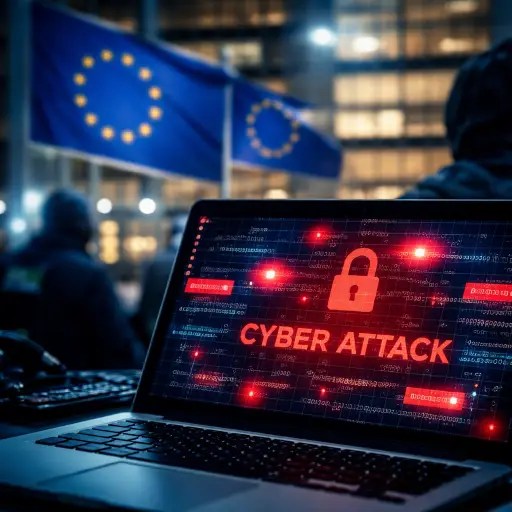
Digital breach raises fresh concerns over security of European institutions
The European Commission’s official web platform has been targeted in a significant cyberattack, exposing once again the persistent vulnerabilities facing even the most sophisticated public institutions. While initial assessments suggest that core internal systems remain secure, officials have confirmed that unauthorized actors may have accessed and extracted certain data, prompting an urgent investigation and renewed debate over cybersecurity readiness across the European Union.
According to preliminary findings, the attack focused on the Commission’s publicly accessible digital infrastructure rather than its internal operational networks. This distinction, while crucial, does little to ease broader concerns. Public-facing platforms often serve as gateways to more sensitive environments, and even limited breaches can yield valuable information for malicious actors.
European officials moved quickly to contain the incident, temporarily restricting access to parts of the affected platform while cybersecurity teams worked to identify the breach’s origin and scope. Early indications point to a coordinated intrusion attempt, though authorities have not yet attributed responsibility to a specific group or state actor.
Despite reassurances that no critical systems were compromised, cybersecurity experts warn that the potential extraction of data could still have far-reaching implications. Even seemingly minor datasets can be used in phishing campaigns, identity mapping, or as leverage in more complex cyber operations.
The incident comes at a time when cyber threats against public institutions are intensifying across Europe. Over the past year, governments, agencies, and infrastructure providers have faced a growing number of attacks ranging from ransomware to espionage-driven breaches. The European Union, as a central political and economic entity, remains a particularly attractive target.
Officials emphasized that internal databases, secure communications, and classified systems were not accessed during the attack. However, the fact that hackers were able to penetrate any part of the Commission’s digital ecosystem underscores the evolving sophistication of cyber threats.
Cybersecurity analysts note that attackers increasingly exploit weaker entry points such as web applications, third-party integrations, and outdated software components. These vulnerabilities can provide initial footholds, allowing attackers to test defenses and potentially escalate their access over time.
The European Commission has not disclosed the exact nature of the data that may have been compromised, citing the ongoing investigation. However, it is believed that the exposed information could include user interaction data, contact details, or publicly submitted forms. While not classified, such data can still be highly valuable in constructing targeted cyberattacks.
In response to the breach, the Commission has initiated a comprehensive security review, including system audits, vulnerability assessments, and enhanced monitoring protocols. External cybersecurity experts have also been brought in to support the investigation and recommend additional safeguards.
The attack serves as a stark reminder that cybersecurity is not a static challenge but an ongoing battle requiring constant adaptation. Even institutions with significant resources and expertise must contend with rapidly evolving tactics employed by cybercriminals and state-sponsored groups.
European policymakers have already been working to strengthen digital defenses through new regulations and coordinated security frameworks. However, incidents like this highlight the gap that can still exist between policy ambitions and operational resilience.
The breach is also likely to intensify discussions around the European Union’s broader cybersecurity strategy, including investment in infrastructure protection, information sharing between member states, and collaboration with private sector partners.
Public trust remains a central concern. While there is no indication of widespread harm at this stage, repeated cyber incidents can erode confidence in digital governance and institutional competence. Transparency in communication and swift corrective action will be key to maintaining credibility.
For citizens and organizations interacting with EU platforms, the incident is a reminder to remain vigilant. Experts recommend monitoring accounts for unusual activity, updating passwords, and being cautious of unsolicited communications that may attempt to exploit the situation.
As the investigation continues, authorities are expected to release further details about the breach, including its origin, methods, and full impact. Whether this attack proves to be an isolated incident or part of a broader campaign remains an open question.
What is clear, however, is that the digital battlefield facing European institutions is becoming increasingly complex. The latest breach underscores a reality that experts have long warned about: no system is entirely immune, and preparedness must evolve as quickly as the threats themselves.
In an era where data is both a critical asset and a potential vulnerability, the European Commission’s experience serves as a cautionary tale. Strengthening defenses is no longer optional but essential, not only to protect information but to safeguard the integrity of governance in the digital age.




 The Tower Post