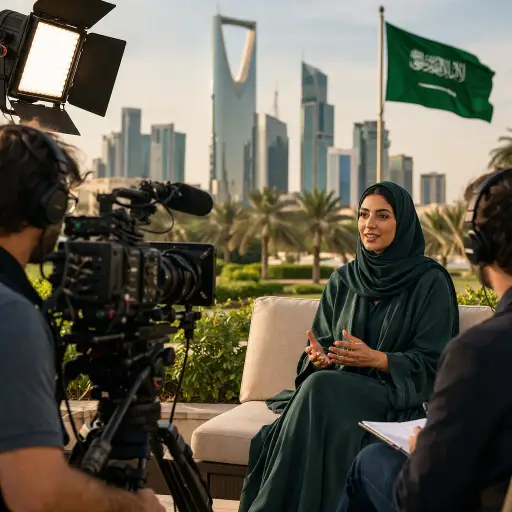
Critics warn that productions portraying social reforms and sustainability efforts risk blurring the line between journalism and state-backed messaging

The BBC is facing mounting criticism following allegations that it produced a series of films perceived as promotional content for Saudi Arabia’s sovereign wealth fund, raising renewed questions about editorial independence at one of the world’s most respected public broadcasters.
At the centre of the controversy are documentaries and short features said to highlight Saudi Arabia’s evolving stance on women’s rights and its environmental initiatives. While supporters describe the productions as legitimate explorations of a country undergoing rapid change, critics argue that the tone and framing risk aligning too closely with official narratives promoted by Saudi authorities.
The issue has triggered concern among media analysts, human rights groups, and former BBC staff, many of whom warn that the broadcaster’s reputation for impartiality could be at stake. The debate reflects a broader tension facing global media organisations: how to cover nations investing heavily in reshaping their international image without becoming vehicles for soft power.
According to those familiar with the productions, the films were commissioned in collaboration with entities connected to Saudi Arabia’s sovereign wealth fund, a central pillar of the kingdom’s economic diversification strategy. The fund has played a major role in financing projects aimed at transforming the country’s global perception, including investments in sports, entertainment, and sustainable infrastructure.
The BBC has long maintained strict editorial guidelines designed to ensure independence from political or commercial influence. However, critics say the partnership model behind these films raises difficult questions about where the boundary lies between factual storytelling and reputational promotion.
Some of the content reportedly focuses on expanded opportunities for women in Saudi Arabia, including increased participation in the workforce and public life. Others highlight ambitious environmental goals, such as renewable energy developments and futuristic urban planning projects.
Supporters of the films argue that such topics are undeniably newsworthy. Saudi Arabia has introduced significant reforms in recent years, and they contend that documenting these changes is both valid and necessary. From this perspective, the films offer audiences insight into a society in transition, rather than serving as endorsements.
Yet detractors say the issue is not the subject matter itself, but the framing. They argue that the films present a largely positive narrative while downplaying or omitting ongoing concerns about human rights, political freedoms, and the treatment of dissent.
“It’s not about whether these changes exist,” said one media commentator. “It’s about whether the storytelling gives a full and balanced picture, or whether it selectively amplifies certain messages in a way that benefits those funding the content.”
The controversy also touches on the evolving funding landscape for major media organisations. As traditional revenue streams face pressure, broadcasters increasingly explore partnerships and co-productions to finance ambitious projects. While such collaborations can enable high-quality storytelling, they also introduce potential conflicts of interest.
For public service broadcasters like the BBC, the stakes are particularly high. The organisation’s credibility has been built over decades on the principle of independence from both government and commercial influence. Any perception that this independence is compromised can have lasting consequences.
Former BBC journalists have voiced concern that even the appearance of alignment with state-backed messaging could erode audience trust. In an era of widespread misinformation and declining confidence in institutions, maintaining clear editorial boundaries is seen as more critical than ever.
The BBC has defended its approach, stating that all content is produced in accordance with its editorial standards and undergoes rigorous review processes. The broadcaster emphasises that it retains full control over storytelling and rejects any suggestion that external partners dictate editorial decisions.
However, critics remain unconvinced, pointing to the broader context in which such collaborations occur. Saudi Arabia has invested heavily in global media, sports, and cultural initiatives as part of a strategy to diversify its economy and enhance its international standing. Within this framework, they argue, even independently produced content can serve a strategic purpose.
Human rights organisations have also weighed in, warning that media portrayals focusing primarily on reform risk obscuring ongoing issues. They stress the importance of including diverse perspectives and acknowledging areas where progress remains contested.
The debate has sparked discussion within the media industry about how to navigate coverage of countries engaged in active image management. Some analysts suggest that greater transparency around funding and partnerships could help audiences better understand the context behind such productions.
Others argue for clearer separation between editorial and commercial activities, particularly when dealing with state-linked entities. They caution that without robust safeguards, the line between journalism and public relations can become increasingly blurred.
For audiences, the controversy highlights the importance of media literacy in an age of complex information ecosystems. Viewers are encouraged to consider not only the content itself but also the broader context in which it is produced.
As the BBC continues to respond to the criticism, the episode serves as a reminder of the challenges facing global journalism. Balancing access, funding, and independence remains a delicate task, particularly when covering regions undergoing significant transformation.
Whether the films ultimately reshape perceptions of the BBC will depend in part on how the organisation addresses the concerns raised. For now, the debate underscores a fundamental question at the heart of modern media: how to tell compelling stories about change without becoming part of the narrative being promoted.
In a rapidly shifting global landscape, that question is unlikely to fade anytime soon.