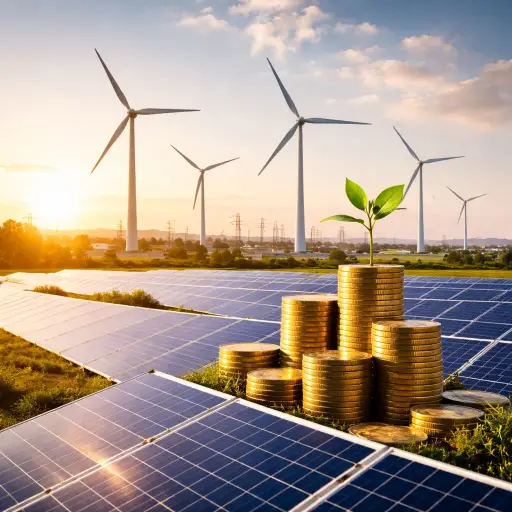
High power prices boost earnings, but financing pressures and policy shifts reshape the pace of the green transition

As the global energy transition accelerates, an unexpected contradiction is taking shape across renewable markets. Elevated electricity prices, once seen as a catalyst for clean energy expansion, are now delivering record profits to operators while simultaneously slowing the pipeline of new projects. The result is a growing investment paradox: the sector appears financially strong, yet structurally constrained.
Across Europe and other advanced economies, renewable energy companies have reported robust earnings driven by sustained high wholesale power prices. Wind and solar assets, with relatively low operating costs, have benefited disproportionately from these market conditions. For investors, the sector has rarely looked more attractive on paper.
Yet beneath the surface, developers are hesitating. The same economic forces that have inflated revenues are also reshaping the cost of capital. Rising interest rates have emerged as a critical barrier, eroding the financial viability of new renewable projects that depend heavily on upfront financing.
The economics of renewable energy are uniquely sensitive to borrowing costs. Unlike fossil fuel plants, which incur ongoing fuel expenses, wind and solar projects require substantial initial investment, with returns spread over long periods. As financing becomes more expensive, project developers are recalculating expected returns and, in many cases, delaying or downsizing planned investments.
Industry analysts note that even modest increases in interest rates can significantly alter project economics. Margins that once appeared comfortable are narrowing, particularly for projects that were planned under different financial assumptions. In some markets, developers are seeking to renegotiate contracts or secure higher power prices to offset rising costs.
This tension is further compounded by supply chain pressures. The cost of key components such as turbines, solar panels, and grid infrastructure has remained volatile, influenced by global demand shifts and geopolitical factors. These uncertainties add another layer of risk, making long-term planning more complex.
Governments are increasingly aware of the slowdown risk. In response, policymakers across Europe are stepping in with new funding mechanisms and regulatory adjustments aimed at sustaining momentum in the energy transition. A major initiative unveiled by the European Union aims to mobilize tens of billions in funding to accelerate renewable deployment and reduce financing burdens.
The program is designed to provide targeted support for projects facing cost pressures, including guarantees, subsidies, and streamlined permitting processes. By lowering financial risk and improving access to capital, policymakers hope to counterbalance the impact of higher interest rates and keep projects moving forward.
However, the effectiveness of these measures remains uncertain. While public funding can alleviate some constraints, it may not fully offset broader macroeconomic trends. Investors are becoming more selective, prioritizing projects with strong fundamentals, stable regulatory environments, and clear long-term revenue visibility.
Another emerging challenge is market design. High electricity prices, while beneficial for existing assets, can create political pressure for intervention. In several countries, governments have introduced or considered price caps, windfall taxes, or contract reforms to protect consumers. While these measures address short-term concerns, they can also introduce regulatory uncertainty that deters investment.
Developers are now navigating a more complex landscape, balancing strong current revenues against uncertain future conditions. Some are shifting focus toward hybrid projects that combine renewable generation with storage, aiming to enhance reliability and capture additional value streams. Others are exploring long-term power purchase agreements with corporate buyers to secure stable income.
Despite these challenges, the long-term outlook for renewable energy remains fundamentally positive. Demand for clean electricity continues to grow, driven by electrification trends, climate commitments, and technological advancements. The underlying drivers of the transition have not changed, but the path forward is becoming more intricate.
The current moment highlights a broader truth about the energy transition: it is not a linear process. Economic cycles, policy decisions, and market dynamics interact in ways that can accelerate or delay progress. The present paradox underscores the importance of adaptive strategies, both for policymakers and for industry participants.
For governments, the task is to create conditions that sustain investment even in less favorable financial environments. This includes not only funding support but also regulatory clarity and long-term policy consistency. For developers and investors, success will depend on flexibility, innovation, and the ability to manage risk in an evolving landscape.
As the new financial realities settle in, the renewable sector is entering a phase of recalibration. The paradox of strong profits and cautious investment may persist in the near term, but it also offers an opportunity to refine the frameworks that will define the next stage of the energy transition.
In this shifting environment, the balance between profitability and growth will be closely watched. The choices made now—by governments, financiers, and industry leaders—will shape not only the pace of renewable deployment, but also the resilience of the global energy system in the years ahead.