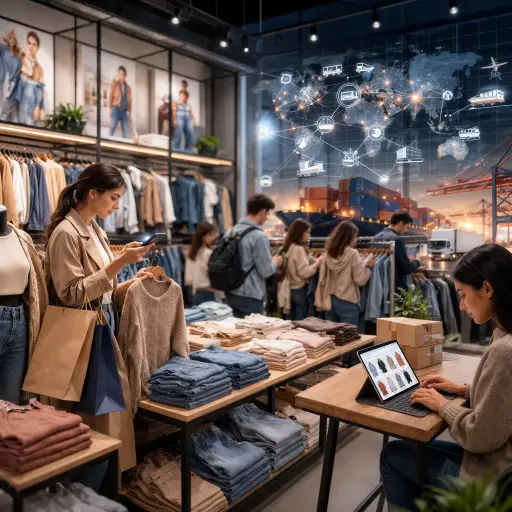
Brands pivot to mid-tier pricing, digital acceleration, and fast fashion revival as global uncertainties reshape consumer behavior

Retailers across the globe are recalibrating their strategies as inflationary pressure continues to reshape how consumers spend, where they shop, and what they prioritize. In a landscape defined by cautious spending and persistent uncertainty, major brands are moving decisively toward mid-tier pricing, strengthening their digital ecosystems, and leaning into the renewed appeal of fast fashion.
The shift reflects a broader change in consumer psychology. Shoppers, increasingly sensitive to price fluctuations, are trading down from premium labels while still seeking quality and immediacy. This has created fertile ground for mid-range offerings that balance affordability with perceived value. Retailers that once relied heavily on premium positioning are now diversifying their product lines, introducing more accessible collections without fully abandoning their brand identity.
At the same time, digital sales channels are no longer a complementary feature but a central pillar of retail strategy. Companies are investing heavily in mobile-first platforms, personalized shopping experiences, and seamless logistics integration. The goal is not just convenience, but retention—keeping customers engaged through targeted promotions, curated recommendations, and frictionless checkout systems.
This digital acceleration is also helping brands mitigate the ongoing disruptions in global supply chains. Conflicts and geopolitical tensions have strained traditional sourcing routes, leading to delays, increased costs, and inventory imbalances. In response, retailers are diversifying suppliers, regionalizing production where possible, and adopting more agile inventory systems. Data analytics and predictive modeling are playing a crucial role in anticipating demand and reducing overstock or shortages.
Yet amid these structural challenges, one segment of the industry is experiencing a notable resurgence: fast fashion. Once criticized for its environmental impact and overproduction, fast fashion is regaining momentum as consumers prioritize affordability and rapid access to trends. The appeal lies in its responsiveness—brands can quickly translate runway or social media trends into retail-ready products, often within weeks.
This renewed demand is pushing fast fashion players to refine their operations further. Speed remains essential, but so does efficiency. Many companies are experimenting with smaller production runs, test-and-scale models, and tighter supply chain integration to reduce waste while maintaining flexibility. The result is a more adaptive version of fast fashion, aligned with both economic pressures and evolving consumer expectations.
Meanwhile, traditional retailers are taking cues from this model, shortening their design-to-shelf timelines and embracing limited-edition drops to create urgency and drive foot traffic. The blending of fast fashion tactics with established retail frameworks is becoming increasingly common, blurring the lines between segments that were once clearly distinct.
In-store experiences are also evolving. Physical retail is no longer solely about transactions but about engagement. Stores are being redesigned to complement digital journeys, offering interactive displays, click-and-collect services, and immersive brand storytelling. This hybrid approach reflects a recognition that consumers move fluidly between online and offline environments.
Despite these adaptations, challenges remain. Margin pressures continue to weigh heavily on retailers, particularly as operational costs rise alongside inflation. Balancing affordability with profitability requires constant adjustment, from renegotiating supplier contracts to optimizing logistics networks.
Looking ahead, agility will define success in the retail sector. Brands that can respond quickly to shifting demand, leverage digital tools effectively, and maintain a clear value proposition are likely to outperform their peers. The current environment may be uncertain, but it is also forcing a level of innovation and responsiveness that could reshape the industry for years to come.
As consumers navigate tighter budgets and evolving preferences, retail giants are learning that resilience depends not on scale alone, but on the ability to adapt—swiftly, strategically, and with a sharp understanding of what value means in a changing world.