Keir Starmer pushes renewed EU cooperation while instability forces a rethink of security, trade routes, and strategic alliances across the continent

As war-driven instability continues to ripple across Europe’s eastern and southern peripheries, the United Kingdom is recalibrating its strategic posture toward closer defense cooperation with the European Union, marking a notable shift in tone years after Brexit reshaped political ties.
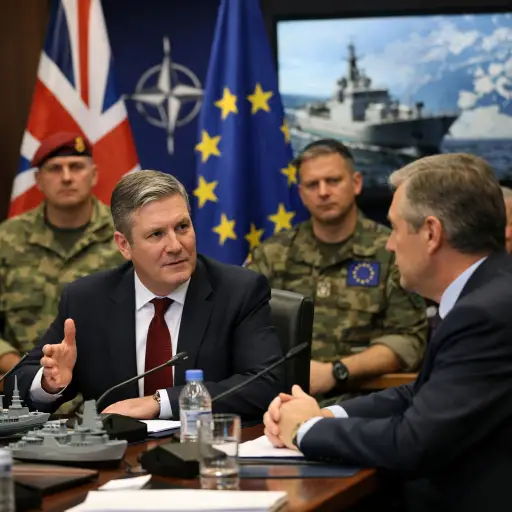
Prime Minister Keir Starmer has emerged as a central advocate for renewed engagement, framing deeper coordination not as a reversal of past decisions but as a pragmatic response to a rapidly deteriorating security environment. Speaking alongside European leaders in recent high-level meetings, Starmer emphasized that the continent faces a “shared threat landscape” requiring “shared solutions.”
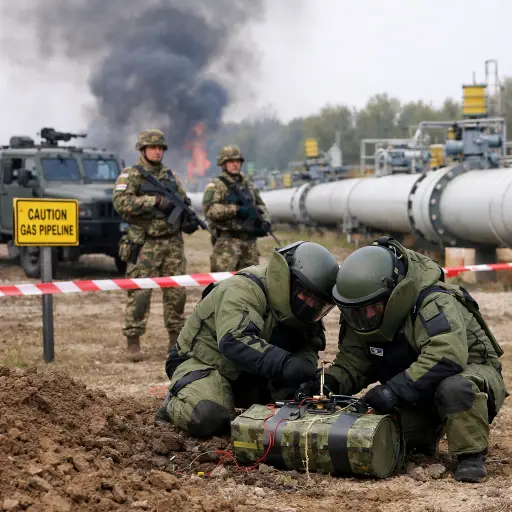
At the heart of the renewed dialogue lies a growing recognition that fragmented defense efforts leave Europe vulnerable in an era defined by hybrid warfare, cyberattacks, and maritime insecurity. The ongoing war in Ukraine continues to dominate strategic thinking, but officials increasingly warn that its consequences extend far beyond the battlefield, influencing energy security, trade stability, and geopolitical alignments.
British and EU officials have opened fresh rounds of talks focused on practical cooperation, particularly in safeguarding shipping lanes that have come under heightened risk. Disruptions in key maritime corridors, including those linking Europe to global energy and commodity markets, have underscored the need for coordinated naval patrols, intelligence-sharing, and rapid-response mechanisms.
Diplomatic sources indicate that discussions are advancing toward joint frameworks that could see the UK participating more closely in EU-led defense initiatives, without formally rejoining institutional structures. This flexible approach reflects political sensitivities on both sides, balancing sovereignty concerns with operational necessity.
For the UK, the shift is driven by both strategic urgency and economic calculation. Ensuring the security of maritime routes is critical not only for national defense but also for stabilizing supply chains that underpin the British economy. Officials warn that prolonged disruptions could amplify inflationary pressures and expose vulnerabilities in energy imports.
Across the Channel, EU leaders have responded cautiously but positively to London’s overtures. There is broad agreement that the scale of current threats demands unprecedented levels of coordination, even as longstanding questions about governance, funding, and command structures remain unresolved.
Security analysts note that the evolving partnership reflects a broader transformation in Europe’s defense architecture. Traditional assumptions about the separation between EU and non-EU security actors are giving way to more fluid arrangements, shaped by necessity rather than ideology.
The role of NATO remains central, but the alliance’s members are increasingly exploring complementary mechanisms to address region-specific challenges. In this context, closer UK-EU alignment is seen as reinforcing, rather than competing with, transatlantic commitments.
Starmer’s government has been careful to frame the initiative as part of a wider strategy to rebuild trust with European partners while maintaining an independent foreign policy. Officials stress that cooperation will focus on areas of clear mutual interest, including intelligence-sharing, defense technology, and joint procurement.
The political implications at home are equally significant. By prioritizing security collaboration over institutional reintegration, the government aims to navigate domestic sensitivities while demonstrating leadership on one of the most pressing issues facing the country.
Meanwhile, the war’s volatility continues to reshape priorities across Europe. Governments are accelerating defense spending, revisiting military doctrines, and strengthening resilience against both conventional and asymmetric threats. The urgency of these efforts has narrowed the space for political hesitation.
Experts caution, however, that translating political intent into effective coordination will require sustained commitment. Differences in strategic culture, legal frameworks, and operational capabilities could complicate efforts to build a truly integrated approach.
Yet momentum appears to be building. The shared perception of risk, combined with tangible economic and security incentives, is driving a convergence that would have seemed unlikely just a few years ago.
As negotiations continue, the direction of travel is becoming clearer: Europe’s security future is likely to depend on deeper cooperation between the UK and the EU, forged not by ideology, but by necessity in an increasingly unstable world.