Security alert triggers regional tensions as experts warn of possible “false flag” scenario linked to domestic power dynamics

Authorities in Serbia have launched an urgent investigation after explosives were discovered near a key gas pipeline supplying Hungary, prompting a swift security response in Budapest and raising concerns across the region about energy infrastructure vulnerability.
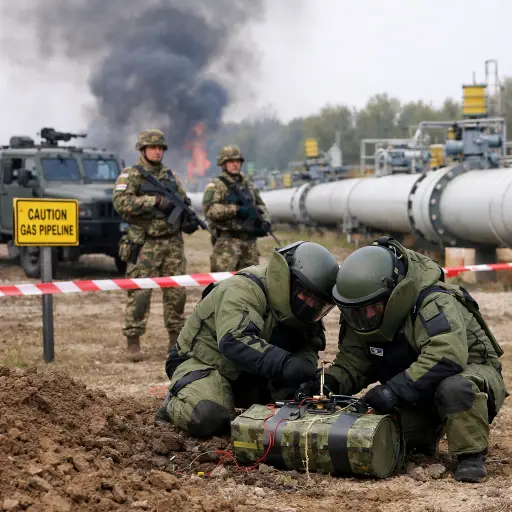
The discovery, announced by Serbian officials early Sunday, involved explosive materials located close to a section of pipeline that plays a critical role in transporting natural gas northward into Hungary. The find immediately triggered alarm in both countries, given the pipeline’s strategic importance for energy security in Central Europe.
Hungarian Prime Minister Viktor Orbán convened an emergency meeting of the national security council later that same day. Following the session, he instructed the Hungarian military to increase protection along the domestic segment of the pipeline, emphasizing the need to safeguard national energy supplies amid what he described as a “serious and evolving threat.”
While authorities have not publicly identified suspects or confirmed whether the explosives were operational, the incident has quickly taken on broader geopolitical significance. Analysts note that critical energy infrastructure in Europe has remained on heightened alert in recent years, particularly amid ongoing tensions tied to regional conflicts and shifting alliances.
However, beyond the immediate security concerns, a more controversial narrative has begun to emerge—one that suggests the possibility of a staged provocation.
Several experts and observers have pointed to reports circulating in recent weeks that warned of a potential “false flag” operation involving pipeline infrastructure in the region. According to these claims, such an attack could be designed to justify heightened security measures, consolidate political authority, or influence public opinion.
Adding fuel to the speculation, investigative journalist Balázs Kaufmann recently published information attributed to an anonymous source alleging that an incident involving the pipeline was being prepared in a manner that could politically benefit the Hungarian leadership. The report has not been independently verified, and officials in Budapest have not directly addressed the claims.
Security specialists caution against drawing premature conclusions but acknowledge that the context surrounding the incident invites scrutiny. “When prior warnings and real-world events appear to align, it naturally raises questions,” said one regional analyst familiar with infrastructure security risks. “That does not mean the claims are accurate, but they do warrant careful examination.”
The concept of false flag operations—covert actions designed to appear as though they were carried out by another party—has long been a subject of both historical record and contemporary debate. In the current environment of heightened information warfare and political polarization, experts warn that distinguishing between genuine threats and manipulated narratives has become increasingly complex.
Serbian authorities have so far taken a cautious stance, focusing on the technical investigation and avoiding speculation about motives. Officials stated that securing the site and ensuring public safety remain the top priorities, while forensic teams work to determine the origin and intended use of the explosives.
Meanwhile, Hungary’s rapid mobilization underscores the seriousness with which the government is treating the situation. Energy infrastructure has become a focal point of national security strategies across Europe, particularly as countries seek to reduce vulnerabilities in supply chains and respond to hybrid threats.
The incident also highlights the delicate balance between security vigilance and political messaging. Critics of the Hungarian government argue that heightened threat perceptions can sometimes be leveraged domestically, while supporters contend that proactive measures are necessary in an increasingly unstable geopolitical landscape.
At the European level, officials are likely to monitor developments closely, given the potential implications for cross-border energy cooperation and regional stability. Any confirmed act of sabotage—or credible evidence of attempted sabotage—could prompt broader discussions about infrastructure protection and intelligence coordination among EU member states and neighboring countries.
For now, many questions remain unanswered. Investigators have yet to clarify who placed the explosives, whether they were intended to be detonated, and what the ultimate objective might have been. The absence of clear attribution leaves room for competing interpretations, each carrying its own political and strategic implications.
As the investigation unfolds, the situation serves as a reminder of how quickly infrastructure incidents can escalate into complex security and political issues. Whether this case proves to be a narrowly averted act of sabotage or something more orchestrated, its impact is already being felt far beyond the immediate location of the discovery.
In a region where energy, politics, and security are deeply intertwined, even a single incident can reverberate widely—shaping narratives, influencing decisions, and testing the resilience of both institutions and public trust.