Unstable atmospheric patterns bring sudden cold snaps, storms, and late snow across the continent

Europe is entering a volatile spring phase marked by sharp and often disorienting weather swings, as conflicting atmospheric forces collide across the continent. Meteorologists are warning of a season defined less by gradual warming and more by abrupt transitions—where sunshine can give way to snowfall within hours, and calm skies rapidly evolve into storm systems.
Across northern and central Europe, unusually cold air masses continue to surge southward, clashing with milder, moisture-laden air pushing in from the Atlantic and Mediterranean. The result is a highly unstable environment primed for rapid weather changes. Forecasters describe the pattern as “blocked and fragmented,” with pressure systems stalling and redirecting typical seasonal flows.
In recent days, several regions have experienced dramatic temperature swings, with early spring warmth quickly replaced by biting cold. These fluctuations are not only uncomfortable but disruptive. Farmers, in particular, are facing mounting uncertainty. Blossoming fruit trees and early crops are vulnerable to frost damage, raising concerns about potential agricultural losses.
At the same time, parts of western and southern Europe are seeing an increase in storm activity. Sudden downpours, strong winds, and localized flooding have already been reported in multiple areas. The instability in the atmosphere is allowing storm systems to intensify rapidly, often with little warning.
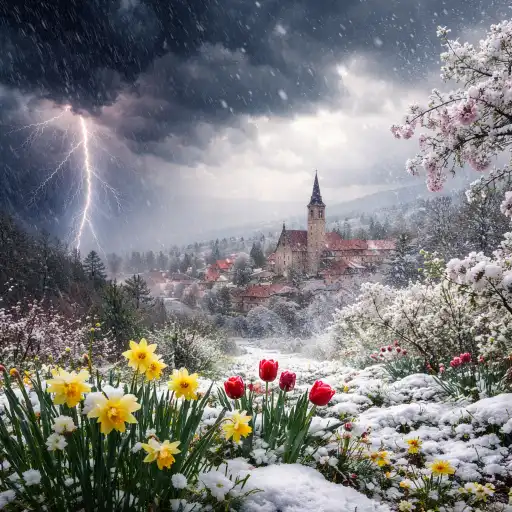
Perhaps most striking is the return of snow to areas that had already begun transitioning into spring. Late-season snowfall has been observed at lower elevations than usual, blanketing landscapes that had already started to bloom. While not unprecedented, the frequency and geographic spread of these events are drawing attention from climate experts.
Meteorological models indicate that the jet stream—a fast-moving ribbon of air high in the atmosphere that typically guides weather systems—is behaving erratically. Instead of following a relatively stable path, it is meandering, creating pockets of cold and warm air that linger longer than expected. This waviness is a key factor behind the prolonged instability.
Some scientists point to broader climatic shifts as a possible influence. Warmer global temperatures can disrupt traditional atmospheric patterns, leading to more extreme and less predictable weather. While no single event can be directly attributed to long-term climate change, the current conditions align with trends observed in recent years.
Urban areas are also feeling the effects. Sudden weather changes are straining infrastructure, from drainage systems overwhelmed by heavy rainfall to transportation networks disrupted by unexpected snow or icy conditions. Emergency services in several countries have already issued advisories urging residents to remain vigilant.
Public health experts note that such rapid shifts can also impact well-being. Sudden cold snaps following mild weather can increase the risk of respiratory illnesses, while storm conditions pose safety hazards. Authorities are encouraging people to stay informed through official weather updates and to prepare for quickly changing conditions.
Looking ahead, forecasts suggest that the pattern of instability is likely to persist in the near term. Rather than a steady progression into warmer weather, Europe may continue to experience a patchwork of extremes—cold and warm, dry and wet, calm and stormy—often within short timeframes.
For now, the message from meteorologists is clear: flexibility and preparedness will be key. As spring unfolds, it is shaping up to be a season that defies expectations, reminding residents across Europe that the transition between seasons is becoming increasingly unpredictable.
In a continent accustomed to distinct seasonal rhythms, this year’s spring stands out for its volatility. Whether it is late snow dusting blooming fields or sudden storms sweeping across cities, the coming weeks are likely to keep Europe on edge—watching the skies and adjusting plans in response to a season that refuses to settle.