How urban aesthetics, designer collaborations, and a new generation of consumers are redefining the meaning of prestige

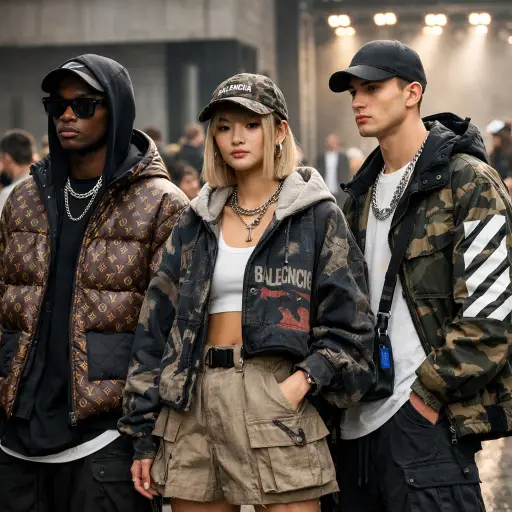
The boundaries that once separated streetwear from high fashion have all but dissolved. What was once considered a subcultural expression rooted in skate parks, hip-hop scenes, and grassroots creativity has firmly embedded itself within the highest tiers of luxury fashion. Today, the fusion of streetwear and couture is not a passing trend but a structural transformation reshaping the global fashion industry.
Across the latest runway presentations, the shift is unmistakable. Hoodies are styled with tailored coats, sneakers accompany formal silhouettes, and oversized fits dominate collections that once adhered to rigid notions of elegance. Luxury is no longer defined solely by exclusivity and craftsmanship in the traditional sense; it is increasingly about cultural relevance, accessibility of style, and the ability to reflect contemporary identity.
At the heart of this evolution lies a wave of collaborations between high-end fashion houses and urban designers. These partnerships have become one of the most powerful engines driving innovation in the industry. Rather than merely borrowing aesthetic cues, luxury brands are actively engaging with creators who built their reputations outside the traditional fashion system. The result is a dynamic exchange that blends technical excellence with raw cultural authenticity.
This collaborative model has proven to be both commercially successful and culturally influential. Limited releases generate anticipation and scarcity, while cross-brand storytelling creates narratives that resonate deeply with consumers. The collaborations often sell out within minutes, reinforcing their desirability and positioning them as modern status symbols.
However, the impact extends beyond sales figures. These partnerships signal a broader recognition of streetwear as a legitimate and influential design language. What was once dismissed as casual or informal has become a cornerstone of contemporary fashion expression. Designers from urban backgrounds are no longer outsiders; they are shaping the very direction of luxury itself.
Equally significant is the dominance of casual styles on luxury runways. The shift reflects changing lifestyles and priorities among consumers, particularly in a world where rigid dress codes have softened. Comfort, versatility, and individuality have taken precedence over formality. Garments are expected to function across multiple contexts, blending ease with sophistication.
This transformation is evident in the construction of modern collections. Tailoring has become more relaxed, fabrics more adaptable, and silhouettes more fluid. Even traditional luxury materials are being reinterpreted through a streetwear lens, resulting in pieces that feel both elevated and approachable. The emphasis is no longer on dressing for a specific occasion but on expressing a personal narrative through everyday wear.
The influence of younger consumers cannot be overstated in this shift. Millennials and Gen Z have emerged as the primary drivers of change, bringing with them new expectations and values. They are less concerned with heritage for its own sake and more interested in authenticity, inclusivity, and cultural resonance. For them, luxury is not just about owning a product but about participating in a broader cultural conversation.
Digital platforms have amplified this influence, allowing trends to emerge and spread at unprecedented speed. Social media has become a critical arena where fashion is not only showcased but also interpreted, remixed, and redefined. Younger audiences engage with brands in a more interactive and immediate way, demanding transparency and relevance.
This generation also places a strong emphasis on individuality. The blending of streetwear and luxury offers a versatile toolkit for self-expression, enabling consumers to mix high and low, formal and casual, established and emerging. The result is a more democratic approach to fashion, where personal style takes precedence over prescribed norms.
Luxury brands have responded by rethinking their strategies. Traditional seasonal cycles are being complemented by more frequent drops, mirroring the rhythm of streetwear culture. Marketing campaigns increasingly feature diverse voices and narratives, reflecting the multiplicity of identities within the consumer base. Retail environments are also evolving, becoming more experiential and community-oriented.
Yet, this convergence is not without tension. Some critics argue that the integration of streetwear into luxury risks diluting its original authenticity. As major brands adopt the aesthetics and language of urban culture, questions arise about ownership, representation, and the potential commodification of subcultural expression.
At the same time, others view the evolution as a natural progression. Fashion has always been a dialogue between different influences, constantly absorbing and reinterpreting elements from various sources. The current moment can be seen as a continuation of this process, albeit at a faster and more global scale.
What is clear is that the streetwear-luxury crossover is redefining the industry’s power structures. Designers who once operated on the margins are now central figures, while established houses are adapting to remain relevant in a rapidly changing landscape. The hierarchy of fashion is becoming more fluid, with influence flowing in multiple directions.
Looking ahead, the trajectory suggests that this fusion will continue to deepen. As technology, culture, and consumer behavior evolve, the lines between categories are likely to blur even further. New forms of collaboration, innovation, and expression will emerge, challenging traditional definitions of both streetwear and luxury.
In this new era, the most successful brands will be those that can navigate this complexity with authenticity and vision. They will need to balance heritage with innovation, exclusivity with accessibility, and craftsmanship with cultural relevance. The stakes are high, but so are the opportunities.
Ultimately, the rise of the streetwear-luxury crossover reflects a broader shift in how fashion is understood and experienced. It is no longer confined to the runway or the atelier; it lives in the streets, online, and within the everyday lives of consumers. Luxury has become more dynamic, more inclusive, and more attuned to the world around it.
As the industry continues to evolve, one thing remains certain: the conversation between streetwear and high fashion is far from over. It is, in many ways, just beginning.