From aid dependency to strategic cooperation, a new chapter focuses on trade, investment, and shared geopolitical priorities

A quiet but significant transformation is reshaping the relationship between Europe and Africa. Long defined by development aid and donor-recipient dynamics, the partnership is now moving decisively toward a model rooted in mutual economic interest, political coordination, and shared strategic goals. This shift reflects not only changing priorities on both continents but also the realities of an increasingly competitive and multipolar global landscape.
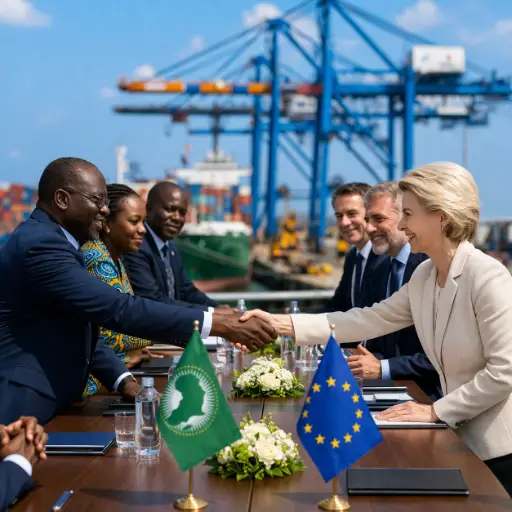
Across diplomatic forums and economic summits, European and African leaders are emphasizing a new language of partnership. The focus is no longer primarily on assistance but on opportunity: trade corridors, infrastructure investment, digital innovation, and energy cooperation. This recalibration signals a broader rethink of Europe’s external engagement strategy, as policymakers seek to build alliances that are both economically viable and geopolitically relevant.
For decades, Europe positioned itself as Africa’s principal development partner, channeling billions into humanitarian aid, governance programs, and capacity-building initiatives. While these efforts yielded measurable progress in areas such as health and education, they also drew criticism for perpetuating dependency and failing to unlock sustainable economic growth. African leaders, increasingly assertive on the global stage, have called for a more balanced relationship that recognizes the continent’s growing economic potential and strategic importance.
This evolving perspective is now taking shape in concrete initiatives. Trade agreements are being reexamined to ensure greater market access for African goods, while investment frameworks are designed to attract European capital into key sectors such as renewable energy, manufacturing, and technology. Infrastructure projects, particularly in transport and energy, are gaining prominence as both continents seek to improve connectivity and resilience in supply chains.
The energy transition has emerged as a central pillar of this renewed partnership. Africa’s vast renewable resources, including solar and wind potential, are increasingly seen as critical to Europe’s ambitions for energy security and decarbonization. In turn, European investment and technology are helping to accelerate energy access and industrial development across African economies. This взаимосвязь highlights a shift from transactional aid to interdependent growth.
Geopolitics is another driving force behind the deepening ties. As global competition intensifies, Europe is seeking to strengthen its presence in Africa amid growing influence from other major powers. For African nations, diversification of partnerships offers greater leverage and flexibility in pursuing national development goals. The result is a more pragmatic and strategic engagement, where both sides are motivated by long-term interests rather than short-term assistance.
Migration, long a sensitive issue in Europe-Africa relations, is also being reframed within this broader context. Rather than focusing solely on border control, policymakers are increasingly linking migration to economic opportunity and stability. Investments in job creation, education, and entrepreneurship are seen as part of a comprehensive approach that addresses root causes while fostering mobility in a more structured and mutually beneficial way.
Digital transformation represents another frontier of cooperation. African tech ecosystems are expanding rapidly, attracting attention from European investors and companies eager to tap into innovation hubs across the continent. Partnerships in digital infrastructure, data governance, and skills development are helping to bridge gaps while creating new avenues for economic integration. This collaboration reflects a shared recognition that the digital economy will play a defining role in future growth.
Despite the optimism surrounding this shift, challenges remain. Structural inequalities, regulatory differences, and political instability in certain regions continue to pose risks to deeper integration. There is also ongoing debate about the fairness of trade arrangements and the need to ensure that local industries in Africa are not undermined by external competition. Addressing these concerns will be crucial to sustaining trust and delivering tangible benefits.
Moreover, the success of this new partnership will depend on implementation. Ambitious agreements and high-level commitments must translate into real projects on the ground. This requires coordination between governments, private sector actors, and international institutions, as well as a willingness to adapt policies in response to evolving conditions.
What is clear, however, is that the narrative has fundamentally changed. Europe is no longer approaching Africa primarily as a recipient of aid, but as a partner with agency, resources, and strategic significance. Likewise, African nations are engaging with Europe from a position of increasing confidence, seeking collaboration that aligns with their own development priorities.
This transformation marks a pivotal moment in Europe’s global engagement strategy. By prioritizing economic cooperation and geopolitical alignment, the relationship with Africa is becoming more integrated into broader efforts to navigate an uncertain international environment. It reflects a recognition that sustainable partnerships must be built on shared interests, mutual respect, and tangible outcomes.
As this new chapter unfolds, the stakes are high for both continents. Success could unlock significant economic potential, strengthen resilience in the face of global challenges, and redefine how international partnerships are structured in the twenty-first century. Failure, on the other hand, would risk reinforcing old patterns and missing a critical opportunity for renewal.
For now, the direction is clear. Europe and Africa are moving beyond the legacy of aid toward a more balanced and strategic partnership, one that reflects the ambitions and realities of a rapidly changing world.