Tensions Rise as Teams and Drivers Clash Over Rule Interpretations

The build-up to the European leg of the Formula 1 season has taken a turbulent turn, with rising tensions between drivers, teams, and governing officials threatening to spill over onto the track. What should have been a period of refinement and preparation has instead become a battleground of conflicting interpretations, technical accusations, and growing mistrust across the paddock.
At the center of the storm lies a series of recent clarifications issued by the Fédération Internationale de l’Automobile. Intended to tighten oversight on evolving aerodynamic and suspension innovations, these updates have instead opened a grey area that teams appear eager to exploit — or accuse others of exploiting.
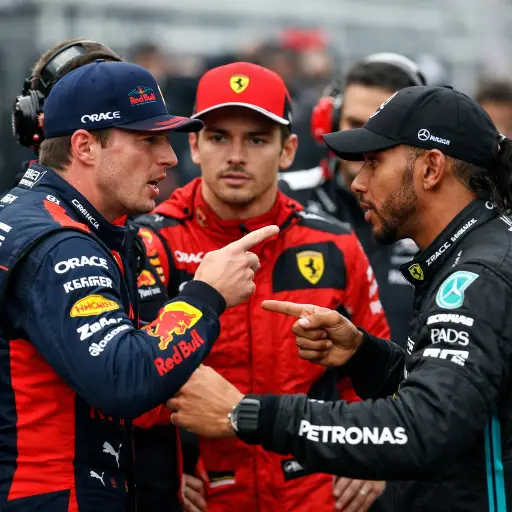
Drivers are increasingly vocal about what they see as inconsistencies in enforcement. Max Verstappen has hinted at frustration over “interpretations that seem to change weekend by weekend,” while Lewis Hamilton has called for “clearer communication and equal application of rules.” Meanwhile, Charles Leclerc has suggested that the current climate risks “damaging the fairness of competition.”
Behind the public remarks lies a more complex technical dispute. Several teams have quietly questioned the legality of innovative floor designs and flexible aerodynamic components introduced this season. While no official breaches have been confirmed, rival engineers argue that certain interpretations push the limits of what regulations intended.
The issue is not new to Formula 1, a sport historically defined by its constant tug-of-war between innovation and regulation. However, the current situation is amplified by the timing. With a sequence of high-profile European races approaching, any regulatory ambiguity could have immediate and high-stakes consequences.
Team principals have been particularly outspoken in private discussions. Some accuse competitors of deliberately operating in regulatory grey zones, effectively forcing the FIA to react rather than proactively enforce. Others argue that innovation within loosely defined rules is the essence of the sport, and that protests are merely strategic tools in an increasingly competitive field.
This tension is already beginning to translate into formal actions. Several teams are reportedly preparing to file protests should certain car components appear unchanged at upcoming races. Such protests, if lodged, could lead to post-race investigations, penalties, or even disqualifications — outcomes that could significantly reshape championship standings.
The drivers, meanwhile, are caught in the middle. On one hand, they rely on their teams to deliver competitive machinery. On the other, they are the public faces of the sport and must address growing questions about fairness and consistency. The result is a paddock atmosphere that feels increasingly strained, with alliances shifting and rivalries intensifying.
There is also a broader concern about the message this sends to fans. Formula 1 has worked hard in recent years to expand its global audience, emphasizing transparency and accessibility. A series of technical disputes and post-race rulings could risk undermining that progress, particularly if race results become subject to prolonged uncertainty.
The FIA faces a delicate balancing act. Too strict an interpretation could stifle innovation and provoke backlash from teams. Too lenient an approach, however, risks encouraging further boundary-pushing and escalating disputes. Insiders suggest that additional technical directives may be issued soon, but whether these will clarify or further complicate matters remains to be seen.
As the championship heads into its European phase, the stakes could hardly be higher. The circuits ahead are traditionally decisive in shaping title battles, and any disruption caused by protests or penalties could have lasting implications.
For now, the tension continues to build. What unfolds over the next races may not only determine the competitive order but also define how the sport navigates the ever-present tension between engineering ingenuity and regulatory control.
In Formula 1, the fight is rarely confined to the track. And as the European races approach, it is clear that this season’s most significant battles may begin long before the lights go out.