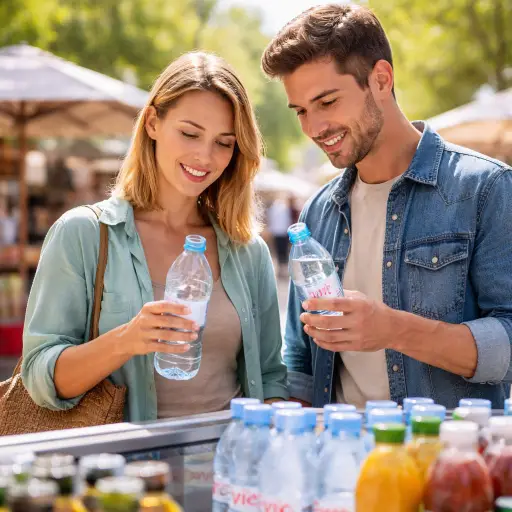
Growing awareness in Britain and France signals a broader global move away from sugary drinks and toward simpler, cleaner choices

A quiet but decisive shift is unfolding across supermarket aisles and café counters in Britain and France. Consumers, increasingly mindful of what they drink, are turning away from sugary beverages and gravitating toward bottled water and other low-sugar alternatives. The change, highlighted by recent remarks from Danone, reflects not just a regional preference but a wider transformation in global consumption habits.
What was once considered a marginal trend driven by niche health enthusiasts has now entered the mainstream. In both countries, shoppers are paying closer attention to ingredient labels, calorie counts, and long-term health implications. Sugary sodas, once dominant in everyday consumption, are steadily losing ground to products perceived as cleaner and more natural. Bottled water, long viewed as a basic commodity, is being reimagined as a lifestyle choice tied to wellness and balance.
Danone, one of the world’s largest food and beverage companies, has observed a notable increase in demand for its bottled water brands, particularly Evian. The company attributes this momentum to a growing awareness of the health risks associated with excessive sugar consumption, as well as a cultural shift that prioritizes prevention over indulgence. Consumers are not merely reacting to public health messaging; they are actively reshaping their habits.
In Britain, the trend has been reinforced by years of policy interventions and public campaigns aimed at reducing sugar intake. Taxes on sugary drinks and widespread educational efforts have contributed to a gradual but persistent decline in consumption. France, meanwhile, has seen a parallel movement driven by a strong culinary culture that increasingly values quality and simplicity over excess. In both markets, water has emerged as the default choice rather than an afterthought.
This evolution is also visible in the way beverages are marketed and displayed. Retailers are dedicating more shelf space to water, flavored waters, and low-sugar options, often placing them at eye level or in prominent positions. Brands are emphasizing purity, origin, and sustainability, appealing to consumers who are not only health-conscious but also environmentally aware. The rise of reusable bottles and refill stations further underscores this shift toward mindful consumption.
Importantly, the change is not limited to older generations or those traditionally associated with health-conscious behavior. Younger consumers, particularly in urban areas, are leading the movement. For them, choosing water over sugary drinks is not a sacrifice but a statement—an expression of identity aligned with fitness, clarity, and control. Social media has amplified this mindset, turning hydration into a visible and shareable habit.
The implications extend far beyond Europe. What is happening in Britain and France mirrors a broader global trend that is reshaping the food and beverage industry. Companies are reformulating products, reducing sugar content, and investing in new categories that align with evolving consumer expectations. The competitive landscape is shifting, with traditional soft drink giants facing pressure from both regulatory frameworks and changing tastes.
For Danone, the rise in bottled water demand represents both an opportunity and a validation of its strategic focus on health-oriented products. However, it also raises questions about sustainability, particularly regarding plastic usage and resource management. As consumers become more discerning, companies will need to balance health benefits with environmental responsibility, ensuring that progress in one area does not come at the expense of another.
Ultimately, the move away from sugary drinks is less about restriction and more about redefinition. Consumers are not abandoning enjoyment; they are redefining it. Refreshment is increasingly associated with clarity, lightness, and well-being rather than sweetness and intensity. In this new landscape, water is no longer just a necessity—it is a conscious choice.
As this shift continues to gain momentum, it signals a deeper cultural transformation. What people drink is becoming a reflection of how they live, what they value, and how they envision their future. In Britain and France, the message is becoming clear: simplicity, once overlooked, is now at the center of modern consumption.