Violent winds and relentless rain expose vulnerabilities in infrastructure and tourism as communities grapple with mounting damage and climate pressures

A powerful storm system sweeping across Greece has left a trail of destruction, flooding homes, disrupting transport networks, and claiming at least one life, as authorities scramble to respond to rapidly deteriorating conditions in one of Europe’s most visited destinations.
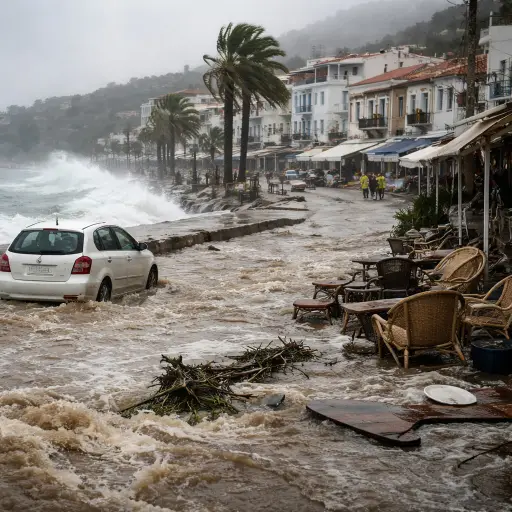
Torrential rain and gale-force winds battered coastal and inland regions alike, turning streets into rivers and overwhelming drainage systems. In several towns and cities, water surged into homes and businesses, forcing residents to evacuate and leaving behind scenes of mud, debris, and shattered infrastructure.
Emergency services were deployed across affected areas, responding to hundreds of calls for assistance. Firefighters and rescue teams worked through the night to pump water from flooded buildings, free stranded motorists, and assist vulnerable residents trapped by rising waters. Officials described the situation as highly dynamic, with conditions shifting rapidly as the storm moved across the country.
Transport disruption quickly became one of the most visible consequences of the extreme weather. Road networks were severely impacted, with key routes blocked by landslides, fallen trees, and standing water. Public transport services faced delays and cancellations, while ferry operations were suspended in several ports due to dangerous sea conditions. Flights were also affected, with delays reported as strong winds made landing conditions hazardous.
The impact on tourism, a cornerstone of the Greek economy, is already being felt. Visitors found themselves stranded or forced to alter travel plans, while hotels and local businesses in affected regions reported cancellations and damage. For a country that relies heavily on seasonal tourism, the timing of the storm raises concerns about resilience and preparedness in the face of increasingly volatile weather patterns.
Local authorities have urged residents and travelers to remain cautious, advising against non-essential movement in the hardest-hit areas. Weather warnings remain in place, with meteorologists cautioning that further rainfall could exacerbate flooding and prolong disruption.
Beyond the immediate damage, the storm has reignited debate about infrastructure readiness and climate adaptation. Experts point to the growing frequency and intensity of such weather events as a clear signal of shifting climate dynamics in the Mediterranean region. Aging drainage systems, unplanned urban development, and limited natural flood defenses have all been cited as factors that can amplify the impact of extreme rainfall.
Government officials have pledged to assess the damage and provide support to affected communities, including financial assistance for repairs and recovery. However, the scale of the destruction is still being evaluated, and early indications suggest that rebuilding efforts could be both costly and prolonged.
Residents in the worst-affected areas described scenes of sudden and overwhelming force. In some cases, water levels rose within minutes, catching people off guard and leaving little time to secure belongings or protect property. Businesses, particularly those along waterfronts, reported significant losses as floodwaters swept through premises, damaging equipment and stock.
Despite the disruption, there have also been accounts of community solidarity, with neighbors assisting one another and volunteers stepping in to support emergency efforts. Such responses highlight both the human cost of the disaster and the resilience of those affected.
As Greece begins the process of recovery, attention is likely to remain focused on how to better prepare for future storms. The intersection of climate change, infrastructure challenges, and economic dependence on tourism creates a complex landscape that policymakers will need to navigate carefully.
For now, the priority remains ensuring safety, restoring essential services, and supporting those whose lives have been upended by the storm. But the broader questions raised by this event—about resilience, preparedness, and adaptation—are unlikely to fade once the floodwaters recede.