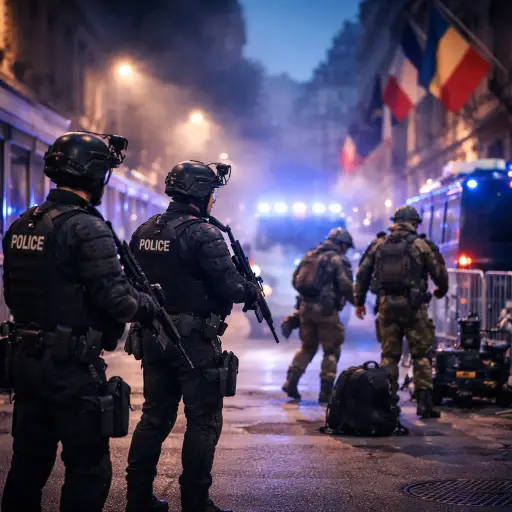
Iran-linked networks suspected in sabotage plots across Western Europe as security agencies intensify vigilance

European security agencies are confronting a growing and unsettling reality: the reverberations of distant conflicts are no longer contained to their regions of origin. Instead, they are increasingly manifesting across European soil through covert operations, sabotage plots, and intelligence-linked activities that blur the lines between traditional warfare and clandestine aggression.
In recent weeks, authorities across France, Belgium, and the Netherlands have disrupted a series of alleged sabotage plans targeting infrastructure, logistics hubs, and symbolic Western institutions. While investigations remain ongoing and official statements cautious, intelligence sources suggest a pattern consistent with operations linked to networks aligned with Iranian strategic interests.
The incidents, though varied in execution and scope, share key characteristics. According to officials familiar with the investigations, the plots involved small, decentralized cells, often operating with minimal direct communication and relying on encrypted channels. Targets reportedly included transportation networks, energy facilities, and sites associated with international cooperation or defense.
European counterterrorism units have emphasized that these operations do not resemble conventional terrorist attacks aimed at mass casualties. Instead, they appear designed to create disruption, uncertainty, and political pressure—hallmarks of hybrid warfare strategies increasingly observed in global conflicts.
In France, security services intervened after identifying suspicious surveillance activity near a critical logistics corridor. Several individuals were detained, and materials potentially linked to sabotage were seized. While authorities have not publicly attributed the plot, internal assessments reportedly point toward coordination influenced by external actors.
Belgium, long considered a logistical and diplomatic hub in Europe, has also heightened its alert level. Investigators there uncovered a network allegedly planning targeted disruptions against transport infrastructure. Officials indicated that the operation was in an advanced preparatory stage before it was dismantled.
In the Netherlands, intelligence agencies have quietly expanded monitoring efforts following indications of similar activity patterns. Though fewer details have been disclosed, officials acknowledged that potential threats linked to foreign-backed networks are being treated with increased urgency.
The emerging picture suggests a coordinated effort to extend geopolitical pressure into Europe without triggering direct military confrontation. Analysts describe this approach as part of a broader strategy to test resilience, exploit vulnerabilities, and signal capability.
Security experts warn that such operations are intentionally difficult to detect. By avoiding large-scale attacks and instead focusing on smaller, deniable acts, perpetrators can maintain plausible deniability while achieving strategic impact. This complicates both attribution and response, particularly in democratic societies where legal thresholds for intervention are high.
European governments are now reassessing their internal security frameworks in light of these developments. Cooperation between intelligence agencies has intensified, with cross-border information sharing becoming a central pillar of prevention efforts. Officials stress that early detection and disruption remain the most effective tools against this type of threat.
At the same time, policymakers face a delicate balancing act. Public reassurance must be maintained without downplaying the seriousness of the situation. Authorities are keen to avoid alarmism, yet acknowledge that the nature of modern conflict is evolving in ways that directly affect civilian environments.
The broader geopolitical context cannot be ignored. Tensions in the Middle East and beyond have created a climate in which proxy actions and indirect confrontations are increasingly common. Europe, with its open societies and interconnected infrastructure, presents both an attractive and vulnerable arena for such activities.
For now, officials emphasize that the disrupted plots demonstrate the effectiveness of European security services. However, they also caution that these incidents may represent only a fraction of ongoing attempts.
As investigations continue, one conclusion is becoming increasingly clear: the boundaries between distant conflicts and domestic security are eroding. What once seemed geographically remote is now unfolding much closer to home, reshaping the security landscape of Europe in subtle but significant ways.