At Easter vigil, a global plea against indifference resonates across Europe as religious leaders call for renewed peace efforts amid escalating conflicts
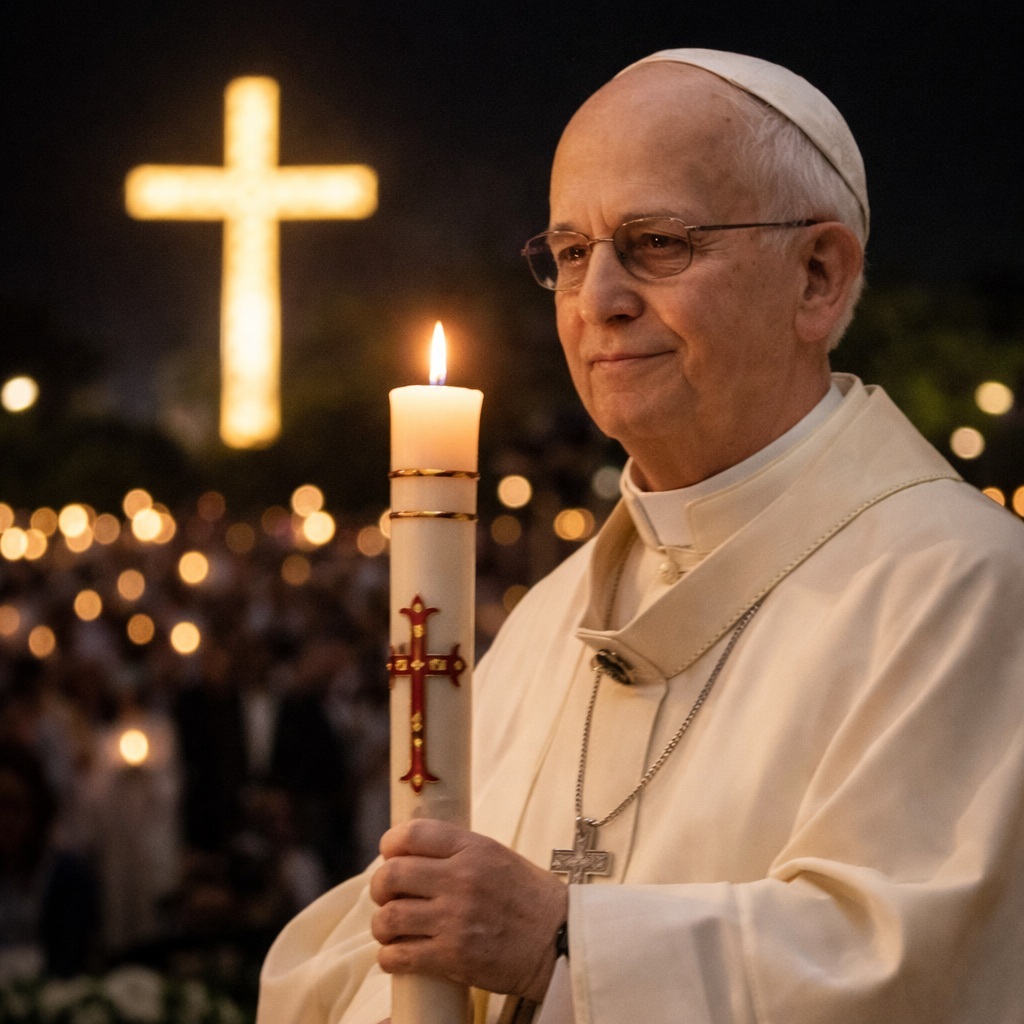
In a solemn and deeply symbolic Easter vigil, Pope Leo delivered one of his most urgent appeals in recent months, warning the world against what he described as a growing and dangerous tendency to normalize war. Speaking before thousands of faithful gathered in candlelit silence, the pontiff’s message extended far beyond the walls of the Vatican, echoing across a world increasingly shaped by prolonged conflict and geopolitical tension.
The vigil, traditionally a moment of reflection and renewal in the Christian calendar, became a platform for a stark moral warning. As flickering lights illuminated the darkened basilica, the Pope urged believers and the international community alike not to grow indifferent to the suffering caused by ongoing wars.
He cautioned that humanity risks losing its sense of compassion when violence becomes routine, stressing that awareness must remain active even when conflicts persist over time.
The Pope’s remarks arrive at a time when Europe continues to grapple with the long shadow of war on its eastern borders. The conflict in Ukraine has reshaped political alliances, strained economies, and tested public resilience. Meanwhile, rising tensions involving Iran have further heightened global uncertainty, reinforcing fears of broader instability.
Across European capitals, the Pope’s warning has found a receptive audience. Observers note that public sentiment, once marked by urgency and solidarity, is increasingly challenged by fatigue. News of conflict risks becoming part of the daily background, absorbed but no longer fully felt.
Religious communities across the continent have responded by amplifying the message. Vigils, interfaith dialogues, and humanitarian initiatives have been organized to ensure that the human cost of war remains visible and present in public consciousness.
Central to the Pope’s address was the concept of moral desensitization, a growing concern in an age of constant information. With images of destruction and displacement circulating endlessly, there is a risk that empathy becomes diluted over time.
He framed this not only as a social issue but as a deeper ethical challenge, warning that indifference allows suffering to persist unchecked.
The Pope’s appeal has been reinforced by leaders from other religious traditions, marking a moment of shared moral concern. Voices from Christian, Muslim, and Jewish communities have issued similar calls for renewed peace efforts and a recommitment to dialogue over conflict.
In several regions, interfaith coalitions have emerged, emphasizing that the pursuit of peace transcends religious differences. These groups have urged political leaders to prioritize negotiation and long-term stability rather than escalation.
While the Pope’s message is rooted in spiritual reflection, its implications extend into the political sphere. His warning challenges governments and institutions to resist complacency and to maintain focus on conflict resolution despite the complexities involved.
Analysts note that such moral interventions can influence public discourse, reinforcing the idea that leadership carries not only strategic responsibility but also ethical accountability.
Despite the gravity of his message, the Pope concluded with a note of cautious hope. He emphasized that even in times of deep uncertainty, the possibility of renewal remains, and that individuals play a vital role in shaping a more compassionate world.
He called on people to remain attentive, engaged, and responsive to the suffering of others, encouraging acts of solidarity and awareness in everyday life.
As the vigil came to a close and the candlelight faded, the message endured. In a world where conflict risks becoming normalized, the call to resist indifference stands as both a warning and a responsibility.
The challenge now lies in whether that call will inspire sustained action, both among global leaders and within the conscience of ordinary citizens.