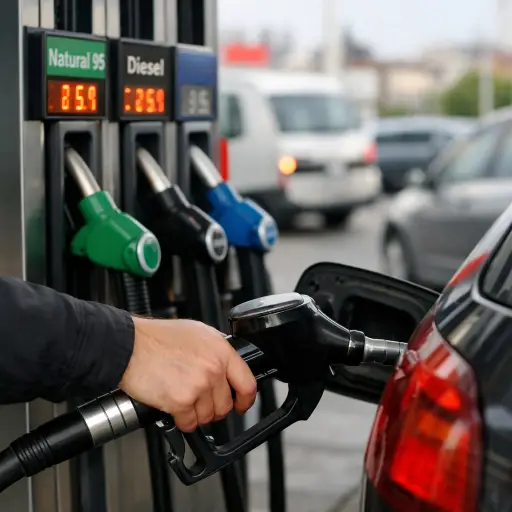
Diesel reaches its most expensive level in over four years while petrol nears a three-and-a-half-year peak, putting renewed pressure on households and businesses

Fuel prices across the Czech Republic have surged sharply in recent days, reaching levels not seen in several years and reigniting concerns about the broader cost of living. The latest data indicate that diesel has climbed to its highest price in more than four years, while petrol is approaching a peak last recorded roughly three and a half years ago.
According to figures from CCS, which monitors fuel prices nationwide, the most widely sold petrol, Natural 95, has risen by 14 hellers over the past week to an average of 41.63 Kč per litre. Diesel prices have increased even more dramatically, climbing by 34 hellers to reach 48.49 Kč per litre.
The sharp upward movement has caught the attention of both consumers and analysts, particularly as it comes at a time when many households are already grappling with elevated costs in other areas such as housing, food, and energy. For drivers, transport companies, and small businesses, the increase is not just a marginal inconvenience but a tangible hit to daily budgets.
A Return to Elevated Price Levels
The current price levels mark a significant turning point after a period of relative stabilization. Diesel, in particular, has shown a steeper trajectory, reflecting both global market dynamics and regional supply pressures. The widening gap between diesel and petrol prices is notable, as diesel traditionally plays a key role in freight transport and logistics, meaning its rise tends to ripple across the broader economy.
Market observers point to a combination of factors behind the increase. Global oil prices have been trending upward, influenced by geopolitical tensions, production constraints, and fluctuating demand forecasts. At the same time, refinery margins and distribution costs have contributed to the final price seen by consumers at the pump.
Seasonal factors may also be playing a role. With increased mobility and transport activity, demand for fuel tends to rise, placing additional upward pressure on prices. However, analysts caution that the current surge is not purely seasonal and reflects deeper structural influences in the energy market.
Impact on Consumers and Businesses
For ordinary drivers, the increase translates into noticeably higher refueling costs. A full tank now costs significantly more than it did just a short time ago, adding to the financial strain for commuters and families relying on personal vehicles.
Transport and logistics companies are particularly affected by the spike in diesel prices. Fuel represents one of their largest operating expenses, and sustained increases can lead to higher transport costs, which are often passed on to customers. This, in turn, may contribute to broader inflationary pressures in the economy.
Small businesses that depend on regular transportation, such as delivery services, construction firms, and agricultural operations, are also feeling the impact. Many are now reassessing their pricing strategies and operational efficiency to cope with the higher costs.
Economic Implications
The rise in fuel prices is not occurring in isolation. It feeds into a wider economic picture where energy costs remain a key driver of inflation. Higher fuel prices can affect nearly every sector, from manufacturing to retail, as transportation and production costs increase.
Economists warn that if the upward trend continues, it could slow consumer spending and dampen economic growth. Households forced to allocate more of their income to essential expenses such as fuel may cut back on discretionary spending, affecting sectors like hospitality and retail.
At the same time, the situation highlights the ongoing vulnerability of European economies to global energy market fluctuations. Despite efforts to diversify energy sources and improve efficiency, oil remains a critical component of the economic system.
Outlook and Uncertainty
Looking ahead, the trajectory of fuel prices remains uncertain. Much will depend on developments in global oil markets, including supply decisions by major producers and shifts in geopolitical conditions. Currency fluctuations and regional refining capacity will also play a role in determining local price levels.
Some analysts suggest that prices could stabilize if global supply improves or demand weakens. However, others warn that volatility is likely to persist, with the potential for further increases if market conditions tighten.
For now, drivers and businesses alike are bracing for continued pressure at the pump. The recent surge serves as a reminder of how quickly fuel costs can change and how deeply they are intertwined with both global events and everyday economic realities.
As the situation evolves, attention will remain focused on whether the current spike represents a temporary surge or the beginning of a more prolonged period of elevated fuel prices.