A landmark ruling exposes deep tensions around border fortification spending and wartime accountability

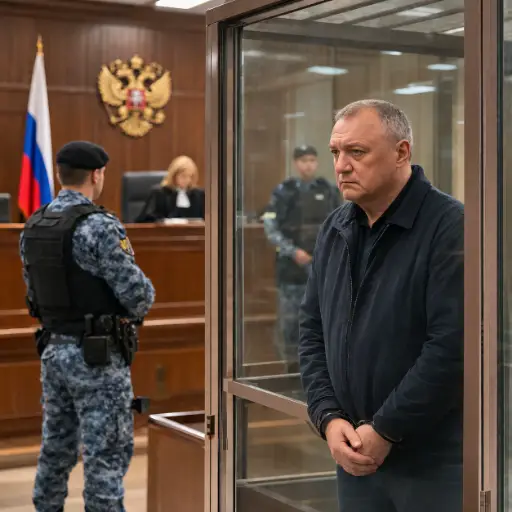
A Russian court has delivered a significant verdict against former Kursk region governor Alexei Smirnov, sentencing him to 14 years in prison and imposing a substantial financial penalty following his conviction on corruption charges tied to the construction of defensive fortifications along the border with Ukraine. The decision, announced at the start of the week, marks one of the most prominent cases in recent years involving alleged misuse of funds linked to strategic infrastructure projects.
According to state news agency reports, the court found Smirnov guilty of accepting large-scale bribes in exchange for facilitating contracts related to the building of defensive structures in the border region. These fortifications, intended to bolster security amid ongoing tensions, have been a central component of Russia’s broader effort to reinforce vulnerable areas adjacent to the conflict zone.
Prosecutors argued that Smirnov exploited his position of authority to orchestrate a scheme in which contractors paid substantial sums in return for favorable treatment, including access to lucrative state-funded projects. The court concluded that these actions not only violated anti-corruption laws but also undermined the integrity of projects deemed critical to national security.
In addition to the prison sentence, the court imposed a fine amounting to hundreds of millions of rubles, reflecting what officials described as the scale of illicit gains associated with the case. The financial penalty is among the largest seen in similar prosecutions and signals an effort by authorities to demonstrate a hardline stance on corruption, particularly in sectors tied to defense and infrastructure.
The case has drawn considerable attention within Russia, where concerns over corruption in regional administrations have persisted for years. Analysts note that the Kursk region holds strategic importance due to its proximity to the Ukrainian border, making any irregularities in defense-related spending especially sensitive.
Smirnov, who previously held a prominent role in overseeing regional development initiatives, has denied wrongdoing throughout the proceedings. His legal team argued that the evidence presented was insufficient and politically motivated, a claim rejected by the court. The defense is expected to pursue an appeal, though legal experts suggest that overturning such a high-profile conviction may prove difficult.
The verdict comes at a time when Russian authorities have increasingly emphasized accountability in the management of funds allocated to security and infrastructure projects. In recent months, officials have signaled a broader campaign aimed at tightening oversight and addressing allegations of mismanagement, particularly in regions directly affected by the conflict.
Observers say the ruling may serve both as a warning to other officials and as a public demonstration of the government’s willingness to prosecute high-ranking figures. However, some critics question whether the case represents a systemic shift or an isolated example intended to reinforce public confidence.
Beyond its legal implications, the case highlights ongoing challenges in balancing rapid infrastructure development with transparency and accountability. The urgency of constructing defensive positions has led to accelerated procurement processes, which experts warn can create opportunities for abuse if not carefully monitored.
As the case moves into the appeals phase, it is likely to remain under close scrutiny, both domestically and internationally. The outcome may influence how similar cases are handled in the future and could shape perceptions of governance in regions situated along Russia’s western frontier.
For now, the sentencing of a former regional leader underscores the complex intersection of security, politics, and accountability at a moment when the stakes for all three remain exceptionally high.