Renewed volcanic activity reaches dramatic new heights, signaling a powerful phase in one of the world’s most closely watched eruptions

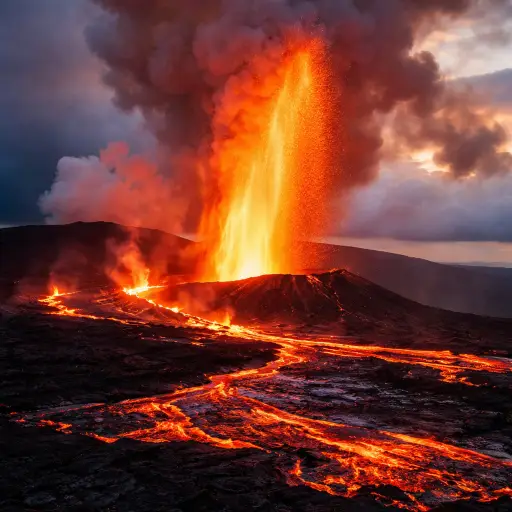
The Hawaiian volcano Kilauea has once again surged into a spectacular and volatile phase, sending towering fountains of molten lava high into the sky and reminding both scientists and residents of its relentless energy. The renewed activity, which intensified late in the week, marks one of the most dramatic episodes since the current eruptive cycle began.
According to the United States Geological Survey (USGS), lava fountains have reached heights not seen in this eruption so far, soaring hundreds of meters above the crater. The fiery jets, glowing intensely against the dark volcanic landscape, have created a striking visual display that can be seen from miles away. Alongside the main fountains, a smaller secondary vent has also emerged, producing its own steady stream of molten rock.
This latest outburst is part of an ongoing sequence of eruptive episodes that have characterized Kilauea’s behavior over recent months. Scientists monitoring the volcano have identified dozens of distinct pulses of activity, each separated by periods of relative calm. The current phase represents the latest in this series, and by many measures, one of the most energetic.
Kilauea, located on the Big Island of Hawaii, is widely regarded as one of the most active volcanoes on Earth. Its eruptions are typically less explosive than those seen in other parts of the world, but they can be remarkably persistent and visually dramatic. Instead of violent blasts, Kilauea often produces sustained lava flows and fountains, driven by a steady supply of magma rising from deep within the Earth.
The recent surge in activity has drawn close attention from volcanologists, who are keen to understand the mechanisms driving these repeated bursts. Preliminary observations suggest that pressure is building within the volcano’s magma system, leading to periodic releases of energy that manifest as powerful lava fountains. The appearance of a secondary vent may indicate changes in the underground pathways through which magma travels.
While the eruption has not posed an immediate threat to populated areas, authorities continue to monitor the situation closely. Lava flows remain largely confined within the boundaries of Hawaii Volcanoes National Park, a region that has long been shaped by Kilauea’s activity. However, officials emphasize that conditions can change rapidly, and ongoing surveillance is essential.
For local communities, the eruption is both a source of awe and a reminder of the island’s dynamic geology. The sight of glowing lava arcing through the air and rivers of molten rock carving new paths across the landscape is as mesmerizing as it is humbling. Tourism interest has also increased, with visitors drawn to witness the natural spectacle, though access remains carefully managed to ensure safety.
Scientists stress that eruptions like this provide valuable opportunities to study volcanic processes in real time. Instruments placed around the volcano are capturing data on seismic activity, gas emissions, and ground deformation, offering insights into how magma moves beneath the surface. These observations not only deepen understanding of Kilauea itself but also contribute to broader knowledge of volcanic behavior worldwide.
As the current episode unfolds, there is no clear indication of how long this heightened activity will continue. Kilauea is known for its unpredictability, capable of sustaining eruptions for extended periods or shifting patterns with little warning. What is certain, however, is that the volcano remains as active and compelling as ever.
For now, the fiery fountains continue to rise, illuminating the Hawaiian night and underscoring the immense natural forces at work beneath the island.