The avant-garde French house stages a strategic and symbolic showcase in China, signaling a new era of luxury expansion and cultural dialogue

In a move that underscores the shifting geography of global luxury, Maison Margiela has chosen Shanghai as the stage for a landmark international debut, aligning its experimental ethos with one of the world’s most dynamic consumer markets. The decision reflects not only a commercial calculation but also a deeper engagement with a region that continues to redefine the future of fashion.
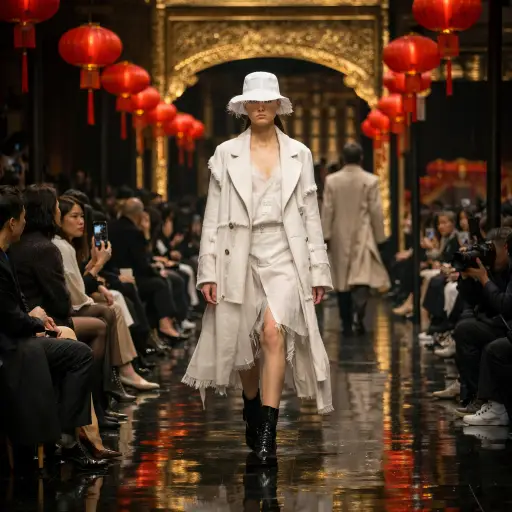
Set against a backdrop of opulence and cultural layering, the presentation unfolded with theatrical precision. Models navigated a runway that blended elements of traditional Chinese aesthetics with the brand’s signature deconstruction, creating a visual dialogue between heritage and modernity. It was not merely a show, but a statement: Margiela is not entering China quietly; it is arriving with intent.
Industry observers view the move as part of a broader recalibration among European luxury houses, many of which are intensifying their focus on Asia amid slowing growth in Western markets. China, in particular, remains a cornerstone of global luxury consumption, driven by a digitally savvy, culturally engaged, and increasingly discerning clientele. For Maison Margiela, whose identity has long been rooted in intellectualism and subversion, the challenge lies in translating its conceptual language without dilution.
The Shanghai debut suggests the brand is confident in that translation. Rather than simplifying its aesthetic, Margiela leaned further into its codes: anonymity, fragmentation, and reinterpretation. Signature elements—unfinished seams, oversized silhouettes, and reworked classics—were presented with a level of craftsmanship that resonated with local audiences attuned to both detail and narrative.
Retail strategy is expected to follow closely behind the spectacle. Sources within the industry point to an expanded footprint in key Chinese cities, alongside investments in digital platforms tailored to local ecosystems. The integration of e-commerce, social commerce, and immersive retail experiences is no longer optional in China; it is essential. Margiela’s approach appears to recognize this reality, positioning the brand not just as a product, but as an experience.
There is also a cultural dimension to the brand’s expansion. By staging such a high-profile debut in Shanghai, Maison Margiela is participating in an ongoing exchange between Western fashion traditions and Chinese cultural expression. This exchange is increasingly reciprocal. Chinese consumers are no longer passive recipients of global trends; they are active contributors, shaping aesthetics, narratives, and expectations.
The show itself reflected this shift. Subtle references to Chinese symbolism were interwoven with Margiela’s avant-garde language, avoiding overt appropriation while acknowledging the local context. The result was a collection that felt both global and specific, a balance that many brands struggle to achieve.
Behind the scenes, the move also signals confidence from Margiela’s parent group in the long-term resilience of the Chinese luxury market. Despite economic fluctuations and evolving consumer behavior, the country continues to offer scale and influence unmatched elsewhere. For brands willing to invest in understanding its complexities, the rewards remain significant.
Yet the stakes are equally high. Competition in China’s luxury sector is intense, with both established houses and emerging designers vying for attention. Success requires more than brand recognition; it demands relevance, agility, and authenticity. Maison Margiela’s Shanghai debut can be seen as a test of its ability to meet these demands while staying true to its identity.
As the final look disappeared from the runway, the message was clear. This was not a one-off event, but the beginning of a new chapter. By choosing Shanghai as the site of its global debut, Maison Margiela has aligned itself with a market that is not only crucial to its growth, but also central to the evolution of fashion itself.
In an industry defined by constant change, the brand’s eastward turn may prove to be one of its most consequential moves yet.