Closure of Key Middle Eastern shipping route forces Asian economies to pivot rapidly to American crude

As global energy markets reel from a sudden disruption in Middle Eastern oil flows, U.S. crude exports are experiencing a dramatic surge, positioning the United States as a critical stabilizing force in an increasingly volatile market.
The catalyst behind this sharp increase is the unexpected closure of the Strait of Hormuz, one of the world’s most vital maritime chokepoints for oil transportation. With a significant portion of global oil supply typically passing through this narrow corridor, the halt in shipments has sent shockwaves across international markets, forcing major importers—particularly in Asia—to urgently seek alternative sources.
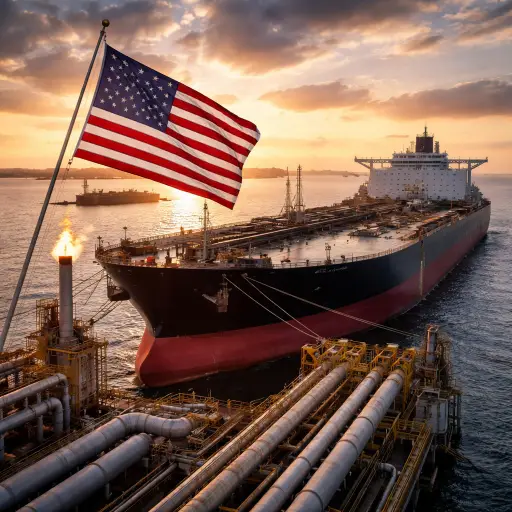
In response, American oil producers and exporters have stepped into the breach. Export terminals along the U.S. Gulf Coast are operating at near full capacity, with tankers departing at an accelerated pace to meet surging overseas demand. Industry analysts suggest that export volumes are now approaching historic highs, driven by both logistical readiness and the competitive pricing of U.S. crude.
Asian economies, heavily reliant on Middle Eastern oil, have been among the most affected by the disruption. Countries such as China, India, Japan, and South Korea are rapidly diversifying their supply chains, turning increasingly toward U.S. shale oil as a reliable substitute. The shift is not only a matter of necessity but also a reflection of evolving global energy dynamics, where flexibility and supply security have become paramount.
The United States, long striving for energy independence, is now leveraging its production capacity to play a more prominent role on the global stage. Advances in shale extraction technologies over the past decade have enabled the country to significantly boost output, transforming it from a net importer into a leading exporter. This structural change is now proving strategically advantageous in times of international crisis.
Market reactions have been swift. Global oil prices initially spiked following the closure of the Strait of Hormuz, reflecting fears of prolonged supply shortages. However, the rapid mobilization of U.S. exports has helped to temper some of the upward pressure, offering a partial buffer against more extreme price volatility. Still, uncertainty remains high, with traders closely monitoring geopolitical developments and shipping conditions.
Logistical challenges persist despite the surge in exports. Port congestion, limited tanker availability, and infrastructure constraints are testing the limits of the U.S. export system. Companies are scrambling to optimize operations, while policymakers are under increasing pressure to support capacity expansion and streamline regulatory processes.
Meanwhile, the geopolitical implications of the current situation are profound. The disruption in the Middle East underscores the vulnerability of global energy supply chains and highlights the strategic importance of alternative production hubs. For the United States, this moment represents both an economic opportunity and a diplomatic lever, as energy exports become an increasingly influential tool in international relations.
Environmental considerations are also re-entering the conversation. The ramp-up in fossil fuel production and transportation raises questions about long-term climate commitments, particularly as governments balance immediate energy security needs against broader sustainability goals. Critics argue that the current crisis could delay the transition to renewable energy, while others contend that it exposes the risks of overreliance on any single region or resource.
Looking ahead, the trajectory of U.S. oil exports will depend on several factors, including the duration of the Middle Eastern disruption, global demand trends, and domestic production capacity. If current conditions persist, the United States may solidify its role as a cornerstone of global energy stability, at least in the short to medium term.
For now, the surge in exports reflects a rapidly shifting landscape—one in which adaptability, infrastructure, and geopolitical positioning are reshaping the flow of one of the world’s most critical resources.