Estonia’s foreign minister urges urgent diplomacy as doubts grow over the durability of a U.S.–Iran ceasefire and the reopening of a critical global shipping artery

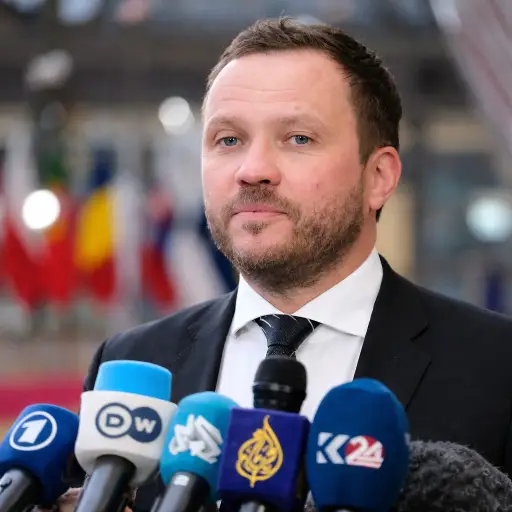
In a moment defined less by relief than by restraint, Margus Tsahkna has delivered a sober assessment of the fragile ceasefire between the United States and Iran. Speaking with measured clarity, he described himself as “not optimistic, but very realistic” about the likelihood that the temporary halt in hostilities will hold. His words capture a broader sentiment taking hold across European capitals: that the current pause in fighting is precarious, and that the window for diplomacy may be both narrow and decisive.
The ceasefire, agreed for a limited duration, has momentarily reduced tensions in a region that sits at the heart of global energy flows and geopolitical rivalries. Yet, as Tsahkna emphasized, the absence of immediate escalation should not be mistaken for stability. Instead, he urged policymakers to act swiftly, arguing that “all efforts must now focus on diplomacy” to prevent a return to confrontation and to address the deeper issues underlying the crisis.
Central to these concerns is the status of the Strait of Hormuz, one of the world’s most strategically vital maritime corridors. The waterway, through which a significant share of global oil shipments passes, has become both a symbol and a flashpoint in the current standoff. Its effective closure or disruption has already reverberated across energy markets, raising fears of supply shocks and renewed inflationary pressure in economies far beyond the Middle East.
For Tsahkna, reopening the Strait is not merely a logistical necessity but a diplomatic imperative. He framed the issue as a test of international coordination, calling for a concerted effort by allies and regional actors to ensure safe passage and restore confidence. “Without stability in that corridor,” he suggested, “the ripple effects will continue to spread—economically and politically.”
His remarks reflect Estonia’s increasingly vocal role within European foreign policy debates. Though small in size, the Baltic nation has positioned itself as a staunch advocate for rules-based international order and collective security. Tsahkna’s intervention underscores a consistent message: that uncertainty, if left unmanaged, can quickly evolve into crisis.
Across Europe, officials are weighing similar concerns. While there is cautious acknowledgment that the ceasefire offers a brief opportunity to de-escalate, there is little illusion about its durability. Diplomatic sources describe ongoing back-channel communications, but also note the persistence of mistrust between Washington and Tehran. In this context, Tsahkna’s realism resonates. It is a reminder that temporary arrangements, absent broader agreements, often struggle to withstand the pressures of competing interests and unresolved grievances.
Energy analysts, meanwhile, are closely monitoring developments in the Gulf. Even the perception of instability in the Strait of Hormuz has historically been enough to unsettle markets. The recent tensions have reinforced the vulnerability of global supply chains to regional conflicts. For importing nations, particularly in Europe and Asia, the stakes are immediate and tangible. Rising energy costs translate quickly into domestic economic strain, making the geopolitical dimension of the crisis inseparable from everyday concerns.
Yet Tsahkna’s emphasis on diplomacy suggests a belief that escalation is not inevitable. His call aligns with a wider push among European leaders to reassert diplomatic channels at a time when military signaling has dominated headlines. The challenge, however, lies in translating that aspiration into concrete progress. Negotiations will require not only technical agreements but also political will—a resource that remains uncertain on all sides.
There is also a broader strategic calculation at play. The ceasefire, however temporary, has created a pause in which narratives can shift. For some, it is an opportunity to reset engagement; for others, a moment to regroup. Tsahkna’s caution reflects an awareness of this duality. Realism, in his framing, is not pessimism but preparedness—a recognition that the coming days will be critical in determining whether the current calm can evolve into something more enduring.
As the situation unfolds, attention will remain fixed on both diplomatic corridors and maritime routes. The interplay between the two will likely define the trajectory of the crisis. A reopened Strait of Hormuz would signal not just logistical normalization but a measure of restored trust. Conversely, renewed disruption could quickly undo the fragile gains achieved by the ceasefire.
For now, the message from Tallinn is clear: the pause in fighting must not be squandered. In Tsahkna’s words, realism demands action—swift, coordinated, and sustained. The alternative, as many fear, is a return to instability with consequences that extend far beyond the immediate theater of conflict.
In an increasingly interconnected world, the stakes of this moment are shared. Whether the ceasefire holds or falters, the urgency of diplomacy remains constant. And as Tsahkna’s remarks suggest, the difference between a temporary reprieve and a lasting resolution may depend on what is done during this brief and uncertain calm.