Relentless downpours trigger flash floods and landslides, raising fears of prolonged disruption and escalating damage

Unusually intense and persistent rainfall has swept across New Zealand’s North Island, unleashing widespread flooding, infrastructure damage, and growing concern among emergency authorities. The capital, Wellington, has emerged as the epicenter of the crisis, where a state of emergency has been declared following a surge of flash floods and landslides that have disrupted daily life and threatened public safety.
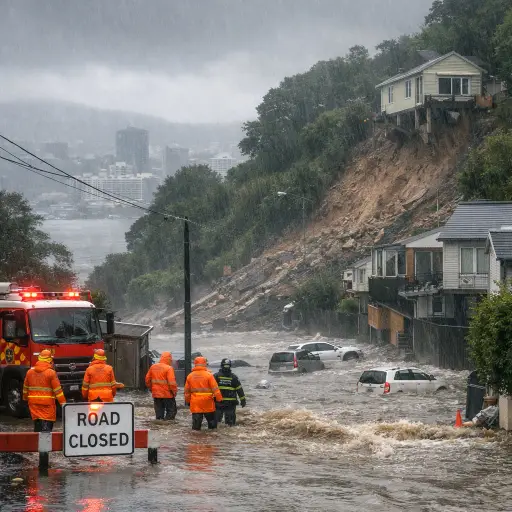
Emergency services have been stretched as heavy rain continues to pound the region, overwhelming drainage systems and swelling rivers beyond their capacity. Streets in several parts of Wellington have turned into fast-moving waterways, stranding vehicles and forcing residents to seek higher ground. Authorities have urged people to stay indoors and avoid unnecessary travel, warning that conditions remain volatile.
Officials say the situation developed rapidly, with rainfall intensifying over a short period and catching many communities off guard. In hillside neighborhoods, saturated soil has given way, triggering landslides that have damaged homes and blocked key transport routes. Crews are working around the clock to clear debris, but ongoing rain is complicating efforts and raising the risk of further collapses.
Transport networks have been severely affected. Rail services have faced disruptions, while several major roads in and around the capital have been partially or fully closed due to flooding or instability. Air travel has also experienced delays as weather conditions reduce visibility and create operational challenges. The cumulative effect has left Wellington increasingly isolated at a time when mobility is critical for emergency response.
Local authorities have opened temporary shelters for displaced residents, though officials stress that many people are choosing to remain in their homes where it is safe to do so. Emergency responders have conducted multiple rescues, particularly in low-lying areas where water levels rose quickly. There have been no immediate reports of widespread casualties, but officials caution that the full extent of the impact is still unfolding.
Meteorological services warn that the weather system responsible for the deluge shows little sign of easing in the immediate term. Forecasts indicate continued rainfall in the coming days, heightening concerns that already saturated ground will be unable to absorb additional water. This raises the likelihood of further flooding and landslides, particularly in vulnerable regions.
The unfolding crisis has reignited discussions about infrastructure resilience and climate preparedness. Experts note that while New Zealand is no stranger to severe weather, the intensity and frequency of such events appear to be increasing. Urban drainage systems, many of which were designed for less extreme conditions, are struggling to cope with the volume of water.
Government officials have emphasized that resources are being mobilized nationwide to support affected areas. Coordination between local councils, emergency services, and national agencies has intensified, with a focus on safeguarding lives and restoring critical services as quickly as possible. Assistance packages are expected to be announced for those impacted by property damage and displacement.
Residents have described a tense and uncertain atmosphere as the rain continues. Many are closely monitoring updates, preparing emergency kits, and checking on neighbors, particularly the elderly and those living alone. Community response has been swift, with volunteers stepping in to provide support where official services are stretched.
As Wellington and surrounding regions brace for more rain, authorities are urging vigilance. The coming days are likely to be decisive in determining the scale of the disaster. For now, the focus remains on immediate safety, with longer-term recovery efforts expected to follow once conditions stabilize.
The situation remains fluid, and officials warn that complacency could prove dangerous. With the ground already saturated and waterways under pressure, even moderate additional rainfall could trigger new emergencies. For residents of New Zealand’s North Island, the message is clear: the worst may not yet be over.