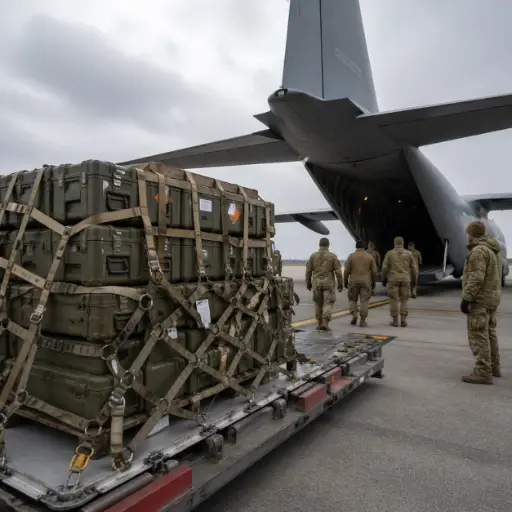
A sudden pause in American military shipments to Estonia has introduced fresh uncertainty into the Baltic region’s security landscape, raising questions about the durability of defense commitments and the shifting priorities of Washington’s global strategy.

In an interview with Estonian public broadcaster ERR, Defense Minister Hanno Pevkur confirmed that the United States has stopped sending weapons to the country. According to Pevkur, the decision emerged from direct discussions with his American counterpart, Pete Hegseth, who indicated that deliveries would remain suspended at least until the conclusion of the ongoing war involving Iran. The timeline remains uncertain, and Estonian officials are now quietly weighing alternative options.
The announcement arrives at a sensitive moment for Estonia, a NATO member that has long relied on close military cooperation with the United States as a cornerstone of its national defense. Situated on NATO’s eastern flank, Estonia has invested heavily in strengthening its armed forces in recent years, motivated by regional instability and the broader security climate in Europe.
While Pevkur did not suggest a breakdown in relations, his remarks reflect a pragmatic shift in tone. Tallinn, he implied, cannot afford to depend exclusively on one supplier if geopolitical circumstances begin to redirect resources elsewhere. Should the suspension extend beyond expectations, Estonia may seek to diversify its procurement channels, potentially looking to European partners or other allied producers.
In Washington, the move appears tied to a reallocation of military resources amid intensifying global commitments. The conflict involving Iran has placed new demands on U.S. defense logistics, forcing policymakers to prioritize theaters deemed more immediately critical. Though officials have not publicly framed the decision as a long-term policy change, the pause underscores the limits of even the most robust alliances when confronted with simultaneous crises.
Security analysts note that the implications extend beyond Estonia. For smaller NATO members, the episode serves as a reminder of the importance of strategic autonomy and the risks inherent in supply dependency. While NATO’s collective defense framework remains intact, individual nations are increasingly encouraged to build resilient, diversified defense capabilities.
At the same time, European defense cooperation may gain renewed urgency. Discussions around joint procurement, shared stockpiles, and expanded industrial capacity have been ongoing within the European Union, but progress has often been incremental. Developments such as this could accelerate efforts to reduce reliance on external suppliers and strengthen regional self-sufficiency.
For Estonia, the immediate impact is likely manageable. The country maintains existing stockpiles and continues to participate actively in NATO operations and exercises. However, the longer-term consequences will depend on how quickly the United States resumes deliveries and whether the broader geopolitical situation stabilizes.
Diplomatic channels between Tallinn and Washington remain open, and both sides have signaled a commitment to ongoing dialogue. Yet the episode introduces a degree of strategic recalibration. Estonia’s leadership now faces the delicate task of balancing alliance loyalty with practical considerations about national defense readiness.
As global tensions reshape military priorities, the pause in U.S. arms deliveries may prove to be less an isolated decision and more a reflection of a changing security environment—one in which even close allies must adapt to new realities.