Ukraine Strikes Deep Into Russian Missile Infrastructure as the War Enters a New Strategic Phase

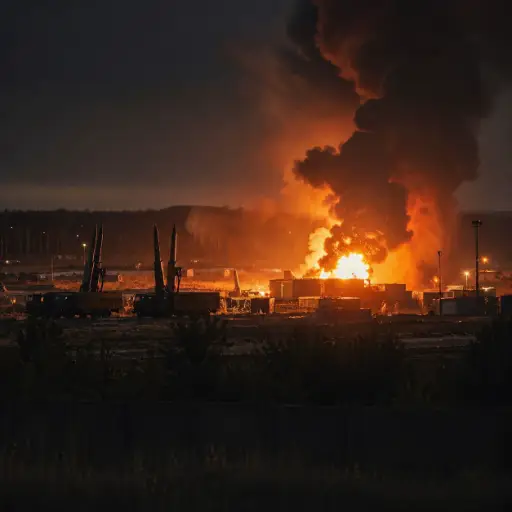
In one of the most significant operations carried out in recent weeks, Ukrainian forces announced that they had struck a Russian military base linked to Iskander missile systems on occupied Crimea during the night leading into Wednesday. According to the Ukrainian army, the target was a missile deployment and logistics site near the village of Ovrazhki, situated east of Simferopol, in territory controlled by Russian forces since the annexation of Crimea.
The attack reflects Kyiv’s continued effort to weaken Russia’s long-range strike capabilities far behind the front lines. Ukrainian military officials stated that the operation focused specifically on infrastructure used to prepare and launch Iskander ballistic missiles, weapons that have repeatedly been employed in attacks on Ukrainian cities, energy networks and military positions throughout the conflict.
While independent verification remains difficult because of restricted access to the occupied peninsula, several Russian military bloggers and local social media channels reported explosions and emergency activity in the surrounding area during the night. Images circulating online appeared to show smoke rising above military facilities after dawn, although Russian authorities offered only limited public comment in the immediate aftermath.
The Iskander system has become one of Moscow’s most important tactical assets during the war. Designed for precision strikes at medium range, the missile platform is capable of carrying both conventional and potentially nuclear payloads. Since the beginning of the invasion, Ukrainian officials have frequently accused Russia of using Iskander missiles against civilian infrastructure, especially during large-scale bombardments aimed at destabilizing the country’s power grid and urban centers.
For Ukraine, attacks against missile infrastructure inside Crimea serve both military and symbolic purposes. Strategically, degrading launch capacity can reduce pressure on Ukrainian air defenses and complicate Russian logistics. Politically, every successful strike on the peninsula reinforces Kyiv’s position that Crimea remains Ukrainian territory despite years of Russian occupation and military fortification.
Military analysts say the operation also demonstrates the growing reach of Ukrainian strike capabilities. Over the past year, Kyiv has increasingly relied on domestically developed drones, modified missiles and coordinated intelligence operations to hit targets once considered safely beyond the battlefield. Air bases, naval facilities, fuel depots and radar installations across Crimea have repeatedly come under attack, forcing Russia to redeploy air defense systems and disperse key military assets.
The latest strike comes at a moment of heightened pressure across multiple sectors of the war. Russian forces continue offensive operations in eastern Ukraine, while Kyiv seeks to maintain international support amid prolonged fighting and uncertainty over future military aid packages from Western allies. At the same time, Ukrainian commanders are attempting to demonstrate that they retain the initiative in areas beyond the static front lines.
Crimea has become increasingly central to that strategy. Since the start of the full-scale invasion, the peninsula has evolved into a major logistical hub for Russian military operations in southern Ukraine. Ports, airfields and missile bases located there support troop movements, supply routes and long-range attacks. By targeting these facilities, Ukraine aims to undermine Russia’s operational depth and challenge its control over the Black Sea region.
Residents in parts of Crimea have reported more frequent air raid alerts and military activity in recent months, underscoring growing insecurity on territory Moscow once portrayed as untouchable. Although Russian authorities insist that defenses on the peninsula remain effective, repeated Ukrainian strikes have exposed vulnerabilities in installations that are crucial to the Kremlin’s military posture.
The psychological impact of these operations may also be significant. Russian military infrastructure in Crimea carries immense symbolic value for President Vladimir Putin, who has repeatedly described the peninsula as inseparable from Russia. Successful Ukrainian attacks there risk undermining the image of stability and control projected by the Kremlin to domestic audiences.
At the same time, the escalation of strikes deep into occupied territory raises concerns about the future trajectory of the conflict. Western governments have generally supported Ukraine’s right to target military objectives connected to Russian operations, but they remain cautious about actions that could trigger broader escalation. Moscow has repeatedly warned that attacks on Crimea cross what it describes as a strategic red line, even though Kyiv and most of the international community continue to regard the peninsula as occupied Ukrainian territory.
As the war moves further into another year of attrition, both sides appear increasingly focused on weakening each other’s logistical and technological advantages rather than relying solely on territorial advances. Precision strikes, drone warfare and attacks on infrastructure have become defining elements of the conflict, transforming Crimea into one of its most contested strategic arenas.
Whether the latest operation significantly damages Russia’s missile capabilities may become clearer only in the coming days. Yet the message behind the strike was unmistakable: Ukraine intends to continue challenging Russian military dominance far beyond the conventional battlefield, including in territories Moscow considers firmly under its control.