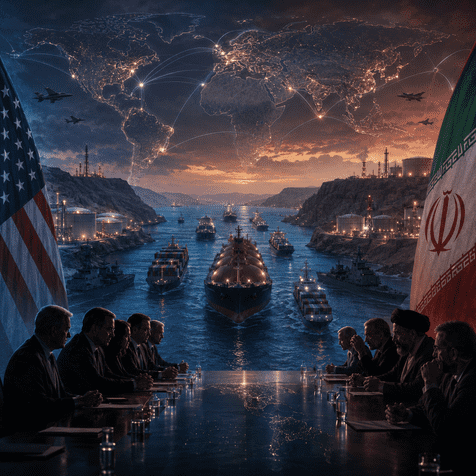
A fragile ceasefire is being tested by renewed clashes near the Strait of Hormuz, raising fears for energy markets and regional stability

Efforts to end the conflict between the United States and Iran have stalled, even as regional mediators attempt to preserve a fragile ceasefire and prevent another escalation around the Strait of Hormuz.
Washington is still waiting for Tehran’s response to a U.S. proposal that would formally end hostilities and open the way to broader negotiations on more contentious issues, including Iran’s nuclear program and regional military activity. U.S. Secretary of State Marco Rubio said American officials had expected a response within hours, but no clear movement from Iran had emerged by the following day.
The diplomatic delay comes after renewed clashes in and around the Gulf, where recent days have seen some of the most serious flare-ups since the ceasefire began. Iran has accused the United States of violating the truce, while Washington says its forces acted in self-defense. The confrontation has placed new pressure on Qatar, Pakistan and other regional actors trying to keep talks alive.
At the center of the crisis is the Strait of Hormuz, one of the world’s most important energy corridors. Before the war, roughly one-fifth of global oil supply passed through the narrow waterway. Any sustained disruption would immediately affect shipping, insurance costs, oil prices and inflation expectations across major economies.
A Qatari liquefied natural gas tanker has reportedly been allowed to move toward the strait in what officials see as a confidence-building gesture involving Qatar and Pakistan. The move is modest, but symbolically important: it suggests that regional states are trying to create small openings for de-escalation even while Washington and Tehran remain far apart.
The risk is that diplomacy becomes trapped between military pressure and political mistrust. The United States has maintained pressure through sanctions and maritime operations, while Iran continues to warn that attacks on its commercial vessels or oil tankers would provoke retaliation against U.S. bases and ships.
For the wider world, the conflict is no longer only a Middle Eastern security crisis. It is a global economic concern. Energy markets, shipping routes and diplomatic alignments are all being reshaped by the uncertainty in the Gulf. European governments are preparing naval options to secure commercial navigation after hostilities cease, while Gulf states are trying to avoid being drawn further into the conflict.
The coming days may determine whether the current ceasefire can be transformed into a real diplomatic process or whether it becomes another short pause in a widening confrontation. For now, the most important question is not whether both sides want to avoid a larger war. It is whether either side is willing to make the first political move needed to end one.