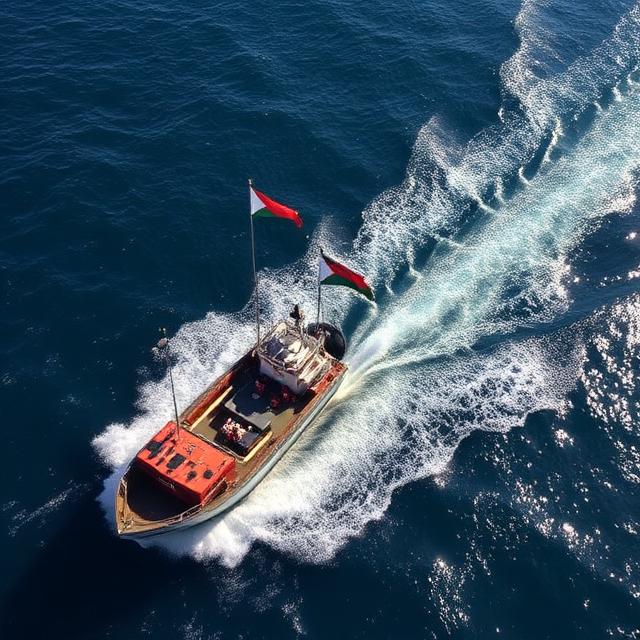
While Israel and the flotilla trade accusations, the release of six Australians in Greece highlights a growing, dangerous stalemate on the high seas.

The news coming out of the Mediterranean this week isn’t just a story about a boat trip gone wrong; it’s a stark illustration of how deeply polarized the Gaza crisis has become, even thousands of miles from the conflict zone. The interception of the Global Sumud Flotilla and the subsequent detention of 175 activists—including six Australians now being released in Crete—feels less like a maritime incident and more like a symptom of a global diplomatic breakdown.
The Clash of Narratives
What stands out most is how completely the two sides are living in different realities.
On one side, you have the Israeli government, which frames the blockade as a lawful security necessity. Foreign Minister Gideon Sa’ar’s statement that the operation was a success and that all participants were taken off “unharmed” is a standard diplomatic defense. It’s a narrative of order versus chaos, where the navy is simply enforcing the rules of the road.
On the other side, the flotilla organizers and participants describe piracy and kidnapping. The allegations that engines were smashed and communications jammed in international waters are grave. If true, these aren’t just tactical moves to stop a boat; they are acts of destruction that turn a humanitarian mission into a potential tragedy. Anny Mokotow’s report of a search-and-rescue operation for stranded boats adds a layer of urgency that goes beyond political posturing.
The Human Cost of Symbolism
The story of the six Australians—Zack Schofield, Ethan Floyd, and their companions—humanizes the statistics. When Peter Schofield speaks of his son being surrounded by boats, it strips away the abstract debate about “blockades” and “aid” and leaves you with a father’s fear.
It’s easy for governments to say, “Don’t go, it’s too dangerous.” And technically, they are right. The DFAT warnings are clear for a reason. But for activists like Schofield and Floyd, safety isn’t the priority; impact is. They are betting their freedom, and potentially their lives, on the idea that the symbolic power of a boatload of volunteers can force the world to look at Gaza in a way that aid trucks and UN resolutions haven’t.
A Recurring Cycle
What’s particularly striking is the déjà vu. This isn’t the first time Australians have been detained by the IDF over Gaza; seven were caught in October 2025. The fact that the same pattern is repeating suggests that neither side is learning.
Israel continues to enforce the blockade with the same firmness. Activists continue to test the limits of that blockade with the same resolve. Governments continue to issue warnings that seem to carry little weight against the moral imperative felt by the participants.
The release of the six Australians in Greece is a small victory for diplomacy, but it doesn’t solve the underlying problem. The flotilla didn’t stop; more than 40 ships are still attempting to reach Gaza. The blockade remains. The humanitarian crisis in Gaza, which prompted this journey in the first place, continues.
This event forces us to ask a difficult question: When standard diplomatic channels fail to deliver aid or change policy, is the only remaining language civil disobedience? And if so, how long before the cost of that disobedience becomes too high for anyone to ignore?
The world is watching Crete, but the real story is happening in the gap between what governments say they are doing and what people on the ground feel they must do to make a difference.