Breakthrough Soil Microbial Technology Offers Sustainable Alternative for IoT Sensors

In a significant leap for sustainable energy, researchers at Northwestern University have developed a novel fuel cell that generates electricity from microbes naturally present in soil. This innovation, detailed in the Proceedings of the Association for Computing Machinery on Interactive, Mobile, Wearable and Ubiquitous Technologies, presents a promising, maintenance-free power source for the growing network of underground sensors used in precision agriculture and environmental monitoring.
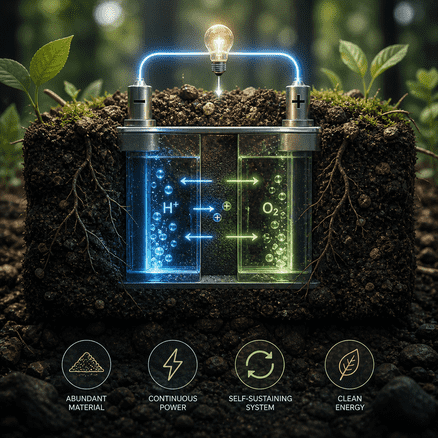
The device, roughly the size of a paperback book, operates by harnessing the energy released as soil bacteria break down organic matter. Unlike traditional batteries that deplete and require replacement, or solar panels that fail when covered in dirt, this “dirt-powered” cell can theoretically function indefinitely as long as organic carbon is available in the soil.
“This could pave the way for sustainable, low-maintenance sensors,” said Bill Yen, a Northwestern alumnus who led the research. “If we imagine a future with trillions of [Internet of Things] devices, we cannot build every one of them out of lithium and heavy metals… We need alternatives.”
A key challenge for previous microbial fuel cells (MFCs), a concept dating back to 1911, has been their unreliable performance, particularly in dry conditions where maintaining both moisture and oxygen is difficult. The Northwestern team overcame this with a two-year design process that culminated in a breakthrough: a perpendicular electrode structure.
The new design features a horizontal anode made of carbon felt, buried beneath the soil to collect electrons from microbes, and a vertical cathode that extends to the surface, ensuring a constant supply of oxygen. A 3D-printed cap protects the device while allowing airflow, and a waterproof coating ensures it remains functional even when flooded.
The results are compelling. In real-world tests, the prototype generated, on average, 68 times more power than required to run its sensors—which monitor soil moisture and can detect touch, potentially tracking wildlife movement. It also outperformed similar technologies by lasting 120% longer across a wide range of conditions, from dry soil to complete submersion.
The system uses a low-energy wireless antenna that reflects existing radio signals to transmit data, further minimizing its power needs. Critically, the researchers have released all their designs and simulation tools publicly, aiming to foster innovation and create fully biodegradable versions that avoid complex supply chains and conflict minerals.
While not intended to power homes or cities, this technology offers a clean, practical solution for the billions of low-power sensors that will underpin future smart farms and environmental networks.