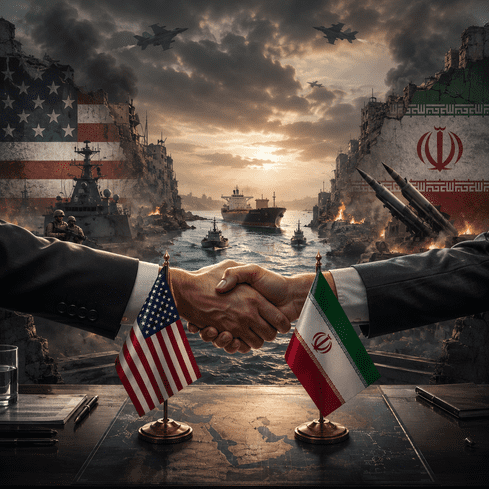
Diplomatic negotiations between Washington and Tehran are gaining momentum, but renewed violence in the Gulf and mounting regional tensions continue to threaten a broader Middle East escalation.

A fragile diplomatic opening emerged this week in the escalating conflict involving Iran, the United States, and regional powers, as negotiators reportedly moved closer to a preliminary framework aimed at ending months of military confrontation in the Persian Gulf.
According to multiple reports, U.S. and Iranian officials are discussing a provisional memorandum that could establish the basis for a broader peace agreement and renewed nuclear negotiations. The proposed framework reportedly includes temporary restrictions on Iran’s uranium enrichment activities, a gradual easing of sanctions, and steps toward restoring commercial transit through the Strait of Hormuz — one of the world’s most strategically important energy corridors.
The talks come after weeks of escalating military pressure across the Gulf region. Although officials in Washington insist the ceasefire technically remains in place, both sides have continued limited military operations, fueling fears that the conflict could rapidly spiral back into full-scale war. Iranian missile launches near the United Arab Emirates, U.S. naval operations in the Gulf, and continued disputes over maritime access have kept regional tensions at critical levels.
At the center of the crisis remains the Strait of Hormuz, the narrow maritime passage through which a significant share of the world’s oil and liquefied natural gas exports travel. Iran’s restrictions on shipping traffic and the U.S.-led effort to secure commercial transit have disrupted global energy markets, sending fuel prices sharply higher and intensifying concerns over international supply chains.
President Donald Trump announced a temporary pause to “Project Freedom,” the American naval operation designed to escort vessels through the Strait, arguing that diplomacy should be given an opportunity to succeed. The move was widely interpreted as an attempt to create political space for negotiations while avoiding further military escalation.
Despite the renewed diplomatic activity, major obstacles remain. Iranian officials have reportedly criticized portions of the U.S. proposal as unrealistic, while hardline factions inside Iran continue to oppose concessions related to nuclear restrictions and regional military influence. Analysts also warn that continued clashes involving Hezbollah, Israel, and Gulf states could undermine negotiations at any moment.
International actors including China, Pakistan, and several European governments are now increasingly involved in mediation efforts, reflecting growing concern that a prolonged conflict could destabilize the global economy and trigger wider regional violence. Oil markets remain volatile, while shipping companies and insurers continue to monitor the Gulf situation closely.
For now, diplomacy and military pressure are unfolding simultaneously — a dangerous balance that has defined much of the crisis. While negotiators appear closer than before to a temporary settlement, the situation across the Gulf remains highly unstable, with even a limited military incident capable of derailing fragile progress toward peace.