CATL and BYD are turning ultra-fast charging into the next battleground for global electric mobility

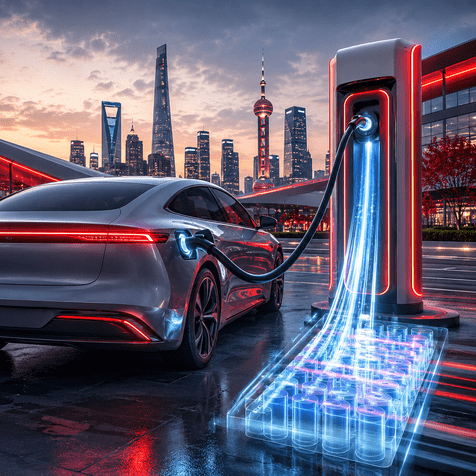
China’s electric-vehicle industry is moving beyond the question of range and into a new technological contest: how quickly an EV can be recharged. At the 2026 Beijing Auto Show, the country’s leading battery and carmakers placed ultra-fast charging at the center of their strategy, signaling that China’s next competitive advantage may come not only from cheaper EVs, but from making electric refueling feel almost as fast as gasoline.
The most closely watched announcements came from CATL and BYD, two companies that already sit at the heart of the global EV supply chain. CATL’s latest Shenxing battery technology has been reported as capable of charging from 10% to 98% in roughly six and a half minutes, while BYD has said its second-generation batteries can charge from 20% to 97% in under 12 minutes, even in temperatures as low as minus 20 degrees Celsius. BYD also claims a driving range of 777 kilometers, or 483 miles, from the new system.
The implications are significant. For years, charging time has remained one of the biggest psychological barriers preventing drivers from switching to electric vehicles. A battery that can recover most of its charge in under 10 minutes would narrow one of the last practical gaps between EVs and combustion-engine cars. That would be especially important in markets where home charging is limited, highway travel is common, or consumers remain skeptical about EV convenience.
BYD is pairing its battery advances with an aggressive infrastructure plan. The company says it intends to build around 20,000 flash-charging stations in China and 6,000 overseas over the next 12 months, a move that could transform fast charging from a laboratory achievement into a real-world commercial advantage.
The broader picture is that Chinese EV technology is becoming increasingly integrated. Automakers, battery suppliers, chip companies and charging-network operators are developing vehicles as complete technology ecosystems rather than isolated products. At Beijing’s auto show, industry observers noted that the strongest attention was no longer reserved only for car design, but for batteries, chips, charging systems and intelligent-driving platforms.
This shift also raises the stakes for foreign competitors. European, Japanese and American automakers are already under pressure from China’s cost advantage. If Chinese brands can also offer faster charging, longer range and more advanced software-defined vehicle platforms, the challenge becomes technological as well as economic.
Still, ultra-fast charging will face practical tests. High-power charging requires expensive infrastructure, grid capacity, thermal management and battery durability over thousands of cycles. The headline numbers are impressive, but mass adoption will depend on whether these systems can perform consistently, safely and affordably outside controlled demonstrations.
Even with those caveats, the direction is clear. China’s EV sector is no longer competing only on price. It is increasingly competing on the speed, intelligence and convenience of the entire electric-driving experience. If CATL, BYD and their rivals can deliver these systems at scale, the global EV market may soon be defined by a new benchmark: not how far a car can go, but how little time it needs to get back on the road.