A deadly Ukrainian strike on Ryazan followed Russia’s heaviest aerial assault of the war, underscoring a widening campaign against cities, energy infrastructure and civilian resilience.

Ukraine and Russia entered a new and more volatile phase of their air war on Friday, May 15, as Ukrainian drones struck deep inside Russian territory while Kyiv continued to count the dead from one of Moscow’s most intense bombardments since the full-scale invasion began.
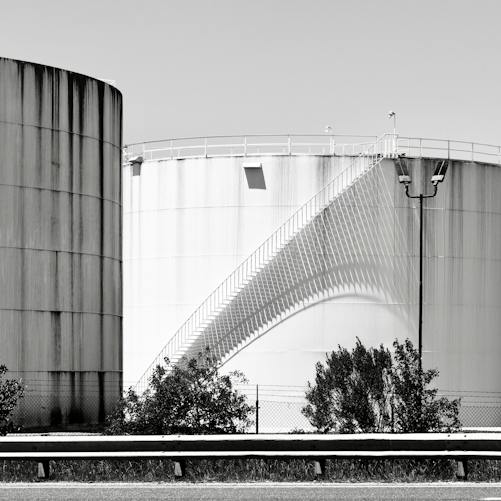
Russian regional authorities said a Ukrainian drone attack on the city of Ryazan killed four people, including a child, and injured 12 others. The strike damaged two high-rise apartment buildings and hit an industrial site, according to the regional governor. Ukraine did not immediately issue an official statement, but the commander of Ukraine’s drone forces indicated that a large oil refinery in Ryazan had also been hit.
The attack came after Russia launched what Ukrainian officials described as a massive wave of missiles and drones across Ukraine. Kyiv suffered some of the worst damage, with a missile strike on a nine-story apartment building killing 24 people, including three teenagers, according to Ukrainian President Volodymyr Zelenskyy. The assault wounded dozens more and damaged around 180 sites across the country.
The scale of the latest Russian barrage points to a deliberate effort to overwhelm Ukraine’s air defenses. Ukrainian officials reported more than 1,560 drone attacks since Wednesday, while Russia said it had downed hundreds of Ukrainian drones overnight. The exchange marks an intensification of a war increasingly fought through long-range strikes, where both sides are targeting infrastructure far beyond the immediate battlefield.
For Ukraine, strikes on Russian refineries and industrial sites are part of a campaign to weaken Moscow’s war economy. Ryazan, located southeast of Moscow and hundreds of kilometers from the Ukrainian border, has been targeted before because of its energy infrastructure. Such attacks are intended to disrupt fuel supplies, pressure Russian logistics and show that the Kremlin cannot fully shield its own territory from the consequences of the war.
For Russia, the latest strikes on Kyiv and other Ukrainian cities appear designed to punish civilians, damage infrastructure and test Ukraine’s air-defense network. Ukrainian officials said some Russian attacks used “double-tap” tactics, in which a second strike follows the first in an effort to hit rescuers and emergency workers.
The timing is politically significant. The escalation came shortly after public claims from Washington and Moscow that peace could be approaching, but the violence on the ground suggests the opposite. Zelenskyy has argued that Russia is not preparing to end the war, while the Kremlin has continued to combine diplomatic messaging with large-scale military pressure.
The latest prisoner exchange offered a rare humanitarian development amid the violence. Ukraine and Russia each released 205 prisoners of war in the first stage of a planned 1,000-for-1,000 swap, with mediation support from the United Arab Emirates. Yet the exchange did little to change the broader picture: the war is becoming more technologically intense, more geographically dispersed and more punishing for civilians.
The immediate risk is further retaliation. Ukraine is likely to continue striking Russian energy and military infrastructure, while Russia may respond with more mass missile and drone attacks against Ukrainian cities. The result is a dangerous cycle in which the front line is no longer only in eastern and southern Ukraine, but also in apartment blocks, oil refineries, air-defense batteries and power networks hundreds of kilometers away.