With oil prices rising and global supply chains under pressure, New Delhi is turning to European partners to reinforce trade, investment and strategic ties.

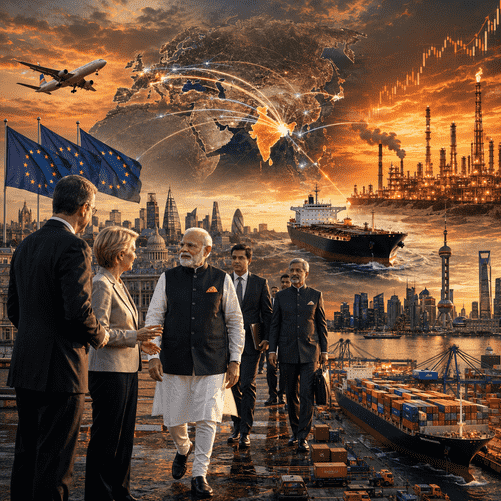
Indian Prime Minister Narendra Modi has begun a five-nation diplomatic tour spanning the United Arab Emirates, the Netherlands, Sweden, Norway and Italy, placing Europe and Asia at the center of India’s response to a worsening global energy and trade environment. The trip comes as the Middle East crisis pushes oil prices higher, strains India’s currency and raises new concerns over the resilience of global supply routes.
For India, the journey is both economic and strategic. As one of Asia’s largest energy importers, New Delhi is vulnerable to disruptions in Gulf oil flows and higher shipping costs. The pressure has already contributed to market volatility and renewed concern over India’s foreign currency reserves, making energy security a central theme of Modi’s meetings in the Gulf and Europe.
The European leg of the tour is equally significant. India is seeking to strengthen trade and investment links with key European economies at a time when Brussels is also reassessing its economic security strategy. EU trade ministers are set to review the impact of the Middle East conflict on trade and discuss broader economic security concerns later this month, showing how closely European policy is now tied to instability in Asia and the Gulf.
The visit also follows renewed momentum in Europe–Asia engagement. The EU and ASEAN recently reaffirmed their commitment to a rules-based trading system and agreed to intensify trade and investment cooperation, reflecting a broader effort by Europe to deepen partnerships across Asia as global supply chains face geopolitical pressure.
For Europe, India represents a critical partner: a fast-growing market, a manufacturing alternative to China and a diplomatic bridge to the Global South. For India, Europe offers investment, technology, defense cooperation and a way to diversify economic partnerships during a period of energy insecurity.
The tour highlights a larger shift in international relations. Europe and Asia are no longer connected only through trade routes and supply chains; they are increasingly linked by shared exposure to energy shocks, maritime risk and geopolitical instability. As oil prices rise and shipping routes come under pressure, diplomacy between New Delhi and European capitals is becoming part of a broader attempt to stabilize the global economy.
Modi’s trip may not produce immediate breakthroughs, but its timing is revealing. In a world where energy security, trade resilience and political alignment are increasingly inseparable, India is moving to reinforce its position between Asia’s growth engines and Europe’s industrial powers.