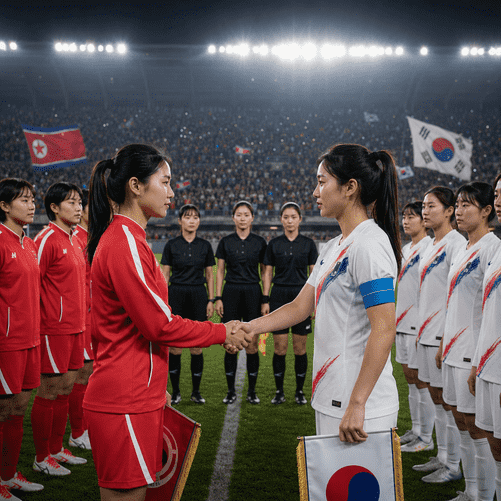
The Asian Women’s Champions League semifinal has become a symbolic moment of contact between the two Koreas after years of frozen relations.

SEOUL — A North Korean women’s football club has arrived in South Korea for a regional tournament, marking the first visit by North Korean athletes to the South in eight years and turning an Asian club match into a rare moment of inter-Korean contact.
Naegohyang FC landed at Incheon International Airport with a 39-member delegation, including 27 players and 12 staff, ahead of its Asian Women’s Champions League semifinal against South Korea’s Suwon FC Women in Suwon on Wednesday. The visit was approved under South Korea’s inter-Korean exchange laws and supported by Seoul’s Unification Ministry.
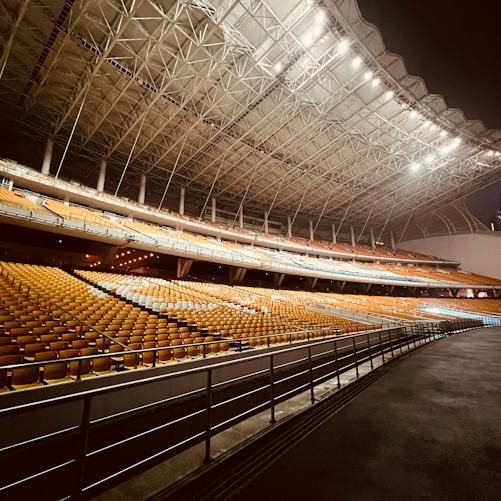
The match has attracted unusual attention far beyond football. All 7,087 tickets sold out quickly, reflecting public curiosity around a sporting encounter between teams from two countries whose political relations remain deeply strained. South Korean civic groups are also organizing a large cheering effort intended to support both sides, though officials and analysts have cautioned against reading the visit as a diplomatic breakthrough.
The symbolism is powerful because inter-Korean sports exchanges have often carried political meaning. The last major period of sports diplomacy came in 2018, when North Korea participated in the Pyeongchang Winter Olympics during a brief thaw in relations. Since then, ties have deteriorated sharply, especially after the collapse of U.S.–North Korea denuclearization talks in 2019.
North Korea has also hardened its political language toward the South, with Pyongyang increasingly treating Seoul as a hostile separate state rather than a counterpart for eventual reconciliation. That makes even a limited sporting visit notable, particularly at a time when official diplomatic channels remain largely frozen.
On the field, the North Korean side is expected to be competitive. North Korea has a strong tradition in women’s football, especially at youth level, and its club team’s appearance in the regional semifinal reinforces the country’s continued strength in the women’s game despite its isolation. The winner of the Suwon match will face either Melbourne City or Tokyo Verdy in Saturday’s final.
For South Korea, the event offers a careful balancing act: allowing a rare people-to-people exchange while avoiding the appearance of a wider political concession. For North Korea, the visit provides international sporting exposure without requiring broader diplomatic engagement.
The match may not change the political reality on the peninsula. But in a period defined by military tension, hostile rhetoric and diplomatic silence, the arrival of a North Korean team in the South is a reminder that sport remains one of the few spaces where contact is still possible.