The French fashion house is betting on renewed demand, creative momentum and private-client retail as the global luxury market searches for its next growth engine.

PARIS — Chanel is preparing to expand its retail presence in China, offering one of the clearest signs yet that major luxury houses believe the Chinese market is beginning to recover after a prolonged slowdown.
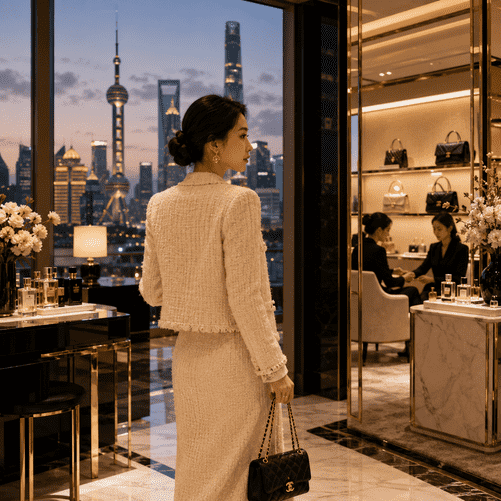
The French fashion house plans to reopen a boutique in Shanghai, add five beauty stores and launch a second private salon in the city, according to recent reporting. The move comes as Chanel benefits from renewed attention around creative director Matthieu Blazy, whose early collections have generated strong demand and brought new energy to one of the world’s most closely watched luxury brands.
Chanel reported $19.3 billion in revenue for 2025, a 2% increase after a decline the previous year, while operating profit rose 5% to $4.7 billion. The rebound was especially notable in the United States, where sales rose 7.2%, while Europe posted modest growth and Asia-Pacific remained more uneven.
The renewed momentum has been linked in part to Blazy’s reinterpretation of Chanel classics, including softer leather bags and brighter tweed pieces that have attracted both loyal clients and first-time buyers. Demand for some items has reportedly outpaced supply, creating the kind of scarcity that luxury brands often use to reinforce desirability.
China remains central to the strategy. Chanel currently operates far fewer boutiques in China than some of its rivals, leaving room for selective expansion. The brand’s decision to invest in Shanghai reflects a broader belief that the country’s high-end consumer base is not disappearing, but becoming more selective, more experience-driven and more focused on brands with strong identity.
The wider luxury sector is still under pressure. Bain has forecast that China’s luxury market could rebound in 2026 after a difficult period, but performance has varied sharply by category: beauty has shown stronger resilience, while fashion, leather goods and watches have faced weaker demand.
For Chanel, the answer appears to be controlled expansion rather than mass growth. Private salons, beauty stores and carefully positioned boutiques allow the brand to deepen relationships with top clients while maintaining exclusivity. The company also continues to invest heavily in vertical integration, spending hundreds of millions of dollars to protect craftsmanship, production control and long-term margins.
The strategy reflects a larger shift in luxury: the market is moving away from easy post-pandemic growth and toward a more competitive era defined by creativity, clienteling and brand discipline. In that environment, Chanel’s China push is not simply a retail expansion — it is a test of whether heritage luxury can still generate desire in a more cautious global market.