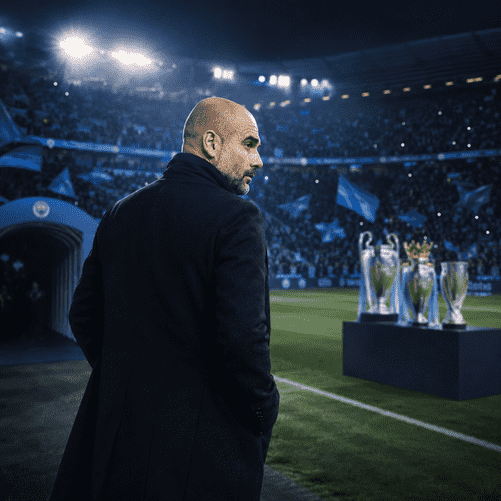
The Spanish manager will leave at the end of the season, closing a decade that reshaped English football and set a new standard for elite coaching

Pep Guardiola will leave Manchester City at the end of the season, bringing one of modern football’s most influential managerial reigns to a close after a decade in charge. The announcement, made on Friday, immediately sent shockwaves through European football, as City prepares for the end of an era defined by tactical dominance, relentless consistency and extraordinary domestic success.
Guardiola’s departure comes after years in which Manchester City became the reference point for modern club football. Under his leadership, the team transformed into a machine built on possession, positional discipline, aggressive pressing and technical control. His influence extended far beyond the Premier League, shaping how clubs across Europe think about recruitment, youth development and tactical identity.
The decision also raises major questions about City’s future. Replacing Guardiola will not simply mean hiring another elite coach; it will require finding a manager capable of maintaining a football ecosystem built around his ideas. The club’s next appointment will be one of the most important decisions in its modern history.
Reuters reported that Guardiola said fading energy played a role in his decision, describing the end as something he sensed after a decade of intense pressure and sustained success. His comments suggest that the emotional and mental demands of managing at the top level were central to the timing of his exit.
The announcement also comes at a delicate moment for English football. The Premier League remains the world’s most powerful domestic competition, but City’s dominance under Guardiola has been one of its defining storylines. His departure could reopen the competitive landscape for rivals such as Arsenal, Liverpool, Chelsea and Manchester United, all of whom have spent years trying to close the gap.
For Manchester City, the challenge now is continuity. The club has the infrastructure, financial strength and squad depth to remain among Europe’s elite, but Guardiola’s presence has been more than tactical. He has been the central figure around whom City’s identity has been built.
For European football, his exit represents a broader turning point. Guardiola did not only win trophies; he changed expectations. Teams are now judged not just by results, but by structure, style and control. His decade in Manchester helped redefine what dominance looks like in the modern game.
As City moves toward a new chapter, the question is not whether Guardiola’s legacy is secure. It is whether any successor can preserve it.