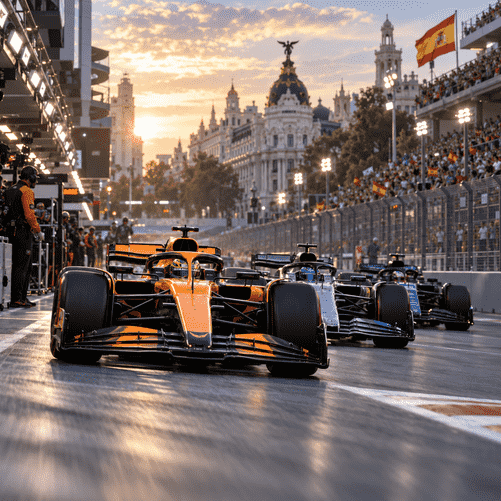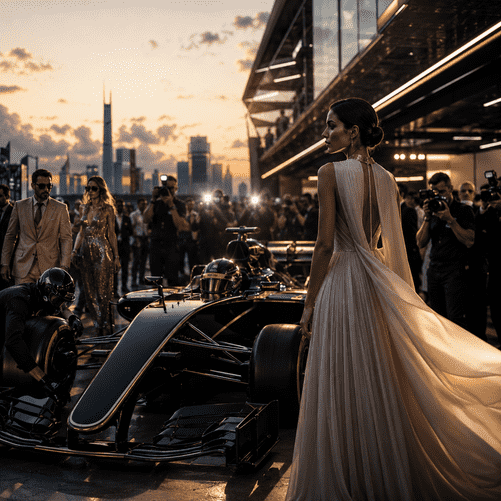
The Italian fashion house’s title partnership with Alpine signals a new phase in the luxury industry’s race for younger, global audiences.

Gucci is moving deeper into the world of high-speed sport, announcing a landmark partnership that will place the Italian luxury house at the center of Formula One from 2027.
Under the agreement, Renault’s Alpine team will be rebranded as the Gucci Racing Alpine Formula One Team, marking an unprecedented fusion of luxury fashion and elite motorsport. The deal makes Gucci the first high-fashion brand to lend its name to a Formula One team, a move that reflects both the growing cultural power of the sport and the luxury sector’s search for new ways to reach younger consumers.
For Gucci, the partnership is more than a sponsorship. It is a strategic attempt to position the brand inside one of the fastest-growing entertainment platforms in the world. Formula One has expanded far beyond its traditional European fan base, attracting large audiences in the United States, the Middle East and Asia, while also gaining traction among younger and female viewers.
That global reach is especially valuable at a time when the luxury market is navigating slower demand, cautious consumers and pressure to justify years of aggressive price increases. After a period in which major brands relied heavily on high-margin handbags, leather goods and price hikes, the industry is now being forced to rebuild emotional connection with shoppers.
Gucci’s move into Formula One shows how luxury houses are increasingly turning to sport, lifestyle and entertainment as engines of visibility. The modern luxury consumer is no longer reached only through runway shows, boutiques and glossy campaigns. They are also found at Grand Prix weekends, on streaming platforms, across social media and inside global cultural events where fashion, celebrity and performance overlap.
The partnership also reflects a wider shift in how heritage brands are trying to stay relevant. Motorsport offers speed, danger, technology, exclusivity and spectacle — values that align easily with luxury branding. For Gucci, whose parent company Kering has been working to revive momentum after a difficult period for the brand, Formula One provides a stage with built-in glamour and international attention.
Alpine, meanwhile, gains a powerful cultural partner. The French racing team has struggled in recent seasons but has sought to rebuild its profile and competitiveness. A tie-up with Gucci could give Alpine stronger visibility beyond the paddock, helping transform the team into a lifestyle symbol as much as a sporting organization.
The new team identity is expected to bring Gucci’s visual language into Formula One’s highly controlled world of liveries, uniforms, hospitality spaces and merchandise. That could create a new category of luxury sportswear and collectibles, where racing culture becomes part of fashion consumption.
The move also highlights a broader trend reshaping luxury: collaboration is no longer limited to artists, musicians or streetwear labels. Luxury brands are now seeking long-term platforms that combine entertainment, community and global reach. Formula One, with its mix of wealth, speed, technology and celebrity, has become one of the most attractive of those platforms.
Still, the strategy carries risks. Luxury brands must avoid appearing superficial in sporting environments where authenticity matters. Formula One fans value heritage, engineering and performance; a fashion partnership must feel integrated rather than decorative. Gucci’s challenge will be to translate its identity into motorsport without reducing the sport to a marketing backdrop.
Yet the logic is clear. In a market where aspirational consumers are more selective and younger shoppers expect brands to participate in culture, luxury houses can no longer rely only on exclusivity. They must also generate relevance.
Gucci’s entry into Formula One suggests that the future of luxury may be built not only on craftsmanship and scarcity, but on speed, spectacle and global cultural presence. The runway, increasingly, now extends to the racetrack.