Nawaf Salam says Israeli operations are forcing civilians into exile, even as Beirut defends security talks with Tel Aviv as the “least costly path” out of war.

Lebanon’s prime minister has accused Israel of pursuing a “scorched earth” policy in the country’s south, warning that the latest phase of Israel’s military campaign risks turning a border war with Hezbollah into a wider national crisis.
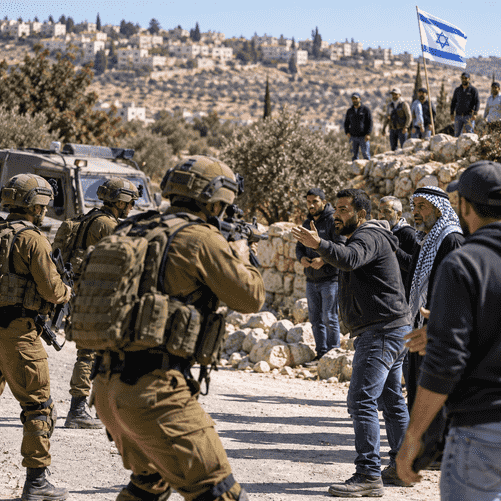
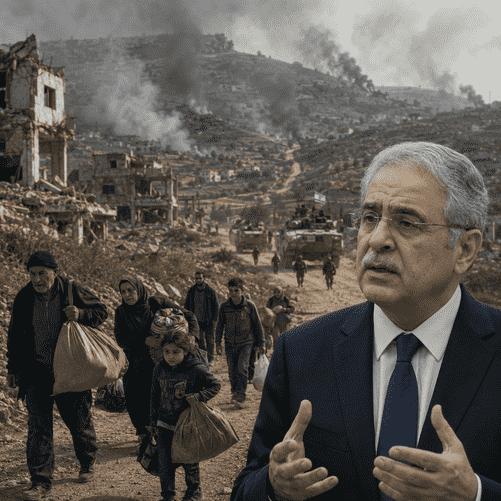
In a televised address, Nawaf Salam said Israel was collectively punishing southern Lebanon by destroying towns and villages and forcing civilians to flee. His remarks came as Israeli forces pushed deeper into Lebanese territory, expanding operations beyond earlier positions and intensifying pressure on areas long considered Hezbollah strongholds.
The Israeli military says its campaign is aimed at removing threats to communities in northern Israel and dismantling Hezbollah infrastructure used to launch rockets, drones and cross-border attacks. But for Lebanon’s government, the scale of the operation has become impossible to separate from its humanitarian consequences.
Salam described the escalation as dangerous and unprecedented, arguing that military force alone would not bring security to Israel. He called for a swift ceasefire and warned that depopulating large areas of southern Lebanon would only deepen instability.
The fighting has placed Lebanon in one of its most fragile positions in years. Southern communities have endured repeated airstrikes, artillery fire and evacuation orders, while tens of thousands of residents face the prospect of prolonged displacement. The destruction of homes, roads and public infrastructure has revived memories of earlier wars between Israel and Hezbollah, particularly the 2006 conflict and Israel’s long occupation of parts of southern Lebanon before its withdrawal in 2000.
Israel’s latest advance has also carried heavy symbolic weight. Its capture of strategic positions, including the historic Beaufort Castle ridge, marks one of the deepest incursions into Lebanon in decades. The site overlooks parts of southern Lebanon and northern Israel and has long held military and political significance for both sides.
For Israel, the operation is framed as a necessary response to Hezbollah’s continuing attacks. Israeli leaders argue that residents of northern Israel cannot return safely unless Hezbollah is pushed back and its military capabilities near the border are degraded. The group, backed by Iran, has continued to fire rockets and drones into Israel, saying its actions are part of a broader confrontation with Israel and its allies.
For Lebanon, however, the offensive is testing the state’s already limited authority. Hezbollah remains a powerful military and political actor, while the Lebanese government is under pressure to protect civilians without triggering an even broader confrontation. Salam’s speech reflected that difficult balance: he denounced Israel’s actions in uncompromising language, but also defended the decision to maintain security talks with Tel Aviv.
That defence is politically sensitive. Lebanon and Israel remain technically at war, and direct engagement with Israel is deeply controversial in Lebanese politics. Yet Salam argued that negotiations are the least costly option for a country already facing economic collapse, political fragmentation and mass displacement.
The talks, backed by international mediators, are aimed at containing the conflict and restoring some form of border stability. But the expanding Israeli operation risks undermining diplomacy before it can produce results. Each new evacuation order, strike or Hezbollah retaliation makes it harder for either side to step back without appearing to concede.
The crisis is also part of a larger regional struggle. Hezbollah’s role links Lebanon’s border war to the broader confrontation involving Israel, Iran and allied armed groups across the Middle East. Any further escalation in southern Lebanon could draw in more actors, widen the battlefield and complicate diplomatic efforts far beyond Beirut and Tel Aviv.