Five Mozambicans were reportedly killed in Mossel Bay, exposing once again the dangerous intersection of migration, unemployment and anti-foreigner politics in South Africa.

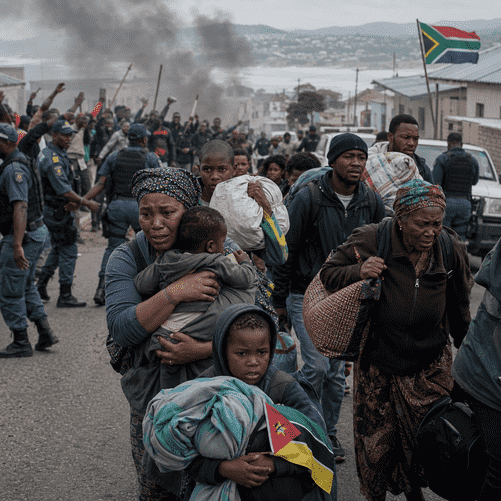
Mozambique has said five of its citizens were killed in xenophobic attacks in South Africa, after violence erupted in the coastal town of Mossel Bay and left hundreds of Mozambican nationals caught in a wave of fear, displacement and grief.
The deaths mark a grim escalation in South Africa’s latest bout of anti-immigration unrest, which has spread across parts of the country amid protests against undocumented migrants. According to Mozambican authorities, about 800 Mozambicans were affected by the violence in Mossel Bay, a town in the Western Cape province better known for tourism than political disorder.
The Mozambican government said seven citizens died in total: five directly as a result of the attacks, and two others in a road accident while travelling back to Mozambique. The announcement has intensified concern in Maputo and across the region over the safety of migrant workers and foreign nationals living in South Africa.
The violence reportedly broke out after anti-immigration protests turned hostile, with foreign-owned homes and communities targeted. Mozambican nationals were among those forced to flee, while some reportedly attempted to return home by private transport. Community representatives said several people were injured, and that weapons, stones and other objects were used during the clashes.
For Mozambique, the killings carry both humanitarian and diplomatic weight. South Africa is home to large numbers of Mozambican workers, many of whom cross the border in search of employment, trade opportunities and family support. Remittances and cross-border movement form part of the daily economic reality between the two neighbouring countries.
Yet that same mobility has repeatedly made migrants vulnerable during periods of social tension in South Africa. Foreign nationals, particularly from other African countries, have often been blamed for unemployment, crime and pressure on public services — accusations that migrant rights groups say are used to deflect attention from deeper structural problems.
South Africa’s unemployment rate remains one of the highest in the world, and frustration over poverty, inequality and weak service delivery has created fertile ground for anti-foreigner sentiment. Vigilante groups and protest movements have increasingly framed immigration as a national crisis, while human rights organisations warn that such rhetoric can quickly turn into mob violence.
The Mossel Bay deaths are likely to increase pressure on both governments to act. Mozambique is expected to seek guarantees for the safety of its citizens, while South African authorities face renewed calls to prevent anti-immigration protests from becoming attacks on vulnerable communities.
Pretoria has condemned xenophobic violence in the past, while also acknowledging public frustration over illegal migration. But critics argue that official responses have often been inconsistent, allowing localised intimidation and harassment to continue until they erupt into deadly violence.
The latest attacks also revive painful memories of previous xenophobic outbreaks in South Africa, including the 2008 violence that killed dozens of people and displaced thousands. Since then, periodic attacks have continued to expose the fragility of social cohesion in a country still struggling with inequality, joblessness and distrust of the state.
For Mozambican families, however, the political debate is secondary to the immediate human cost. The victims were citizens who had travelled across the border in search of security, work or survival. Instead, their deaths have become a symbol of a regional crisis that South Africa and its neighbours can no longer treat as isolated or temporary.
As anti-immigration protests continue, the question is whether authorities will move quickly enough to protect foreign communities — or whether Mossel Bay will become another name in South Africa’s long and troubling history of xenophobic violence.