Trump declares an end to months of conflict, but unresolved nuclear questions and regional tensions leave the agreement facing an uncertain future

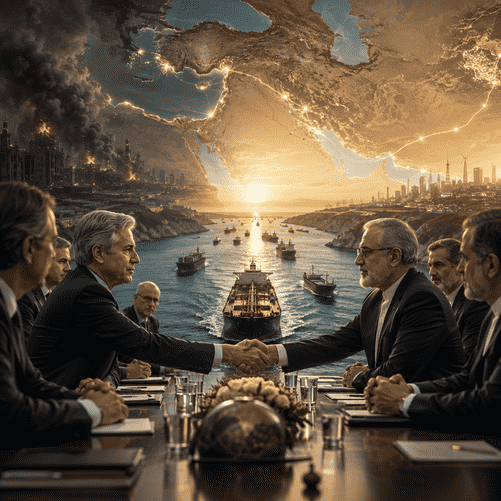
The United States and Iran have reached an agreement intended to end their war and reopen the Strait of Hormuz, President Donald Trump has announced, marking a potentially decisive turning point after months of military confrontation and disruption to global energy supplies.
The deal provides for the restoration of commercial shipping through one of the world’s most important maritime passages and the lifting of the American naval blockade imposed on Iranian ports.
Iran and the United States are also expected to maintain a ceasefire while negotiators attempt to resolve the most difficult questions dividing the two countries. However, many details remain unclear, and the agreement has not yet been transformed into a comprehensive peace settlement.
Pakistan’s Prime Minister Shehbaz Sharif, whose government played a central mediating role alongside Qatar, confirmed that an agreement had been reached. A formal signing ceremony is expected to take place in Switzerland.
Trump presented the accord as evidence that the conflict was ending and that unrestricted navigation through the Strait of Hormuz would resume. The waterway connects the Persian Gulf with the Arabian Sea and carries a substantial share of the world’s oil and liquefied natural gas exports.
Its closure and repeated interruptions to shipping had driven up energy prices, complicated global supply chains and raised fears of a prolonged economic shock.
The announcement immediately eased some of those concerns. Oil prices fell as traders anticipated that tankers would again be able to move more freely through the strait and that Iranian exports could gradually return to international markets.
A ceasefire before a final settlement
Despite Trump’s description of the agreement as a peace deal, the initial framework appears closer to an extended ceasefire combined with a commitment to further negotiations.
The arrangement is expected to halt direct military operations between Iran and the United States, end restrictions on shipping and create a 60-day period for discussions over Iran’s nuclear activities.
That distinction is important. The causes of the conflict have not disappeared, and the most politically sensitive issues remain unsettled.
Washington has demanded guarantees that Iran will never produce a nuclear weapon and has sought restrictions on uranium enrichment, nuclear infrastructure and Tehran’s stockpile of highly enriched material.
Iran has consistently maintained that its nuclear programme is peaceful and has resisted demands that would permanently eliminate its ability to enrich uranium.
Under the interim framework, Tehran is reportedly expected to freeze further advances in its nuclear programme while negotiations continue. Iran has also repeated that it does not intend to develop or acquire a nuclear weapon.
However, negotiators have not yet disclosed a final formula for Iran’s enriched uranium, its nuclear facilities or the system of international inspections that would verify compliance.
Those questions could determine whether the ceasefire develops into a durable settlement or merely postpones another confrontation.
Economic concessions for Tehran
Sanctions relief is expected to form a central part of the agreement.
Iran has demanded access to revenues frozen in foreign banks, permission to sell oil on international markets and the removal of restrictions that have weakened its economy.
Proposals discussed during negotiations have reportedly included the temporary suspension of some American oil sanctions, the release of frozen Iranian assets and a longer-term process for lifting further US and United Nations restrictions.
In exchange, Washington is seeking verifiable nuclear commitments and guarantees that the Strait of Hormuz will remain permanently open to commercial vessels without tolls or political interference.
For Tehran, the economic benefits could be substantial. Restored oil exports and access to frozen funds would provide urgently needed foreign currency and help ease pressure on the government after months of war and isolation.
For Trump, reopening the strait offers a major domestic political benefit. The disruption had contributed to higher oil and fuel prices, adding to inflationary pressure and creating economic risks for the United States and its allies.
The war’s regional consequences
The agreement is also intended to reduce hostilities beyond the direct conflict between Washington and Tehran.
Fighting involving Israel, Iran and armed groups aligned with Tehran has spread instability across the Middle East, including Lebanon. Continued Israeli attacks against Hezbollah targets could complicate implementation of the ceasefire and provoke an Iranian response.
Trump has called for restraint as diplomats attempt to preserve the agreement. Nevertheless, Israel remains deeply sceptical.
Israeli officials and other critics argue that the reported framework does not adequately restrict Iran’s ballistic-missile programme or end its support for Hezbollah and other regional armed organisations.
They also fear that sanctions relief could eventually provide Tehran with additional resources without permanently dismantling its nuclear capabilities.
Some American lawmakers have raised similar objections, warning that the deal may defer rather than resolve the strategic threat posed by Iran.
Supporters of the agreement counter that continued war would carry even greater risks, including further disruption to energy markets, attacks on American forces and the possibility of a wider regional conflict.
The importance of the Strait of Hormuz
Reopening the Strait of Hormuz is the agreement’s most immediate and measurable achievement.
The narrow maritime corridor is essential to energy exports from Saudi Arabia, Iraq, Kuwait, Qatar, the United Arab Emirates and Iran. Any prolonged interruption can rapidly affect oil prices, shipping costs and inflation around the world.
During the conflict, Iran severely restricted passage through the waterway, while the United States imposed its own blockade on Iranian ports. The competing restrictions created a dangerous military environment and left commercial vessels exposed to delays and possible attack.
The new framework calls for both sides to remove those obstacles.
Shipping companies and energy traders will nevertheless want evidence that navigation is genuinely safe before restoring normal traffic. Insurers may also remain cautious until the ceasefire has held and naval forces have reduced their presence.
The reopening is therefore likely to occur in stages rather than through an immediate return to prewar conditions.
A diplomatic breakthrough with major risks
Pakistan and Qatar’s involvement demonstrates the growing importance of regional mediators able to communicate with both Washington and Tehran.
Their diplomacy helped create a channel through which the two adversaries could negotiate despite the absence of normal diplomatic relations.
The planned signing ceremony will provide an opportunity for all sides to present the agreement as a historic breakthrough. But the success of the accord will depend on implementation rather than ceremony.
Iran must allow commercial vessels to pass safely through the strait. The United States must lift its blockade and begin delivering the promised economic concessions. Both sides must also refrain from military action while the nuclear negotiations proceed.
Any renewed strike, disputed inspection or disagreement over sanctions could quickly destabilise the process.
The absence of publicly available details adds to that uncertainty. It remains unclear how compliance will be monitored, what will happen if one side accuses the other of violating the ceasefire, and whether regional actors such as Israel and Hezbollah will be bound by the arrangement.
Trump has described the deal as the end of the war. For now, it is more accurately understood as an opportunity to end it.
After months of fighting and economic disruption, the reopening of the Strait of Hormuz represents a major step away from escalation. Whether it becomes the foundation of a lasting peace will depend on the difficult negotiations that are only now beginning.