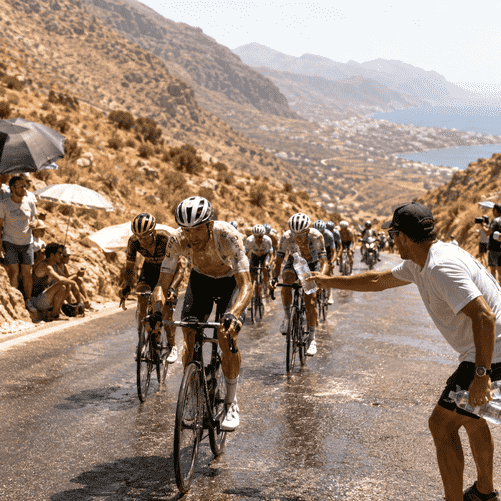
With parts of Europe facing temperatures near 44°C, organisers are preparing for the possibility that extreme heat could force unprecedented changes to cycling’s most famous race.

The Tour de France is confronting a threat that no edition of the race has yet fully faced: the possibility that extreme heat could force the cancellation or major alteration of a stage.
As Europe endures another severe heatwave, race officials are preparing contingency plans for the 2026 Tour, which begins in Barcelona before moving into the Pyrenees and then across France. Forecasts in parts of Spain and France have raised the prospect of temperatures approaching 44°C, placing rider safety, spectator welfare and race logistics under intense scrutiny.
Tour technical director Thierry Gouvenou has acknowledged that the risk is now central to planning. The issue, he said, is “very much” on organisers’ minds as the race faces conditions that could push endurance sport beyond safe limits. Under cycling’s extreme weather protocols, stages can be shortened, delayed, modified or, in the most serious cases, cancelled.
Such a move would be historic. The Tour de France has survived wars, protests, strikes, crashes, scandals and the disruptions of the pandemic era. But a cancellation caused specifically by heat would mark a new chapter for the race — and a powerful symbol of how climate change is reshaping major outdoor sport.
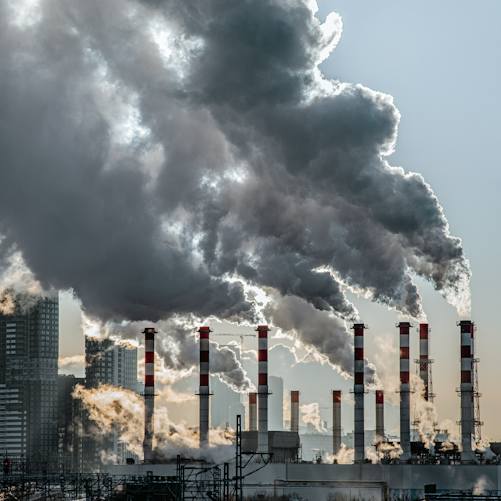
The concern is not theoretical. Europe has already suffered a punishing summer, with France reporting around 1,000 excess deaths during the recent heatwave and Spain also facing deadly conditions. Transport networks, power systems and public services have been strained across the continent, while meteorological agencies have warned of elevated fire risks and dangerous conditions for vulnerable people.
For cyclists, extreme heat presents a particular danger. Riders spend hours exposed to direct sun, often on dark asphalt that radiates additional heat. Dehydration, heat exhaustion and heatstroke can develop rapidly, especially during mountain stages or intense race efforts. The danger was underlined recently when leading rider Elisa Longo Borghini suffered heat-related illness at the Tour de Suisse, intensifying concerns about elite racing in extreme temperatures.
The Tour already has tools to reduce risk. Organisers can expand feed zones, allow extra water distribution, provide ice and cooling measures, adjust neutral service support and alter stage routes. But those solutions have limits when temperatures rise to levels that threaten the basic safety of athletes, staff, roadside spectators and the thousands of police, medics and emergency personnel required to stage the race.
Changing start times might seem like an obvious answer, but the Tour’s scale makes even simple adjustments difficult. Broadcast schedules, road closures, municipal coordination, security plans and team logistics are all built around fixed timetables. A morning start could reduce heat exposure, but it would also disrupt a global television product and a complex travelling infrastructure that moves across cities, mountains and borders every day.
The 2026 route adds to the challenge. After its Grand Départ in Barcelona, the race is scheduled to enter the Pyrenees early, with a demanding course that includes eight mountain stages and later Alpine battles, including back-to-back finishes on Alpe d’Huez. Those stages are central to the sporting drama of the race, but they are also among the most vulnerable to weather extremes.
Cycling has already begun adapting. The French men’s road race at the national championships was shortened recently because of extreme heat, while other European events have faced delays and adjustments. These decisions show that race organisers are increasingly willing to intervene when conditions become dangerous.
The larger question is whether the Tour de France can remain a July institution in its current form. Research on European summer sport has warned that rising temperatures are increasing the risk of dangerous heat stress during events such as the Tour, with high-risk conditions becoming more frequent in recent decades.
For now, organisers are not abandoning tradition. The Tour remains a summer spectacle, built around heat, crowds, mountain roads and the mythology of suffering. But the kind of heat now confronting Europe is different. It is no longer merely a test of endurance; it is a safety risk, a logistical problem and a climate warning.
If a stage is cancelled, the decision will be controversial. Teams may argue over sporting fairness, broadcasters may lose a key moment, and fans may be disappointed. But for organisers, the calculation is becoming unavoidable: the Tour can survive a lost stage more easily than it can survive a preventable medical crisis.
The race that has long celebrated human limits is now being forced to recognise environmental ones. In the age of extreme heat, even the Tour de France may have to learn when not to race.