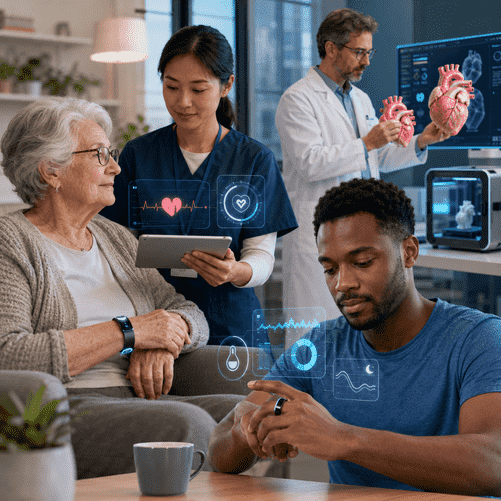
From fall-detection bracelets in Rome to AI-guided smart rings and Medicare-backed digital health pilots, connected medical technology is shifting care toward continuous monitoring, prevention and earlier intervention.

A new generation of medical technology is beginning to change where health care happens. Instead of waiting for patients to arrive at hospitals or clinics, doctors, insurers and technology companies are increasingly looking to wearable devices, artificial intelligence and remote-monitoring systems to detect problems earlier and manage chronic conditions in everyday life.
The shift is visible in Rome, where local authorities are using smart bracelets to help protect elderly residents during extreme summer heat. The wearable device tracks movement and can detect accidental falls, allowing caregivers to respond quickly when vulnerable people may be at risk. The programme reflects a wider trend in Europe and beyond: using connected devices not as lifestyle accessories, but as practical tools for public health and elderly care.
In the consumer market, health wearables are also becoming more sophisticated. The new Oura Ring 5, recently reviewed by The Guardian, is smaller and lighter than its predecessor while tracking more than 50 health metrics, including heart rate, blood oxygen, body temperature, sleep quality and activity. Its app also includes an AI adviser designed to interpret personal health patterns and provide guidance based on the user’s data.
The medical sector is watching this evolution closely because continuous data could help shift care from reactive treatment to preventive intervention. A patient’s sleep disruption, heart-rate changes, reduced movement or temperature variations may signal health deterioration before symptoms become severe. For older adults, people with chronic illnesses and patients recovering after surgery, that kind of early warning could reduce hospital admissions and improve outcomes.
Governments and health systems are now testing whether these technologies can also reduce costs. In the United States, Medicare is launching the ACCESS payment model, a pilot programme involving more than 150 health-care organisations. The initiative will test whether health technologies, including AI-supported services, can improve care quality while controlling spending through outcomes-based reimbursement rather than traditional fee-for-service payments.
Hospitals are also adopting advanced technologies beyond wearables. IU Health in Indiana has opened one of the first hospital-based, FDA-cleared 3D-printing studios in the United States. The studio uses medical imaging data to create detailed patient-specific models, such as heart vessels, helping surgeons plan complex procedures and allowing families to better understand operations before they happen.
Artificial intelligence is central to this transformation, but adoption remains uneven. A global Philips survey found that AI is already saving clinicians time, yet many health professionals say training in the technology is inadequate, inconsistent or unavailable. That gap highlights one of the biggest challenges facing digital medicine: the tools may be advancing faster than hospitals, regulators and staff can integrate them safely.
Regulators are also trying to keep pace. The U.S. Food and Drug Administration says it encourages the development of safe and effective AI-enabled medical devices, reflecting the growing role of software in diagnosis, monitoring and clinical decision-making. But the expansion of AI in health care also raises questions about reliability, privacy, bias, accountability and how much medical judgment should be delegated to algorithms.
For patients, the promise is clear: more personalised care, earlier warnings, fewer unnecessary hospital visits and better support outside clinical settings. For health systems, the appeal is equally strong, especially as ageing populations and staff shortages place pressure on hospitals.
The next phase of medical technology is unlikely to be defined by one dramatic invention. Instead, it will emerge through a network of devices, sensors, AI models and connected care platforms. The doctor’s office will still matter, but the future of medicine may increasingly begin at home — on a wrist, a finger, or a small device quietly watching for the first signs that something is wrong.