Naomi Osaka’s elaborate walk-on looks have turned tennis entrances into a stage for identity, power and high fashion, as players increasingly use clothing to make a statement before play begins.

At Wimbledon, the match now begins before the first ball is struck.
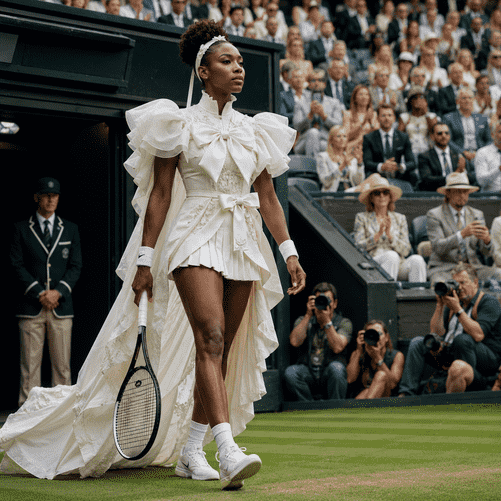
This year, Naomi Osaka has transformed the short walk from tunnel to court into one of the tournament’s most closely watched fashion moments. Her all-white entrance outfits — complete with frills, sculptural sleeves, oversized bows and ceremonial references — have challenged the idea that Wimbledon’s strict dress code leaves little room for personal expression.
Designed by Tokyo-based Hana Yagi, Osaka’s walk-on pieces draw from Japanese ceremonial clothing, particularly the shiromuku bridal kimono, while also nodding to pop culture, including Quentin Tarantino’s Kill Bill. The result is not simply sportswear, but a theatrical introduction: part armor, part heritage statement, part luxury fashion editorial. One of the looks was unveiled by Vogue before it appeared anywhere near a tennis court, underlining how far tennis style has moved beyond the traditional boundaries of match-day apparel.
Osaka has described fashion as a form of storytelling, and at Wimbledon that story is layered. The garments respect the tournament’s all-white rule while stretching it to its most imaginative limit. Embroidered cranes, cherry blossoms, dramatic proportions and carefully constructed silhouettes turn a rule often seen as restrictive into a creative challenge.
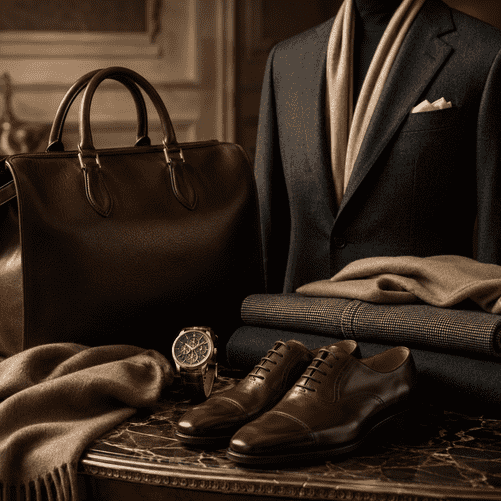
Yet Osaka is not alone. Across the sport, players are increasingly treating “walk-on fits” as part of their public identity. Frances Tiafoe, Coco Gauff, Novak Djokovic and Taylor Fritz have all embraced more deliberate entrance styling, from tailored jackets to luxury-branded details. Reuters reported that male players at Wimbledon have followed Osaka’s lead, with Djokovic appearing in a personalized Lacoste blazer and Fritz entering in a Hugo Boss suit with a white silk scarf.
The trend reflects a wider shift in tennis culture. Players are no longer seen only as athletes competing inside the lines; they are also global personalities, brand ambassadors and cultural figures. The few seconds before a match offer sponsors, designers and athletes a valuable visual moment — easily photographed, instantly shareable and capable of shaping a player’s image far beyond the scoreboard.
For Osaka, the fashion has not distracted from performance. She reached the second week of Wimbledon for the first time after defeating Daria Kasatkina 6-1, 6-3, showing the same force and precision on court that her entrance looks project visually. Her growing comfort on grass has strengthened the sense that the outfits are not a sideshow, but part of a larger return to confidence.
Still, not everyone is convinced that tennis should lean too far into spectacle. Some players and observers worry that elaborate pre-match styling could overshadow the competition itself, especially if a bold outfit is followed by an early defeat. Fritz summed up that risk bluntly, noting that a player cannot make a major entrance and then lose immediately without inviting criticism.
But the rise of walk-on fashion is unlikely to fade. Tennis has always had a visual language — from Björn Borg’s headbands to Serena Williams’s catsuits and Roger Federer’s blazers. What is changing now is the level of intention. The entrance has become a curated image, and the outfit is increasingly a message.
At Wimbledon, a tournament built on tradition, that message is especially powerful. Osaka’s ceremonial whites show that even within one of sport’s most rigid aesthetic codes, players can still carve out space for individuality, identity and imagination.
The result is a new kind of tennis theater: one where fashion does not replace performance, but frames it. Before the serve, before the rally, before the score, the player arrives — and the story has already begun.