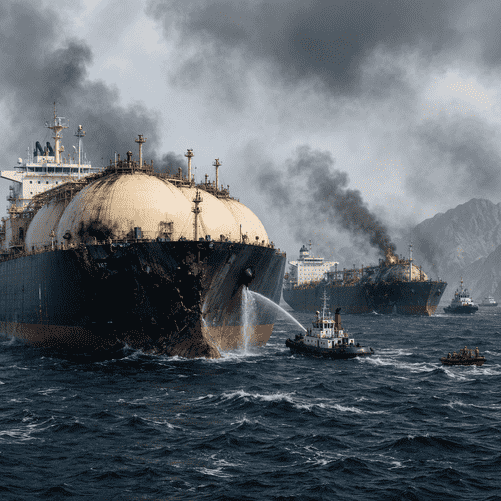
Dispute intensifies after three vessels are struck near Oman, raising fears over energy security and regional stability

Qatar has accused Iran of being legally responsible for attacks on three commercial vessels in the Strait of Hormuz, including a Qatari liquefied natural gas (LNG) carrier, in a major escalation of tensions surrounding one of the world’s most important maritime trade routes.
The incidents occurred near Oman, a strategically vital area where a significant share of global energy shipments pass every day. The attacks have increased concerns over the security of commercial shipping and the potential impact on international energy markets, as regional governments assess the risks of further disruption.
Qatar, one of the world’s largest LNG exporters, said Iran bears responsibility under international law for the damage caused to the vessels. The accusation has intensified diplomatic pressure on Tehran, which has denied involvement and instead blamed the United States for the wider escalation of tensions in the region.
The Strait of Hormuz remains a critical chokepoint for global energy supplies, connecting the Persian Gulf with international shipping routes. Any disruption in the area has the potential to affect oil and gas markets, increase insurance costs for shipping companies and create broader economic uncertainty.
The attacks come amid heightened confrontation between Iran and Western powers, with Tehran repeatedly warning that regional instability is linked to foreign military actions and sanctions. Iranian officials have rejected accusations against them and argued that the United States is responsible for creating the conditions behind the current crisis.
For Gulf countries, the security of maritime routes has become a national priority. Qatar, in particular, relies heavily on safe navigation through regional waters to maintain its LNG exports to international markets, including Europe and Asia.
The latest dispute also places additional pressure on diplomatic efforts aimed at preventing a wider regional conflict. International actors have urged restraint, warning that further incidents involving commercial vessels could trigger a dangerous cycle of retaliation.
Energy analysts are closely monitoring the situation, as even limited disruptions in the Strait of Hormuz can have global consequences. A prolonged security crisis could affect energy prices, supply chains and the economic outlook for countries dependent on Gulf energy exports.
As investigations continue and competing claims emerge, the attacks highlight the fragile balance in the Gulf, where maritime security, international trade and geopolitical rivalry remain deeply interconnected.