The house’s latest haute couture presentation blends restrained glamour with questions over succession, ownership and the future of one of Italy’s most influential luxury brands.

Giorgio Armani Privé returned to Paris Haute Couture Week with a collection that carried more than seasonal significance. It was not only a runway presentation of beaded evening gowns, elegant tailoring and polished eveningwear; it was also a public signal of continuity for a fashion house entering a historic transition.
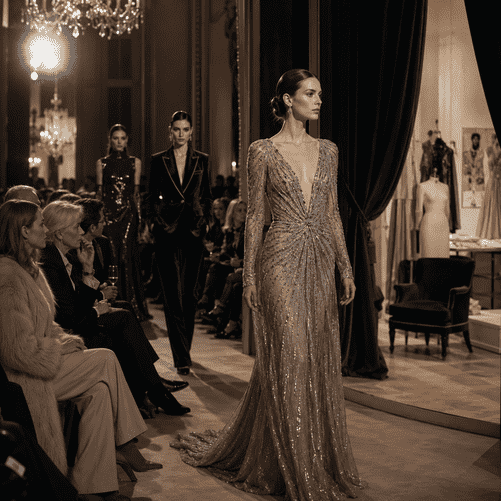
Shown at Palazzo Armani near Avenue Montaigne, the collection leaned into the codes long associated with Armani: precision, restraint and quiet luxury. Reuters reported that the runway featured shimmering evening gowns, elegant suits in dusky tones, textured satin bomber jackets, velvet tailoring in burgundy and navy, flowing coats with broad lapels and beaded blazers paired with lace tops and fluid trousers.
The show comes after the death of Giorgio Armani in September 2025, placing new attention on how the house will preserve its identity while adapting to a luxury market under pressure. The Privé collection, presented under Silvana Armani’s creative direction, appeared designed to reassure clients that the brand’s visual language remains intact: disciplined silhouettes, sophisticated surfaces and a preference for elegance over spectacle.
Yet behind the refinement of the couture runway lies a much larger business question. Armani’s will reportedly directed that the company gradually be sold or taken public, with a 15% stake to be sold within 12 to 18 months of his death. Preferred buyers are said to include LVMH, EssilorLuxottica and L’Oréal — names that underline the strategic value of one of Italy’s most independent luxury houses.
The timing is delicate. The global luxury sector is emerging from a period of slower growth and more selective consumer spending. Bain has forecast that personal luxury goods sales could rise by 2% to 4% in 2026, reaching between €365 billion and €373 billion, but the recovery remains cautious rather than explosive.
That market backdrop gives the Armani transition added importance. For years, the brand represented a rare model in luxury: founder-led, independent and globally recognized without the direct control of a major conglomerate. A partial sale or public listing would not simply alter the ownership structure; it could redefine how the house balances heritage, creative authority and commercial expansion.
The collection itself seemed to answer that uncertainty with discipline. Deep green and blue evening gowns, richly beaded and draped with long trains, offered the clearest couture statement. Leopard print appeared in muted tones, not as provocation but as controlled accent. The result was a show that resisted excess while still projecting status — a familiar Armani formula, but now charged with new symbolic weight.
Across the wider fashion industry, luxury brands are also experimenting with new forms of client engagement, from hospitality and private dining to immersive cultural events. Vogue Business recently described niche dining as an emerging frontier for fashion brands seeking deeper emotional connections with high-value consumers and younger luxury audiences.
In that context, Armani Privé’s Paris presentation felt deliberately conservative — not in ambition, but in message. While rivals chase novelty, the house emphasized permanence. The runway suggested that Armani’s next chapter will begin not with a radical break, but with a carefully managed inheritance.
The challenge now is whether that inheritance can survive a changing ownership landscape. Armani’s elegance has always depended on control: of line, color, fabric and image. As investors and potential buyers circle, the question becomes whether the business can evolve without losing the restraint that made the name powerful in the first place.