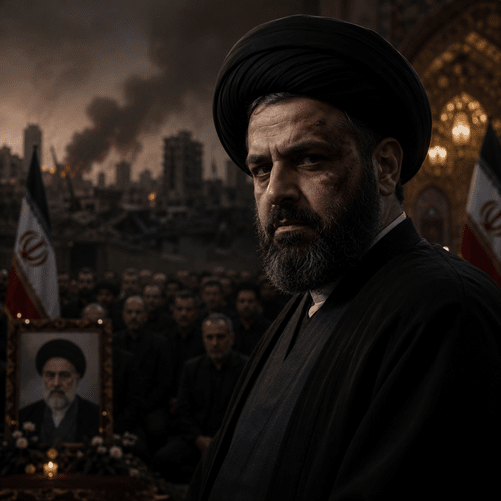
Mojtaba Khamenei’s first message since assuming power intensifies tensions with Washington and Israel, while his prolonged absence continues to fuel uncertainty over Iran’s leadership.

TEHRAN — Iran’s supreme leader, Ayatollah Mojtaba Khamenei, has pledged to avenge the killing of his father and predecessor, sharpening the country’s confrontation with the United States and Israel at a moment of renewed military and diplomatic uncertainty.
In a statement broadcast by Iranian state television on Saturday, Khamenei described retaliation for the death of Ayatollah Ali Khamenei as both a national demand and a religious duty. He promised that those responsible would face justice, presenting revenge not merely as a personal objective but as a mission supported by Iran and its allies abroad.
Ali Khamenei, who ruled Iran for 37 years, was killed in a US-Israeli airstrike on February 28, 2026. His son was appointed supreme leader on March 8 with strong backing from the Islamic Revolutionary Guard Corps, inheriting control of the Islamic Republic during one of the most dangerous periods in its recent history.
Mojtaba Khamenei has not appeared publicly since taking office. He was absent from his father’s large funeral ceremonies and has communicated principally through written statements, an unusual situation for a leader whose authority depends heavily on projecting religious legitimacy, political control and continuity at the top of the Iranian state.
Reports indicate that he suffered serious injuries in the same airstrike that killed his father. Some accounts have suggested that he was badly wounded or disfigured, but Iranian authorities have not publicly confirmed the nature or extent of his injuries. The claims therefore remain unverified, and no authenticated recent image or video has resolved the uncertainty surrounding his condition.
His continued invisibility has become more than a personal health question. It has raised doubts about who is exercising day-to-day authority in Tehran and how much power rests with the Revolutionary Guards, senior clerics and other institutions operating in the supreme leader’s name.
Iranian officials maintain that Khamenei remains involved in decision-making. Nevertheless, political analysts and critics of the government argue that prolonged absence could weaken his standing, particularly because he assumed office without the established religious stature of previous supreme leaders.
The revenge declaration comes as relations between Tehran and Washington deteriorate once again. A provisional ceasefire and diplomatic process have been threatened by renewed attacks, disputes over sanctions and confrontation around the Strait of Hormuz, a crucial maritime corridor for international oil and gas supplies.
US President Donald Trump has warned that any Iranian attempt to assassinate him or other American figures would provoke an overwhelming response. Iranian funeral ceremonies and political rallies have included explicit calls for revenge against US leaders, further increasing fears that rhetoric could develop into covert operations or direct military action.
Khamenei’s statement did not specify the form or timing of any retaliation. Iran has previously responded to pressure through a combination of missile strikes, naval action, cyber operations and support for armed regional allies, allowing Tehran to escalate while retaining a degree of ambiguity.
That ambiguity may offer Iran strategic flexibility, but it also increases the risk of miscalculation. Any attack attributed to Tehran could trigger a broader American or Israeli response, further destabilising the Middle East and threatening commercial shipping and global energy markets.
The message also appears intended for a domestic audience. By linking his leadership directly to the demand for vengeance, Khamenei is seeking to demonstrate continuity with his father and reinforce his authority despite remaining out of public view.
Yet the declaration may not entirely silence questions about his ability to govern. Iran is facing economic pressure, the consequences of war and internal doubts about the political succession. A leader who communicates only through statements may find it increasingly difficult to reassure the public, manage competing factions and establish an independent identity.
For the moment, Mojtaba Khamenei’s threat of revenge has made Iran’s intentions sound clearer, while leaving the condition and influence of the man delivering that threat as uncertain as ever.