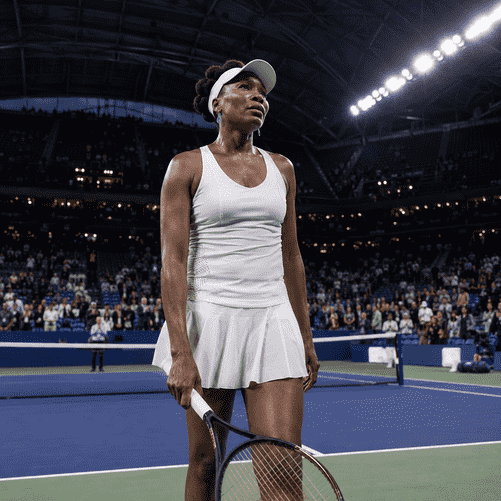
After surrendering five championship points in a dramatic second-set reversal, the 21-year-old Czech drew inspiration from the trophy beside the court and recovered to defeat Karolina Muchova for her first Grand Slam title.

LONDON — Linda Noskova stood within one point of becoming Wimbledon champion five times during the second set on Saturday. Each opportunity disappeared, and with it appeared to go the composure that had carried her to the edge of the greatest victory of her career.
Less than an hour later, the 21-year-old Czech was holding the Venus Rosewater Dish.
Noskova defeated compatriot Karolina Muchova 6-2, 5-7, 6-3 in a tense Centre Court final, surviving a remarkable collapse before regaining control in the deciding set and securing her first Grand Slam championship. She completed the victory on her sixth championship point with a serve Muchova could not return.
The triumph made Noskova the youngest women’s Wimbledon champion since Petra Kvitova won the title at the same age in 2011. It also extended an extraordinary period for Czech women at the All England Club: Marketa Vondrousova won in 2023, Barbora Krejcikova followed in 2024, and Noskova has now delivered the country’s third women’s singles title in four editions.
Her route to the trophy, however, was nearly transformed into one of Wimbledon’s most painful defeats.
Noskova dominated the opening stages with powerful serving and aggressive groundstrokes, taking the first set 6-2 and maintaining control deep into the second. At 5-2, she appeared ready to close the match quickly.
Muchova refused to concede. The 29-year-old saved five championship points as Noskova’s previously assured game began to tighten. Errors multiplied, Muchova became increasingly adventurous and the match’s momentum reversed. Noskova lost five consecutive games as her opponent claimed the second set 7-5.
The sequence invited immediate comparisons with Jana Novotna, another Czech player who famously surrendered a commanding lead in the 1993 Wimbledon final before returning five years later to win the championship.
Noskova said that during the interval before the deciding set, the sight of the trophies positioned beside Centre Court helped her redirect her thoughts. Rather than continuing to dwell on the opportunities she had missed, she focused on the larger prize still available.
Her reaction was characteristically direct: she had already lost control of the smaller trophy awarded to the runner-up, she explained, but the champion’s prize remained within reach.
“I’m taking the big one,” she told herself.
The mental reset became visible almost immediately. Noskova slowed the match down, restored the depth of her groundstrokes and resisted the temptation to force an instant recovery. Muchova continued to vary her game with slices, changes of pace and movement toward the net, but she could not reproduce the sustained pressure that had transformed the second set.
Noskova earned the decisive break in the third and protected it with increasingly confident serving. The final game still carried enormous pressure, but this time she did not allow the moment to escape.
The victory completed a breakthrough tournament for a player who arrived at Wimbledon ranked 12th in the world and seeded ninth. Before this fortnight, she had never progressed beyond the quarter-finals of a Grand Slam singles event. Her run included victories over Madison Keys, Elise Mertens and Marta Kostyuk before the historic all-Czech final.
Noskova’s success was also notable because she had barely played professional tennis on grass before establishing herself as one of the strongest performers of the 2026 season. Her Wimbledon title followed another grass-court victory during the build-up to the tournament and is expected to lift her to a career-high world ranking of No. 7.
For Muchova, the defeat represented another narrow encounter with a major championship. The versatile Czech had previously reached the 2023 French Open final, where she lost to Iga Swiatek. At Wimbledon, she again demonstrated the creative shot-making and resilience that have made her one of the tour’s most admired players, particularly during her comeback in the second set.
Muchova entered the final with greater Grand Slam experience and had survived a match point during her three-set semi-final victory over Coco Gauff. Against Noskova, she again showed an ability to remain calm when defeat appeared imminent.
Her recovery was not enough to deny her younger compatriot, but it ensured that the first all-Czech women’s Grand Slam final became a genuine contest rather than a procession.
The match also highlighted the continuing influence of Czech tennis at Wimbledon. Despite the country’s relatively small population, its women have established an exceptional record on the tournament’s grass courts. Noskova now joins a lineage of Czech-born champions that includes Martina Navratilova, Novotna, Kvitova, Vondrousova and Krejcikova.
Kvitova watched the final from the Royal Box, providing a visible connection between generations. Noskova has previously spoken of the inspiration she drew from Czech champions, and her victory at 21 mirrored Kvitova’s first Wimbledon triumph 15 years earlier.
The emotion of the occasion became clear during the presentation ceremony. Noskova paid tribute to her family and remembered her mother, who died when the player was still young. Her words moved those watching on Centre Court, including nine-time champion Navratilova. The Princess of Wales presented Noskova with the trophy.
Muchova responded with warmth despite the defeat, congratulating Noskova and jokingly referring to her fellow Czech as an “ex-friend.” The exchange reflected a relationship formed through years on tour and strengthened when the two represented their country at the 2024 Paris Olympics.
Noskova’s victory continued another Wimbledon pattern: for the ninth consecutive edition, the women’s singles tournament produced a first-time champion. The sequence reflects the depth and unpredictability of the women’s game, where established stars have repeatedly been challenged by emerging players capable of winning the sport’s largest titles.
Yet this final was defined less by unpredictability than by recovery.
Noskova had already demonstrated the power and composure required to win Wimbledon. In the closing stages of the second set, she discovered how quickly those qualities could disappear when the championship became tangible.
What followed in the third set may ultimately prove more important to her career than the dominant tennis with which she began the match. She was forced to confront the possibility that she had allowed a Grand Slam title to escape—and then return to the same court determined to pursue it again.
The trophies beside Centre Court offered a simple choice. Noskova could continue looking back at the prize she had almost secured, or concentrate on the larger one she could still win.
She chose the big one.