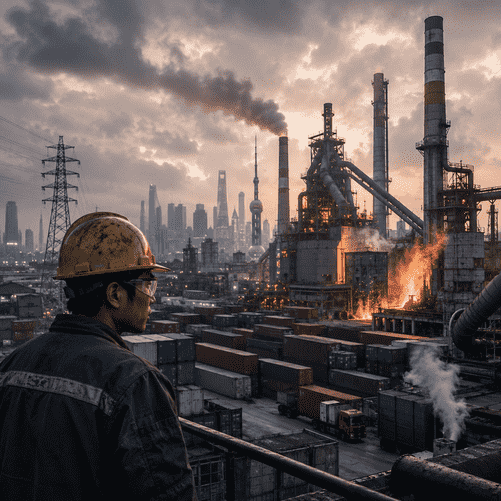
Producer inflation has reached a four-year high, squeezing manufacturers already contending with weak consumer demand and a prolonged property downturn.

BEIJING — China’s manufacturers are facing renewed pressure after factory-gate inflation accelerated sharply in June, presenting policymakers with a difficult combination of rising production costs and persistently fragile domestic demand.
The producer price index rose 4.1 percent from a year earlier, its strongest increase in four years and the fourth consecutive monthly rise. Higher energy and raw-material costs were among the principal drivers, with price increases spreading through coal mining, electrical machinery and electronics manufacturing.
The figures mark a striking reversal for an economy that had spent an extended period battling industrial deflation. Although higher producer prices can sometimes indicate stronger demand, the latest increase appears to reflect external cost pressures more than a broad domestic recovery.
Chinese manufacturers have been hit by elevated energy prices and supply-chain disruption linked to the conflict in the Middle East. Many companies may struggle to pass those additional costs on to customers because household spending remains cautious and intense competition continues to limit pricing power.
Consumer inflation offered further evidence of that imbalance. Consumer prices rose 1 percent year on year in June, slowing from 1.2 percent in May, while prices declined 0.3 percent from the previous month. The divergence between factory and consumer prices suggests that profit margins could narrow, particularly for smaller manufacturers with limited bargaining power.
The development comes as China attempts to shift its economic model toward stronger household consumption and reduced dependence on investment and exports. That transition remains incomplete. A new World Bank assessment said that high-technology investment and policy support had helped sustain growth, but warned that consumers remained cautious and the property sector was still adjusting to weaker housing demand.
The World Bank expects China’s economy to expand by 4.4 percent in 2026 before slowing slightly to 4.3 percent in 2027. Private investment is being constrained by the property downturn and low profitability in parts of the corporate sector, while export growth could weaken as external demand moderates.
For Beijing, the latest data complicate the policy outlook. Aggressive monetary stimulus could support consumption and investment, but it might also intensify inflationary pressures if energy and commodity costs remain elevated. Conversely, keeping financial conditions too restrictive could deepen the strain on indebted property developers, manufacturers and local governments.
China’s central bank may therefore favour a cautious approach, providing targeted support to vulnerable sectors rather than launching a large-scale stimulus programme. Authorities have also been attempting to curb destructive price competition in industries where overcapacity has pushed companies to sell products at exceptionally thin margins.
Strong exports and continued investment in advanced manufacturing, including artificial intelligence-related technology, remain important sources of resilience. But the latest inflation figures underline the limitations of an export- and factory-led recovery when household confidence remains subdued.
The central question is whether China can translate industrial strength into stronger incomes and consumer spending. Until that happens, rising factory prices may represent less a sign of economic vitality than an additional burden on companies caught between expensive inputs and reluctant customers.