From mini desserts to wellness spaces and branded experiences, fashion houses are moving deeper into food, fitness and everyday rituals as consumers redefine what luxury means.

Luxury fashion is no longer selling only objects. Increasingly, it is selling a way of living.
Across the global luxury market, brands are expanding beyond clothing, handbags and accessories into food, wellness, hospitality and highly curated lifestyle experiences. The shift reflects a wider change in consumer behavior: affluent shoppers, especially younger ones, are looking less for ownership alone and more for moments that feel personal, social and shareable.
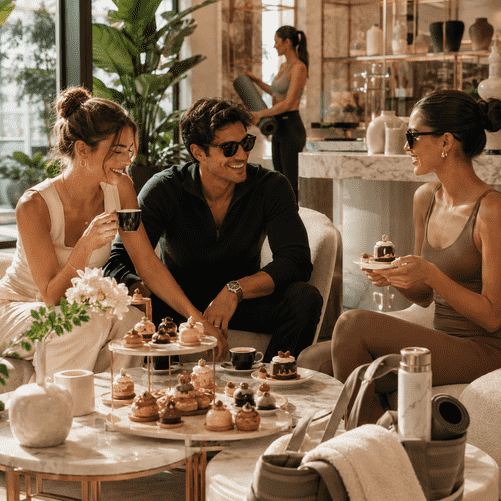
One of the clearest signals is the rise of food as a fashion-adjacent luxury category. Vogue’s 2026 trend forecast highlighted “mini everything” as one of the food movements fashion needs to understand, with small desserts, tiny drinks and low-commitment treats gaining appeal among consumers who want pleasure without excess. Brands such as Ladurée, Milk Bar and Magnolia Bakery have leaned into miniature formats that feel playful, premium and easy to photograph.
The trend fits neatly with luxury’s current challenge. In a slower global fashion market, shoppers are more selective and increasingly demand proof of value, quality and meaning before spending. McKinsey’s State of Fashion 2026 report says the industry is expected to post only low single-digit growth this year, while consumer caution and geopolitical volatility continue to weigh on sentiment.
That pressure is pushing brands to create experiences rather than rely only on products. Restaurants, cafés, wellness spaces and immersive retail concepts allow luxury labels to stay present in consumers’ lives even when they are not buying a major item. A branded pastry, a curated coffee, a boutique workout accessory or a coastal-style wellness appointment can act as a softer entry point into the luxury world.
The lifestyle strategy is also visible in wellness. Luxury fashion is increasingly investing in fitness and health culture, with major houses and investors moving closer to wellness-driven communities. Recent reporting noted that LVMH-backed L Catterton has been linked to interest in HYROX, while Dior and Balenciaga have introduced wellness and performance-oriented products, showing how health and physical discipline are becoming new markers of status.
Retail data points in the same direction. In Delhi-NCR, fashion brands and eateries helped drive a 78 percent year-on-year jump in retail leasing in the first half of 2026, according to Cushman & Wakefield figures reported by The Times of India. The growth suggests that physical retail is being revived not simply by stores, but by destinations where fashion, dining and social life overlap.
For luxury companies, food and lifestyle experiences offer something digital advertising often cannot: atmosphere. A café, restaurant or wellness boutique gives a brand scent, sound, taste and ritual. It turns luxury into a place where consumers can spend time, not just money.
This matters in the age of artificial intelligence, when polished images and digital content are easier than ever to produce. Vogue Business recently argued that brands now face a deeper challenge: creating meaning and emotional memory when aesthetics alone are becoming cheaper and more abundant. Real-world experiences, heritage and consistent storytelling are becoming harder to copy than visual style.
The new luxury consumer is not necessarily abandoning fashion. But the purchase is becoming part of a broader lifestyle equation. A handbag may still signal status, but so can the right hotel breakfast, a members-only wellness class, a tiny dessert from a fashionable bakery or a boutique that feels like a retreat.
The result is a softer, more sensory version of luxury. It is less about showing wealth through one expensive object and more about curating daily life through taste, health, design and experience.
For the fashion industry, the message is clear: the next frontier of luxury may not be found only on the runway. It may be found at the table, in the gym, inside the café and in the small rituals that make everyday life feel exclusive.