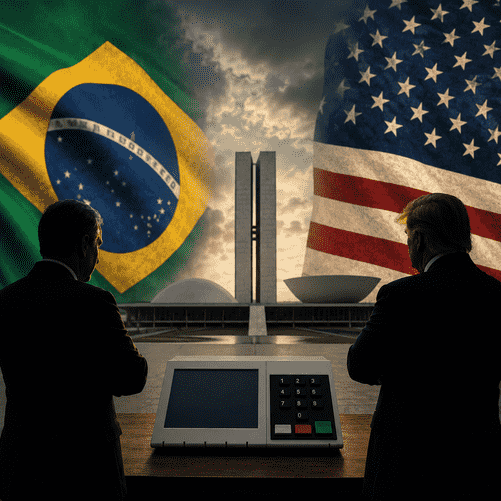
Brasília’s refusal to admit two State Department envoys has deepened tensions with Washington months before Brazil’s presidential election

Brazil has denied visas to two senior officials from the administration of U.S. President Donald Trump, accusing Washington of attempting to interfere in the country’s political process ahead of a closely watched presidential election in October.
The officials, Riley M. Barnes and Samuel Samson, work in the U.S. State Department’s Bureau of Democracy, Human Rights and Labor. They had planned to travel to Brazil for meetings with government representatives, religious leaders and civil-society organisations on subjects including electoral integrity, freedom of expression and religious liberty.
Brazilian officials said the visas were rejected because the proposed visit appeared to form part of a wider effort to undermine confidence in the country’s electronic voting system. One official described the planned mission as an attempt to politically exploit the electoral debate and weaken public trust in Brazilian institutions.
Washington has rejected that interpretation. The State Department characterised the planned visit as a routine diplomatic engagement focused on democratic values and human rights, denying that the delegation intended to influence the election or challenge Brazil’s sovereignty.
The confrontation comes at a sensitive moment for Latin America’s largest democracy. President Luiz Inácio Lula da Silva is seeking another term and faces a challenge from Senator Flávio Bolsonaro, the son of former president Jair Bolsonaro and a prominent figure on Brazil’s political right.
Flávio Bolsonaro and his allies have renewed criticism of Brazil’s voting machines, echoing arguments previously promoted by his father. Brazilian electoral authorities have repeatedly rejected allegations that the electronic system is vulnerable to systematic fraud, while officials have warned that unsupported claims could destabilise the campaign and weaken acceptance of the final result.
The latest dispute is also shaped by Jair Bolsonaro’s continuing influence over Brazilian politics. The former president was convicted over efforts to overturn the result of the 2022 election and received a lengthy prison sentence. His supporters maintain that the legal proceedings were politically motivated, while Brazilian courts have defended them as necessary measures to protect the country’s constitutional order.
Trump has maintained close political ties with the Bolsonaro movement, contributing to suspicions within Lula’s government that elements of the U.S. administration favour the Brazilian opposition. The relationship has become increasingly contentious as Washington and Brasília clash over trade, judicial decisions and the treatment of Bolsonaro and his allies.
Visa restrictions have emerged as a recurring instrument in the diplomatic confrontation. The Trump administration has previously imposed or threatened restrictions against Brazilian officials, including figures associated with legal proceedings involving Bolsonaro. Brazil’s latest decision therefore carries a strong element of reciprocity, although its immediate justification is the alleged risk of election interference.
The incident illustrates a broader transformation in relations between the Western Hemisphere’s two largest democracies. For decades, disagreements between Brazil and the United States were generally managed through institutional diplomacy. Their present relationship has become increasingly personalised, with domestic political alliances and ideological rivalries shaping foreign policy.
For Lula, resistance to perceived foreign pressure provides an opportunity to present himself as a defender of Brazilian sovereignty. The president and his allies have argued that the country’s elections must be conducted without intimidation or external involvement, particularly after the political violence and institutional crisis surrounding the previous presidential transition.
For the Brazilian opposition, however, the government’s decision may reinforce allegations that authorities are unwilling to tolerate international scrutiny. Bolsonaro supporters are likely to portray the visa refusal as evidence that the Lula administration fears criticism of the country’s courts and electoral institutions.
The controversy may also influence political debate beyond Brazil. Governments across Latin America are closely observing the dispute as political movements increasingly form cross-border alliances. Conservative leaders and parties have developed stronger ties with Trump and the Bolsonaro family, while left-leaning governments have emphasised national sovereignty and opposition to U.S. intervention.
The diplomatic consequences will depend partly on Washington’s next move. Further visa restrictions, sanctions or public criticism could deepen the dispute and allow foreign policy to become a central issue in Brazil’s election campaign. A quieter diplomatic response could prevent the confrontation from escalating while preserving channels of communication between the two governments.
Brazil’s decision nevertheless sends a clear political message: foreign officials will not be permitted to enter the country when their activities are considered a threat to confidence in the electoral system.
With the election approaching, tensions surrounding voting technology, judicial authority and international influence are likely to intensify. What began as a disagreement over two visa applications has become a test of relations between Brasília and Washington—and of how far domestic political rivalries can reshape diplomacy between major democratic powers.