Thousands of visitors have been moved from Atlantic coast tourist areas near Bordeaux as extreme heat and renewed winds threaten to reignite dangerous blazes across southwestern Europe.

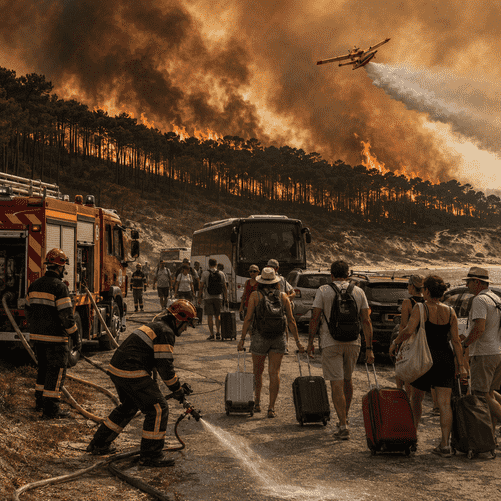
Nearly 4,000 people have been evacuated from tourist sites near Bordeaux as wildfires continue to burn across parts of France and Spain, with firefighters warning that returning winds and extreme heat could undermine efforts to bring the blazes under control.
French authorities ordered the latest evacuations from campsites and holiday accommodation around Lacanau, a popular Atlantic coast resort area in the Gironde region. The move was described as a precautionary measure, but it reflected growing concern that smouldering vegetation, dry conditions, and rising temperatures could trigger fresh flare-ups even where fire crews had made progress.
The wider crisis has already forced mass evacuations across southwestern Europe. In France, fires in the Gironde area have displaced about 220,000 people, while Spain has evacuated around 100,000 as emergency teams confront one of the most severe wildfire periods of the summer.
The situation remains especially tense because weather conditions are turning against firefighters. Heat, low humidity, and renewed winds can rapidly transform contained or partially controlled fires into fast-moving fronts, particularly in pine forests and dry coastal vegetation. In Gironde, authorities remain on high alert as new fires near Grand Crohot and the wider Lacanau area threaten homes, campsites, and tourist infrastructure.
Spain is facing similar pressure. Several major fires remain active, including a massive blaze in Ávila, west of Madrid, which has become one of the country’s largest recorded wildfires. Officials have begun lifting some evacuation orders where conditions have improved, but emergency services continue to warn that another wave of extreme heat could reverse those gains.
The fires have struck at the height of the summer holiday season, forcing tourists and residents alike to leave beaches, campsites, and rural communities. For local authorities, the challenge is not only to protect homes and forests, but also to manage thousands of displaced people during one of the busiest travel periods of the year.
France has deployed military support to assist firefighting operations, while aerial crews continue to battle flames from above. Across Europe, emergency services are increasingly stretched as climate-driven heatwaves intensify wildfire risks and extend the duration of fire seasons.
Scientists have repeatedly warned that hotter, drier summers are making wildfires more frequent and more destructive across the Mediterranean region. Prolonged drought, high temperatures, and stronger winds create the conditions for fires to spread quickly and become harder to contain.
For now, the priority in France and Spain is evacuation and containment. But the scale of the fires, the number of people displaced, and the threat of further heat suggest that this crisis is no longer only a seasonal emergency. It is becoming a warning of how Europe’s most popular summer destinations are increasingly exposed to a harsher and more dangerous climate reality.