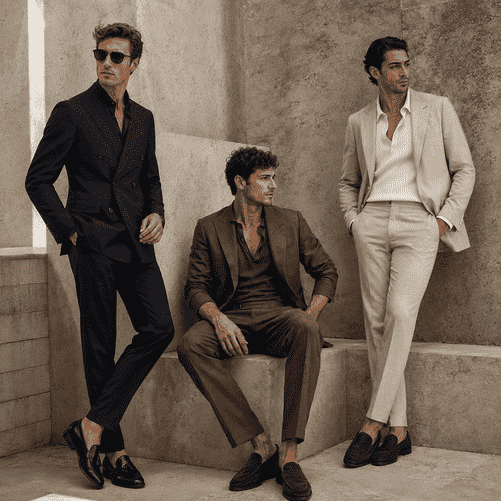
After years dominated by loose silhouettes and casual dressing, luxury menswear is rediscovering sharper shoulders, double-breasted jackets and defined proportions—while keeping the comfort and individuality modern men now expect.

The men’s suit is undergoing a significant transformation. After several seasons dominated by oversized jackets, wide trousers and deliberately relaxed silhouettes, the latest collections from Paris and Milan suggest that tailoring is beginning to recover a sharper, more deliberate sense of structure.
This is not, however, a return to the restrictive skinny suits that defined much of the 2010s. Instead, designers are developing a more balanced form of tailoring that combines stronger shoulders, cleaner waists and more precise proportions with softer construction, lighter fabrics and greater freedom of movement. The result is a modern suit that looks more disciplined without becoming rigid.
Recent collections from houses including Celine, Givenchy, Hermès, Prada and Dries Van Noten have reinforced this shift. Across the luxury menswear market, designers are treating tailoring less as a corporate uniform and more as an expression of personal style. Jackets are becoming more defined, double-breasted silhouettes are gaining prominence, and trousers remain relatively generous, creating a stronger contrast between the upper and lower body.
At Celine, Michael Rider has explored proportions that sit between the extremes of recent fashion cycles. Broad shoulders have been paired with leaner trousers, while fitted jackets have appeared alongside fuller bottoms. The overall effect is controlled but not restrictive, reflecting a broader industry effort to restore elegance without abandoning the comfort that has become essential to contemporary menswear.
Givenchy has taken a similarly refined approach, using double-breasted jackets, wide-leg trousers and crisp shirting to reinterpret classic menswear codes. Rather than presenting the suit as something reserved for offices or formal ceremonies, the collection positions tailoring as a versatile component of the everyday wardrobe.
That change reflects a deeper transformation in how men dress. Hybrid working, the long-term casualisation of corporate environments and the decline of rigid office dress codes have weakened the suit’s traditional role as professional uniform. In response, luxury brands are attempting to give tailoring a new purpose. The contemporary suit is increasingly something a man chooses to wear rather than something he is required to wear.
This freedom has significantly expanded the possibilities of styling. Traditional shirts and ties can be replaced by fine knitwear, polo shirts or lightweight T-shirts. Formal shoes can give way to loafers, minimal sneakers or sandals. Jackets can be worn independently with denim or relaxed trousers, while matching suits can be styled with far less formality than in previous decades.
Hermès has embraced this more fluid interpretation through lightweight jackets, coordinated trousers and silk accessories replacing conventional neckwear. Knit tailoring has further blurred the distinction between formal jackets and casual knitwear, demonstrating how modern luxury houses are attempting to make elegance more adaptable.
Fabric is becoming just as important as silhouette. Designers are increasingly using lightweight wool, linen, silk, cotton and technical blends to produce tailoring that works in warmer climates and more relaxed environments. Climate considerations are becoming increasingly relevant as traditional heavy suiting becomes less practical during hotter summers.
This shift is also changing how designers approach construction. Comfort no longer needs to come exclusively from oversized proportions. Softer canvassing, lighter linings and more flexible shoulder structures allow jackets to follow the body while remaining comfortable. This means tailoring can become more precise again without returning to the constricted fits of the previous slim-suit era.
Prada has been particularly influential in this direction. Its recent menswear collections have moved toward slimmer outerwear and cleaner silhouettes while maintaining relatively soft shoulders. The effect is closer to the body but deliberately avoids the tightly compressed proportions once associated with narrow lapels, very low-rise trousers and extremely slim legs.
The distinction is important. The emerging suit is not simply “slim” again. It is more controlled. Jackets may sit closer to the torso, but trousers often retain volume. Shoulders are clearer and occasionally extended, while lapels are becoming more prominent. Higher-waisted trousers are also returning, restoring a more classical proportion between jacket and leg.
Double-breasted tailoring is another increasingly visible part of the movement. Once associated with conservative business dress, the double-breasted jacket is being repositioned as one of the most expressive pieces in the modern male wardrobe. Its overlapping front, pronounced lapels and structured chest naturally create a stronger silhouette, making it particularly compatible with fashion’s renewed interest in sharper tailoring.
The trend is partly connected to the revival of historical menswear references. Elements of 1980s power dressing, 1990s minimalism and 1960s suiting are all resurfacing, although designers are selectively borrowing proportions rather than reproducing complete period looks. The extended shoulders of the 1980s, clean restraint of the 1990s and disciplined tailoring of the 1960s can now coexist within the same contemporary wardrobe.
Colour is evolving as well. Navy, charcoal and black remain indispensable, but brown has become increasingly important across luxury menswear. Chocolate, tobacco, taupe and earthy shades provide a softer alternative to conventional business colours and combine naturally with suede shoes, knitwear, denim and casual outerwear.
Texture is also becoming more prominent. Flannel, mohair, brushed wool, linen and tactile blends allow designers to introduce character without relying on overt logos or conspicuous patterns. This reflects a broader shift within luxury toward craftsmanship and material quality as consumers become more selective about what justifies premium pricing.
The renewed interest in bespoke and made-to-measure clothing reinforces the same trend. In several growing luxury markets, consumers are showing greater interest in individually fitted suits, tuxedos and tailored separates that can remain relevant for years rather than a single fashion season. For affluent male customers, personalisation offers both exclusivity and practical value.
Tailoring is particularly well positioned to benefit from this shift because relatively subtle adjustments can dramatically influence appearance. Shoulder width, jacket length, lapel proportion, trouser rise and sleeve position all affect how a suit frames the body. As a result, consumers increasingly recognise the difference between simply purchasing an expensive suit and owning one that has been properly fitted.
The broader movement therefore appears to be toward individualised tailoring rather than a single dominant silhouette. One man may favour a strong double-breasted jacket with full trousers, while another chooses a clean single-breasted suit with a narrower leg. Others may prefer unstructured linen tailoring designed for warmer climates. These approaches differ visually but share the same underlying principle: the suit is becoming more intentional.
Paradoxically, tailoring may be becoming more interesting precisely because fewer men are required to wear it every day. When suits were compulsory in professional environments, they functioned primarily as uniforms. As formal dress codes have weakened, tailoring has regained the opportunity to become a genuine fashion choice.
That evolution is helping redefine the role of the suit in contemporary menswear. The most relevant designs emerging for 2026 and 2027 do not attempt to restore the traditional corporate wardrobe. Instead, they combine the authority and sophistication of classical tailoring with the comfort, flexibility and individuality that men have come to expect from modern clothing.
The shoulders are becoming stronger, the waist more defined and the double-breasted jacket more prominent, while trousers remain comfortable and fabrics become lighter. After years of exaggerated volume, men’s tailoring is finding a new equilibrium—sharper, more sophisticated and considerably more personal.