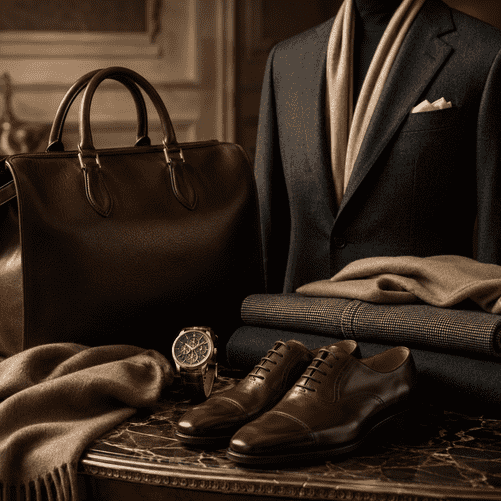
Bvlgari’s emphasis on jewellery, craftsmanship and controlled product launches reflects a wider shift across the luxury industry away from relentless novelty and toward pieces designed to retain cultural and financial value.

For much of the past decade, luxury fashion operated according to a relentless rhythm.
New collections arrived constantly. Collaborations multiplied. Limited editions appeared every few weeks. Social media rewarded novelty, and luxury companies responded by accelerating product cycles.
That model is beginning to change.
One of the clearest signals came this week from Bvlgari chief executive Laura Burdese, who said the Italian house does not feel compelled to continuously launch new products. Instead, Bvlgari is focusing on strengthening established collections, craftsmanship and long-term desirability.
The strategy is important because it reflects a broader change in the luxury market.
Consumers are becoming more selective.
After several extraordinary years following the pandemic, luxury growth has become less uniform. Aspirational customers have been pressured by inflation and higher living costs, while wealthy clients increasingly differentiate between genuine craftsmanship and products that appear primarily designed to capture short-lived trends.
Jewellery has proved unusually resilient.
Unlike many fashion products, fine jewellery possesses a combination of emotional, aesthetic and financial characteristics.
A handbag may be strongly associated with a particular season.
A necklace or watch can be purchased to mark a wedding, inheritance, professional milestone or anniversary.
That emotional dimension makes jewellery less dependent on rapidly changing fashion cycles.
Bvlgari’s Serpenti collection is a particularly strong example.
Introduced decades ago and repeatedly reinterpreted, the snake motif remains immediately recognisable without depending on obvious logo placement. Demand has reportedly remained so strong that production has struggled to keep pace in some categories.
The lesson for the wider luxury sector is significant.
Consumers may increasingly value recognisable design codes more than constant novelty.
Hermès has demonstrated this principle for decades through products such as the Birkin and Kelly.
Rolex operates similarly in watches, refining familiar designs rather than reinventing its entire catalogue every season.
Ferrari applies a comparable philosophy in automobiles: scarcity, continuity and carefully controlled expansion preserve desirability.
Bvlgari appears to be leaning further into that model.
The company is also investing in production capacity and expanding its retail presence, particularly in North America. New boutiques in locations such as San Diego and Palm Beach reflect the continuing importance of wealthy American consumers to the global luxury industry.
Another notable element is the company’s approach to watches.
Bvlgari has developed an increasingly strong position in technically ambitious watchmaking, particularly through its use of titanium and ultra-thin mechanical movements.
The brand’s Octo Finissimo family helped redefine perceptions of Italian-designed high horology, while collaborations with independent watchmakers have strengthened its technical credibility.
That coexistence of jewellery and mechanical watchmaking is commercially valuable.
Women’s jewellery watches are becoming particularly important as boundaries between watchmaking and jewellery continue to blur.
A generation ago, the luxury-watch market was often presented primarily as a male enthusiast category dominated by technical specifications.
Today, houses increasingly treat watches as objects of design, jewellery and personal expression.
The broader fashion industry is moving in a similar direction.
At Gucci, artistic director Demna is attempting to revitalise one of fashion’s largest brands by combining historical codes with a more emotional and pragmatic design language. His work draws on Gucci’s 1970s and 1990s heritage while experimenting with new silhouettes and a broader approach to body shapes and gender.
The significance is that luxury brands are once again searching their archives.
This does not necessarily mean fashion is becoming conservative.
Instead, designers are rediscovering the commercial power of continuity.
Luxury works differently from mass-market fashion because the consumer is purchasing more than functionality.
The object carries history, symbolism and cultural recognition.
A beautifully constructed coat from a famous house feels more valuable when the customer believes its design belongs to a continuing tradition.
Fast fashion has reached almost the opposite conclusion.
Companies built around extremely rapid production must generate constant novelty because low prices encourage frequent consumption.
Luxury cannot successfully compete on that battlefield.
Its advantage is permanence.
That explains the renewed emphasis on tailoring, high-quality leather, precious metals, watchmaking, cashmere and artisanal production.
Men’s fashion provides particularly visible examples.
Soft tailoring, wider trousers, suede footwear, unstructured jackets and understated knitwear continue to replace the highly branded streetwear aesthetic that dominated much of the previous decade.
The so-called “quiet luxury” trend may have become a cliché, but the underlying consumer preference remains relevant.
Clients increasingly appreciate garments whose quality becomes apparent through fabric, cut and construction rather than enormous logos.
The same logic affects watches.
Enthusiasts are looking beyond immediate hype toward provenance, movement architecture, finishing and long-term collectability.
Independent watchmakers have consequently gained influence because they offer scarcity and craftsmanship that cannot easily be reproduced at industrial scale.
Luxury companies must nevertheless avoid taking scarcity too far.
Artificially restricting supply can frustrate customers and create speculative secondary markets.
The most successful houses balance accessibility, exclusivity and product continuity.
Bvlgari’s philosophy offers an interesting version of that balance.
Rather than treating every season as an obligation to create another blockbuster, the company appears increasingly comfortable allowing established designs to mature.
That may ultimately be luxury’s most important competitive advantage.
In a consumer economy built around constant replacement, the most desirable object may increasingly be the one that does not need replacing at all.